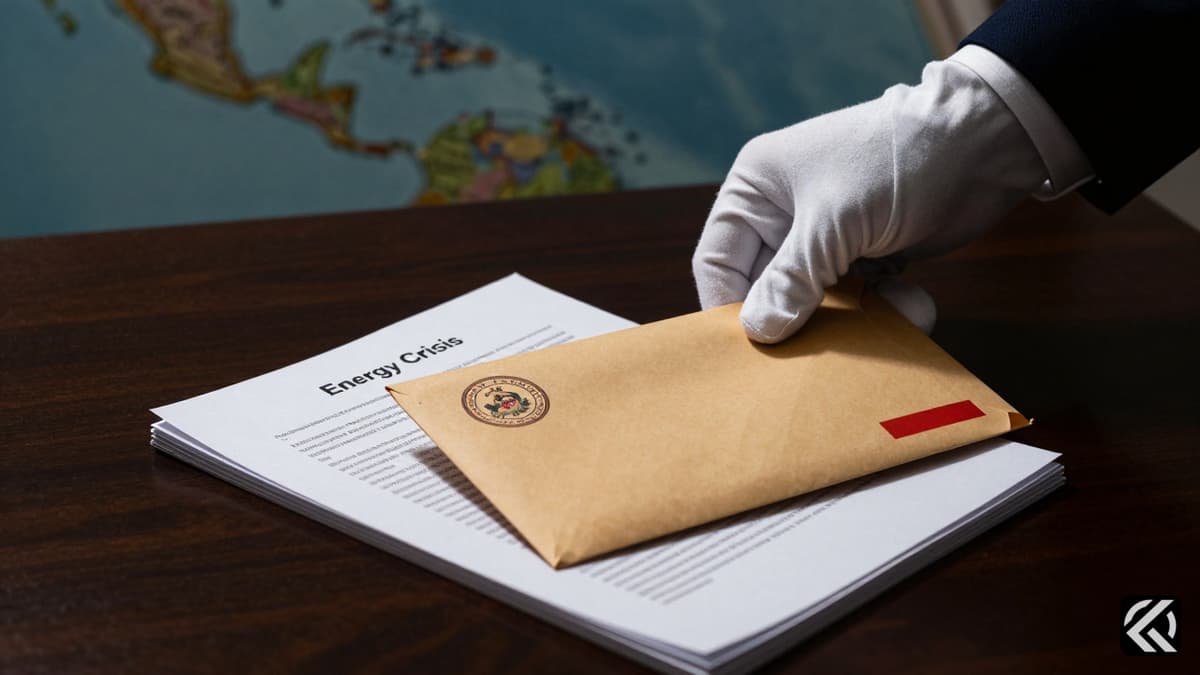
CIA Director John Ratcliffe’s secret Havana visit highlights shifting US-Cuba relations as Washington offers $100m in aid while maintaining the oil blockade.
In a significant diplomatic development, the Cuban government confirmed that CIA Director John Ratcliffe met with high-ranking Cuban officials at the interior ministry in Havana. This meeting occurred as the Caribbean island nation grapples with severe fuel shortages exacerbated by the ongoing Cuban oil blockade imposed by the United States.
The US has renewed an offer of $100m (£74m) in aid to help ease the effects of the crisis, yet tensions remain high regarding the terms of this assistance. A Cuban statement released following the encounter described the meeting as an attempt to improve dialogue, noting that American officials were explicitly told that Havana does not pose a threat to US national security.
A CIA official told CBS News that the visit was intended to "personally deliver President Trump's message" directly to Cuban leadership. The delegation from the US side included Director Ratcliffe, while the Cuban side was led by Interior Minister Lázaro Álvarez Casas, Raúl Rodríguez Castro (grandson of former President Raúl Castro), and the head of Cuba's intelligence services.
During the discussions, Ratcliffe and Cuban officials addressed intelligence cooperation, economic stability, and security issues. The US stance was clear: Washington is "prepared to seriously engage on economic and security issues, but only if Cuba makes fundamental changes." Furthermore, the official emphasized that Cuba "can no longer be a safe haven for adversaries in the Western Hemisphere."
Conversely, the Cuban government issued a statement underscoring their interest in developing bilateral cooperation between law enforcement agencies to benefit the security of both nations as well as regional and international security. This diplomatic exchange was corroborated by visual evidence, as a US government plane was observed taking off from Havana's José Martí International Airport on Thursday afternoon, according to a Reuters witness.
The core of the current diplomatic friction lies in the conditions attached to the humanitarian aid. Last week, US Secretary of State Marco Rubio claimed that Havana had rejected a previous US offer of humanitarian aid worth $100m. Cuba denied this claim, asserting its willingness to accept good-faith cooperation.
On Wednesday, the US State Department renewed its offer to "provide generous assistance to the Cuban people." However, the department made it explicitly clear that the aid would have to be distributed "in coordination with the Catholic Church and other reliable independent humanitarian organisations," effectively bypassing the Cuban government. The US statement warned that the decision now rested with the Cuban regime "to accept our offer of assistance or deny critical life-saving aid and ultimately be accountable to the Cuban people for standing in the way of critical assistance."
In response, Cuban Foreign Minister Bruno Rodríguez expressed skepticism, stating it was unclear whether the US aid offer would be in cash or in-kind assistance. He emphasized that "the Cuban government does not, as a matter of practice, reject foreign aid offered in good faith and with genuine aims of cooperation, whether bilateral or multilateral." However, he added that the best way the US could help would be to "de-escalate energy, economic, commercial, and financial blockade measures, which have intensified as never before in recent months."
The diplomatic maneuvers take place against a backdrop of severe humanitarian suffering within Cuba. Fuel shortages, driven by the US oil blockade, have left hospitals unable to function normally and forced schools and government offices to close. The country previously relied on Venezuela and Mexico for oil supplies, but these nations have largely cut off deliveries following threats of tariffs from US President Donald Trump.
On Wednesday, Cuban President Miguel Diaz-Canel stated that conditions could be eased faster if the US lifted its blockade entirely, rather than offering aid with restrictive conditions. Energy Minister Vicente de la O Levy issued a stark warning to state-run media, revealing that Cuba had completely run out of diesel and fuel oil. While limited gas remained available, he described the energy system as being in a "critical" state.
The consequences of these shortages have been palpable on the streets. Cubans have endured extensive blackouts, some nationwide, for months. On Wednesday, after a power cut affected eastern Cuba and parts of the capital, hundreds took to the streets in Havana. Protesters blocked roads with burning rubbish and shouted anti-government slogans, marking the biggest single night of demonstrations in the city since the energy crisis began in January.
While negotiations appeared to stall earlier this year as the oil blockade wore on, the recent confirmation of the high-level meeting suggests a shift in diplomatic engagement. However, the fundamental disconnect remains: the US views the aid as a lever for political change and security cooperation, while Cuba views the blockade as the primary obstacle to its survival.
Cuban Foreign Minister Rodríguez condemned the sanctions as "illegal and abusive," maintaining that the path to stability lies in the removal of economic pressures rather than conditional humanitarian gestures. The presence of CIA Director US-Cuba relations at the heart of this negotiation underscores the complexity of the issue, blending national security concerns with urgent humanitarian needs.
The current standoff between Washington and Havana hinges on the acceptance of conditional aid versus the removal of the blockade. As the energy crisis worsens, with hospitals and schools closing due to fuel deficits, the Cuban government faces increasing internal pressure. The US strategy appears to rely on public pressure through conditional aid distribution, while Cuba insists that only the lifting of sanctions will resolve the root cause of the humanitarian disaster. Future developments will likely depend on whether the Cuban regime accepts the US demand to bypass government channels for aid delivery, or if further diplomatic escalation occurs as the energy situation remains critical.
Jun 8, 2026 22:55 UTC
Netanyahu Vows Forceful Response to Future Iran Attacks
Join 50,000+ readers getting the global briefing every morning.
No spam. Unsubscribe anytime.
Jun 8, 2026 22:55 UTC
Netanyahu Vows Forceful Response to Future Iran Attacks
Jun 8, 2026 20:56 UTC
Netanyahu Halts Iran Fighting, Vows Future Force
Jun 8, 2026 20:54 UTC
Justice Department Moves to Strip Citizenship from 17 Individuals
Jun 8, 2026 18:37 UTC
Trump Denied War Pledge Despite Clear Campaign Records


