Section
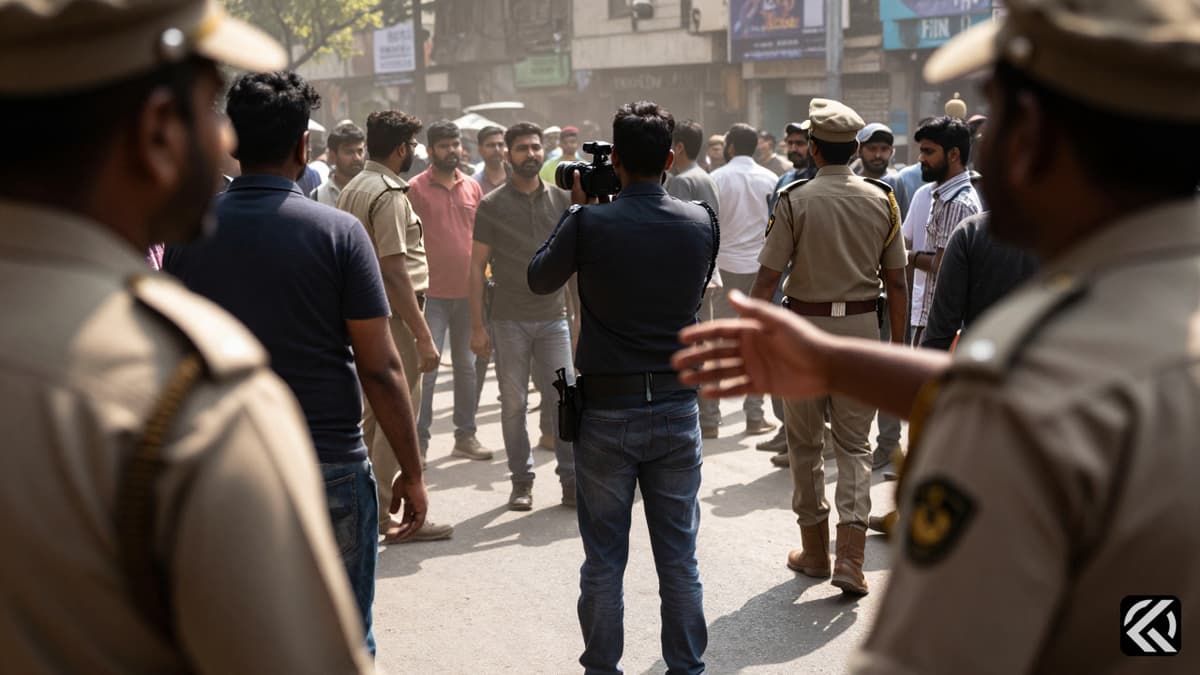
Protests erupt over Gyanesh Kumar's voter roll changes as the Delhi Police faces serious allegations of harassing journalists and activists, sparking national outrage.
The recent surge in public unrest across major Indian cities has placed the Delhi Police under intense scrutiny following allegations of misconduct against media professionals and activists. On Saturday, serious claims emerged regarding the treatment of individuals detained during demonstrations, prompting the force to initiate a formal investigation into the matter.
In a social media post, the Delhi Police confirmed that its New Delhi District had received complaints concerning the detention of scores of young people. The force stated that these complaints had been transferred to its crime branch for what it described as a "fair and impartial" inquiry. This development occurred just days after thousands of protesters gathered in Delhi and Mumbai for a third consecutive day, demanding the resignation of Gyanesh Kumar due to his role in large-scale changes to the voters' list.
The unrest is directly linked to the Election Commission's ongoing efforts to revise the electoral rolls. The Commission asserts that this exercise is designed to remove duplicate and ineligible entries, noting that approximately 130 million names have already been struck off the voters' list. According to the Commission, the last such revision was conducted nearly a quarter of a century ago. Authorities argue that updating the list is essential to account for individuals who have died, left the country, or registered at multiple addresses due to moving.
However, the exercise has been mired in controversy from its inception. Opposition parties have accused Kumar of manipulating the voters' list to favor the BJP during elections. Both Kumar and the Election Commission have firmly rejected these accusations, maintaining that the process is neutral and necessary for administrative accuracy. The controversy is further complicated by internal dissent within the Commission. The Central Judicial Platform (CJP) called for the latest protests after a report in The Indian Express revealed that two fellow election commissioners, Sukhbir Singh Sandhu and Vivek Joshi, had formally objected at least 14 times over 10 months to decisions issued without their knowledge. These differences reportedly centered on the Special Intensive Revision (SIR) of electoral rolls, which began last year.
The treatment of those involved in the protests has drawn sharp criticism from press organizations. The Press Club of India demanded immediate action against the officers involved, expressing that it was "shocked and dismayed" by the treatment of journalists. In a statement, the Club emphasized that such behavior "cannot be normalised in a democracy." It further stated that journalists must be allowed to work freely and without fear to document those gathering to raise various issues.
Personal accounts from the ground highlight the severity of the allegations. Aahna Singh, an activist and student at Jawaharlal Nehru University, told Reuters news agency that she was dragged by her hair by police during the protests. Such testimonies contribute to the growing pressure on law enforcement authorities to address the conduct of their personnel during civil demonstrations.
The protest movement has gained momentum recently, recording its first major victory in July when it forced the resignation of then Education Minister Dharmendra Pradhan. This success followed weeks of protests calling for education reforms, demonstrating the potential impact of sustained public pressure on government officials. The current demonstrations mark a shift in focus toward electoral integrity and the specific actions of Gyanesh Kumar and the Election Commission.
The combination of mass protests, allegations of police misconduct against journalists, and internal dissent within the Election Commission creates a volatile political environment. The allegations against the Delhi Police risk further eroding public trust in state institutions if the inquiry does not yield transparent results. Furthermore, the controversy surrounding the voter roll revision threatens to deepen political polarization. If the opposition continues to assert that the list is being manipulated, and the Election Commission maintains its defense of administrative necessity, the conflict may escalate into a broader constitutional crisis. The internal objections raised by commissioners Sandhu and Joshi suggest that the foundation of the current electoral process is fragile. Future elections may face heightened scrutiny, potential legal challenges, and continued civil unrest unless a consensus on the integrity of the voter rolls is reached. The outcome of the police inquiry and the Election Commission's handling of the SIR will likely determine whether the current administration retains its credibility or faces significant political repercussions in the coming months.
Oct 6, 2026 02:48 UTC
Yemen Forces Recapture Mocha in Major Counteroffensive
Oct 6, 2026 00:07 UTC
Teen Loses Hand in French School Protest Clashes Amid Escalating Violence
Oct 5, 2026 22:36 UTC
UAE Shares FlyDubai Crew Data After Pilot Seize Control Attempt
Oct 5, 2026 22:00 UTC
US Withdraws Heavy Bombers From UK Base Amidst Rising Tensions With Iran
Nov 5, 2026 20:16 UTC
Pia Dandiya Claims Landmark Florida Win in 2026 Midterms