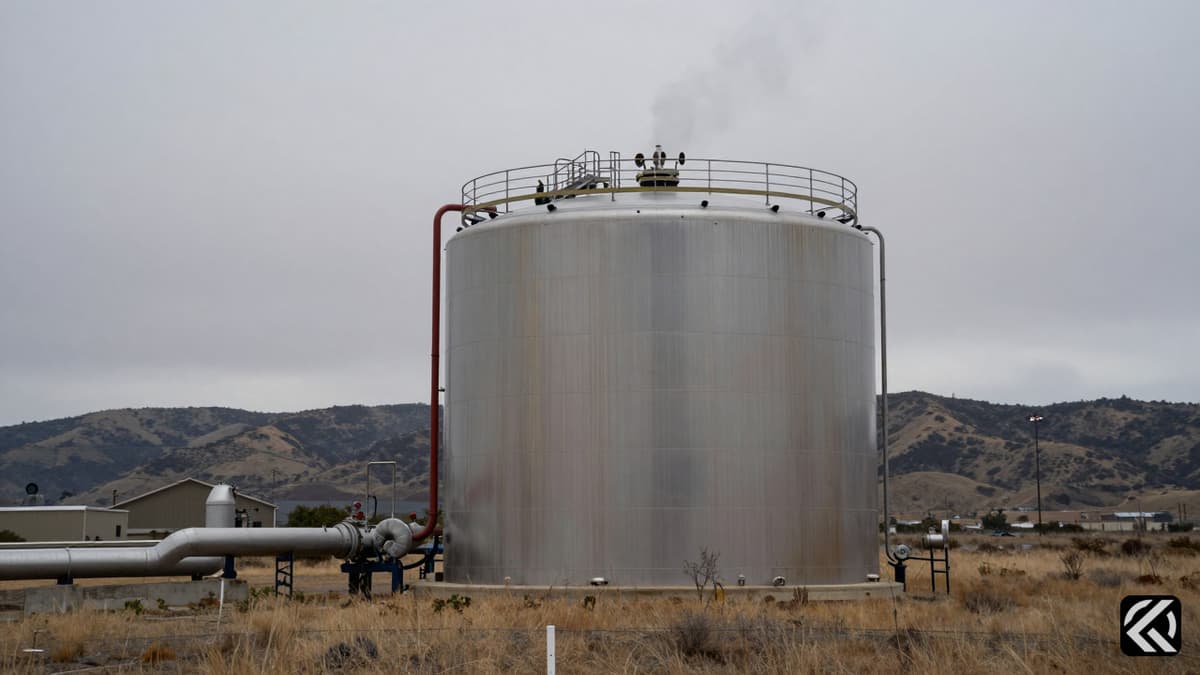
Tens of thousands in Orange County face evacuation as a GKN Aerospace facility’s chemical tank nears critical temperatures, raising fears of a toxic disaster.
As authorities in Southern California race to cool a massive industrial tank containing a toxic chemical at risk of explosion, tens of thousands of nearby residents have been forced to abandon their homes. The primary driver for this mass displacement is the immediate threat of health concerns and catastrophic damage should a blast occur.
The situation centers on a facility in Garden Grove owned by GKN Aerospace, where a specific tank began to overheat on Thursday. This technical failure triggered emergency protocols, leading to the largest Orange County evacuation in recent memory. The chemical involved, methyl methacrylate, poses significant respiratory and irritation risks upon exposure, prompting officials to prioritize public safety above all else.
Orange County Fire Authority Interim Fire Chief TJ McGovern confirmed that first responders initially arrived at the Garden Grove location on Thursday for a vapor release from the tank. The facility’s relief valves and sprinklers activated automatically to cool the structure, but reports indicate the valves became "gummed up." Consequently, the temperature inside the tank continued to climb, eventually reaching 90 degrees.
Craig Covey, Division Chief and Unified Incident Commander for the Orange County Fire Authority, highlighted the precarious nature of the situation. He noted that the chemical’s optimal temperature is around 50 degrees, making the current rise a critical danger. Covey warned that the increasing heat could lead to a leak or a catastrophic explosion. To mitigate this, authorities are attempting to solidify the chemical from the outside inward, a process Captain Steve Concialdi described as similar to an ice cube freezing.
Concialdi explained that the chemical hardens from the exterior while liquid remains inside. While this process is their hope for stabilization, he cautioned that the tank could still crack, spilling its 7,000 gallons of content, or explode entirely. He emphasized that the agency does not know the exact temperature at which ignition might occur. "Letting this thing just fail and blow up is unacceptable to us," Covey stated, underscoring the goal of preventing community and environmental damage.
The chemical involved, methyl methacrylate, is known to cause respiratory issues and irritation to the skin and eyes, according to the Environmental Protection Agency (EPA). Orange County Health Officer Dr. Regina Chinsio-Kwong added that exposure can lead to nausea and dizziness. She noted that the chemical has a fruit-like scent, though smelling it does not necessarily indicate harmful exposure levels.
Despite EPA monitors deployed around the clock failing to detect contaminants in the air, some residents reported symptoms. Stanton resident Van Ly evacuated on Friday after forgetting to close a window, reporting soreness in his throat and nose. Another resident, Miguel Loo, mentioned that he and his family experienced headaches since Thursday.
About 50,000 people in Orange County have been ordered to evacuate. Many spent the Memorial Day weekend in shelters, hotels, or with relatives outside the danger zone. While busy tourist destinations like Disneyland and Knott’s Berry Farm are nearby, they remain outside the evacuation zone. However, approximately 6,000 residents, or 15%, refused to leave as of Friday.
The Red Cross opened a new shelter at Golden West College in Huntington Beach, while three other shelters in Fountain Valley, La Palma, and Oceanview High School neared capacity. A shelter in Anaheim is also open. California Governor Gavin Newsom declared a state of emergency, mobilizing state resources to support local responders and ensure the community has necessary supplies.
GKN Aerospace apologized to evacuated residents and businesses, stating it is working with emergency services to ensure safety. The company described its Garden Grove location as a world leader in military transparency systems and commercial aircraft transparencies, which include canopies and windshields.
However, the facility has a history of regulatory issues. A November 2020 inspection by the South Coast Air Quality Management District (AQMD) revealed that GKN failed to maintain records documenting VOC emissions. Inspectors also found the company operated new equipment without a permit and modified existing equipment improperly. These violations led to a notice of violation in April 2021 and a civil penalty of roughly $900,000.
AQMD stated it has been working with GKN to resolve these permitting issues since the settlement. Two more notices to comply were issued in March of last year regarding operating records and equipment registration. When contacted regarding the current crisis and past violations, GKN reiterated its commitment to resolving the immediate situation but did not address the previous compliance history in detail.
The current Orange County evacuation underscores the risks inherent in industrial chemical storage and the critical need for rigorous safety monitoring. With the tank’s temperature exceeding safe limits and past violations indicating a pattern of non-compliance, the incident may trigger deeper regulatory investigations into GKN Aerospace’s operational standards. Authorities are now focused on containing the immediate threat, but the long-term impact could involve stricter enforcement measures and enhanced safety protocols for similar facilities across the region to prevent future disasters.
Jun 8, 2026 22:55 UTC
Netanyahu Vows Forceful Response to Future Iran Attacks
Join 50,000+ readers getting the global briefing every morning.
No spam. Unsubscribe anytime.
Jun 8, 2026 22:55 UTC
Netanyahu Vows Forceful Response to Future Iran Attacks
Jun 8, 2026 20:56 UTC
Netanyahu Halts Iran Fighting, Vows Future Force
Jun 8, 2026 20:54 UTC
Justice Department Moves to Strip Citizenship from 17 Individuals
Jun 8, 2026 18:37 UTC
Trump Denied War Pledge Despite Clear Campaign Records


