Section
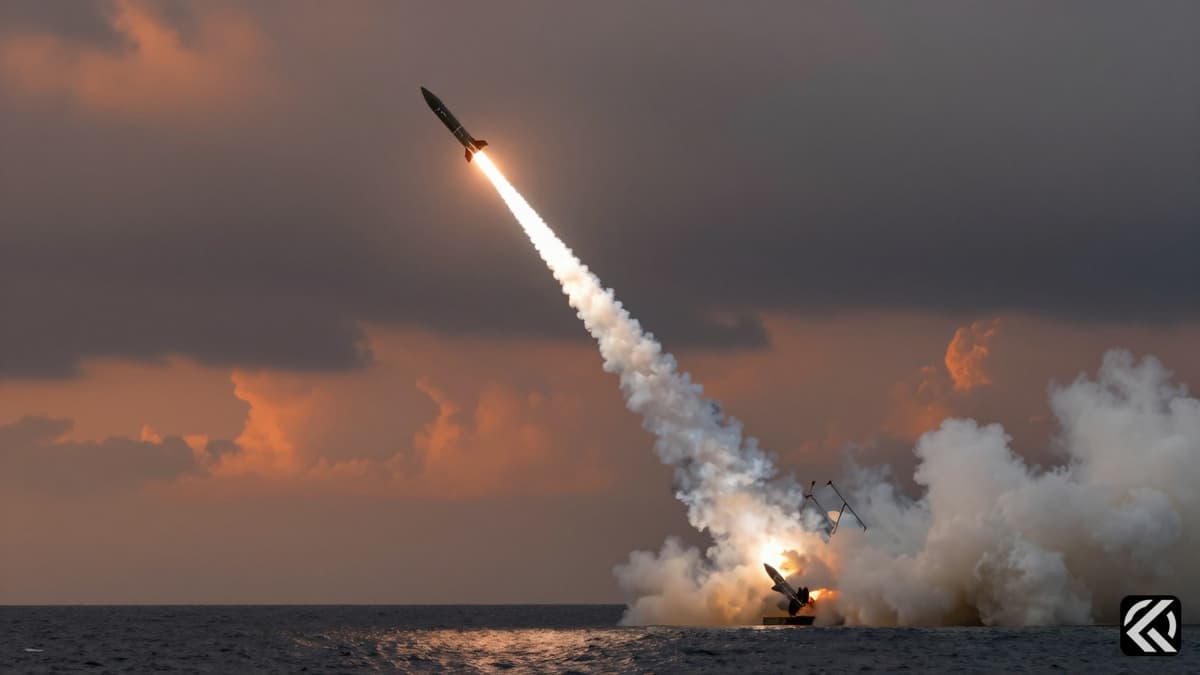
Pyongyang accelerates military provocation with two rapid-fire ballistic missile tests off its eastern coast, drawing sharp condemnation from Seoul, Tokyo, and international allies in escalating regional tensions.
The recent North Korea missile test represents a significant escalation in military posturing by Pyongyang, as the isolated state conducted two ballistic missile launches off its eastern coast within a mere three-hour period on Sunday. This rapid sequence of events marks the country's second set of such tests in roughly a week, intensifying fears of instability on the Korean Peninsula. The launches occurred just days after Pyongyang accused the United States of deliberately driving tensions higher through a series of coordinated military drills involving its allies.
South Korea’s defense ministry confirmed that the first short-range ballistic missile was fired toward the East Sea on Sunday afternoon. Just three hours later, a second short-range ballistic missile was launched from the same general area. According to South Korea’s Joint Chiefs of Staff, the first test firing was detected coming from the Wonsan area around 3 p.m. local time, which corresponds to 0600 GMT. The agency identified this initial projectile as a ballistic missile. Japan’s defense ministry also corroborated this classification, stating that the projectile appeared to be a ballistic missile as well.
If the subsequent launch is confirmed to be a ballistic missile, it will mark two consecutive ballistic missile tests by North Korea within a tight three-hour window, a frequency that underscores the aggressive nature of the recent provocation. The Japanese public broadcaster NHK reported that the first projectile had come down outside Japan's exclusive economic zone, avoiding direct impact on Japanese territory but raising significant security concerns among neighboring nations.
The technical details of the launches provide further insight into the capabilities being demonstrated. The first projectile flew approximately 450 km (280 miles) and is presumed to belong to the Hwasong-11 series, according to South Korea's military analysis. This series of missiles has been central to Pyongyang's arsenal in recent years. The second short-range missile, which was also fired from Wonsan at about 5:50 p.m. (0850 GMT), achieved a longer range of more than 600 km (373 miles). These distances indicate a substantial reach into the regional waters, challenging the security postures of South Korea and Japan.
In response to the launches, the South Korea Joint Chiefs of Staff stated that South Korean and US intelligence authorities have been tracking and sharing related developments from the initial stage of the launch. They have also shared information regarding the 'North Korean ballistic missile' with Japan, highlighting the coordinated intelligence effort among allied nations. This rapid information sharing is critical for monitoring the evolving situation and preparing potential defensive measures.
The political fallout from these tests has been swift and severe. South Korea's National Security Council condemned the short-range missile launch, which follows a test on September 12. The council urged Pyongyang to immediately cease missile activity, warning that the test directly violated UN Security Council resolutions. The frequency of these tests suggests a deliberate attempt to test international resolve and disrupt regional stability.
Japan also lodged a protest through embassy channels in Beijing, according to a Nikkei report, indicating that diplomatic efforts are being utilized alongside military concerns. Japanese Defence Minister Shinjiro Koizumi was quoted by Nikkei as saying, "This series of North Korean actions threatens the peace and security of Japan, the region, and the international community." His statement reflects the broader anxiety across the region regarding the unpredictability of Pyongyang's actions.
On Saturday, North Korea dismissed a resolution by the UN nuclear watchdog against Pyongyang's nuclear programme, further demonstrating its disregard for international oversight. The latest missile tests come in the wake of a US-led naval drill that included South Korea and Japan, which ran from August 29 to September 10 near Guam. Pyongyang last week condemned this drill, framing it as a provocation that necessitated their military response.
Kim Yo Jong, the influential sister of leader Kim Jong Un, played a key role in the narrative leading up to these tests. On Friday, she blamed US-led military drills for "ever-worsening" tensions on the Korean Peninsula. She vowed no change in the country's course to strengthen its nuclear arsenal, signaling that these missile launches are part of a broader strategic goal rather than isolated incidents. Her statements reinforce the hardline stance of the North Korean leadership.
The recent dual missile launches by North Korea highlight the fragility of peace on the Korean Peninsula and the potential for rapid escalation. The coordination between South Korea, the US, and Japan in tracking and condemning these actions demonstrates a united front against Pyongyang's provocations. However, the persistent cycle of military drills and retaliatory tests suggests a deepening stalemate. As tensions remain high, the international community must navigate the delicate balance between deterrence and diplomacy. The continued strengthening of North Korea's nuclear arsenal, as vowed by Kim Yo Jong, indicates that these missile tests are likely to persist. Future developments will depend heavily on the responses of neighboring nations and the potential for diplomatic engagement. Without a shift in strategy, the region risks further militarization and increased incidents of military confrontation.
Sep 20, 2026 22:26 UTC
Trump Issues Stark Ultimatum to Iran Amid Rising Tensions
Sep 20, 2026 22:10 UTC
Andy Burnham Welcomes Greenland Agreement Ahead of Trump Meeting
Sep 20, 2026 20:50 UTC
Trump Threatens Iran With Destruction Amidst Diplomatic Standoff
Sep 20, 2026 16:47 UTC
North Korea Missile Test: Rapid Dual Launches Escalate Tensions
Sep 21, 2026 00:37 UTC
Trump Warns of Destruction as Iran Demands Truce Conditions