Section
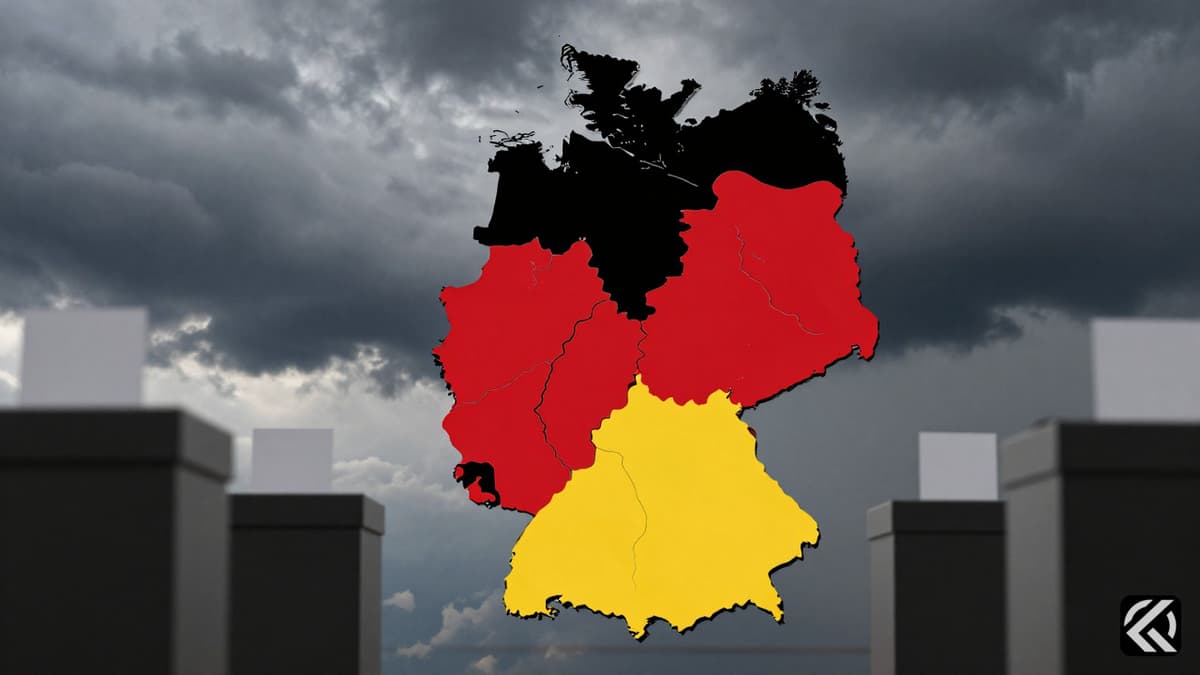
German Chancellor Friedrich Merz faces intense pressure after exit polls reveal a significant surge for the far-right AfD in key state elections, labeling the CDU’s performance a disaster.
German Chancellor Friedrich Merz is confronting a severe political crisis as exit polls from recent state elections reveal a dramatic surge for the far-right Alternative for Germany (AfD). The Christian Democratic Union (CDU), led by Merz, is facing historic lows, particularly in the north-eastern state of Mecklenburg-Vorpommern, where the party is projected to secure only 5% of the vote. This result is barely enough to guarantee representation in the largely rural state and piles immense pressure on Merz’s beleaguered leadership just two weeks after the AfD achieved its best-ever national result in Saxony-Anhalt.
The political landscape shifted sharply on Sunday, with the AfD projected to win 38% of the vote in Mecklenburg-Vorpommern. This outcome places the far-right party firmly at the top, surpassing the center-left Social Democratic Party (SPD), which trails at 36.5%. The contrast was stark within the CDU’s Berlin watch party, where audible groans erupted as the results for both regions were read out. Despite the dire projections, Merz remained defiant, arguing that the solution to Germany’s deepening divisions and economic woes is not a return to past policies but rather comprehensive reform.
The current results mark a significant nadir for the CDU. Prior to this election cycle, the party’s worst performance in a state election occurred 75 years ago in 1951, when it garnered 9% in Bremen. This was the only instance in the party’s history of remaining in single digits during a state election. With the current projection of 5%, the CDU has plunged even lower, underscoring the depth of the dissatisfaction with Merz’s governance among the electorate.
In Berlin, the electoral dynamics were markedly different. The capital’s state parliament election was predicted to be a tight contest between the left-wing Die Linke and the CDU. Exit polls indicate that Die Linke leads with 26% of the vote, followed by the CDU and the Greens. While the AfD is projected to come in fourth in Berlin with 13.5%, this figure represents a notable increase from the 9.1% the party achieved in the last state parliament election in 2023. This gain highlights how the far-right is finding support even in the cosmopolitan capital, challenging the traditional political norms of the city.
Alice Weidel, co-leader of the AfD, celebrated the results with characteristic confidence. Speaking to CNN, she declared that her party is "clearly the new people’s party in Germany." Weidel asserted that the AfD has overtaken the CDU, stating that voters are demanding a change in policy. She described Merz as "strongly damaged" and argued that the CDU cannot continue with a chancellor she views as weak. Her remarks reflect the growing belief within the far-right that they have captured the mantle of political relevance in Germany.
The success of the AfD in Mecklenburg-Vorpommern is partly attributed to its strategic campaigning on issues of economic inequality and dissatisfaction with Merz. The party’s platform included calls for mass deportations of undocumented migrants, an end to military aid in Ukraine, and closer ties with Russia. The AfD’s candidate for state premier previously compared the party’s approach to the "America First" agenda of the Trump administration, signaling a nationalist shift in their policy proposals.
The election also served as a critical test for Manuela Schwesig, the Social Democratic Party’s candidate and the state premier of Mecklenburg-Vorpommern since 2017. As the first woman to hold the role, Schwesig campaigned vigorously to prevent another AfD breakthrough. In her final rally, she warned of "dark clouds," referring to the rise of the far-right, while focusing her message on jobs, education, and social cohesion. The state is grappling with a severe shortage of skilled workers due to an aging population and low birth rates, with approximately 50,000 people of immigrant background playing a key role in the local economy despite rising anti-immigration sentiment.
In Berlin, the campaign focused heavily on housing affordability. After a decade of rising rents and a projected major shortage of housing in the coming years, this issue dominated the political discourse. The close contest between Die Linke and the CDU reflects the intense competition for voters concerned with the cost of living and urban development in the capital.
The results of these state elections signify a turning point for German politics, with the AfD firmly establishing itself as a dominant force in the east and making inroads in the west and capital. Friedrich Merz’s leadership is now under intense scrutiny, as the CDU struggles to contain the far-right surge. The polarization evident in these results suggests that future national policies will face greater resistance, particularly regarding migration and foreign aid. As the CDU attempts to rebuild its credibility, the AfD’s rise indicates a permanent shift in the political center of gravity, potentially reshaping the country’s domestic and international alliances for years to come.
Sep 20, 2026 22:26 UTC
Trump Issues Stark Ultimatum to Iran Amid Rising Tensions
Sep 20, 2026 22:10 UTC
Andy Burnham Welcomes Greenland Agreement Ahead of Trump Meeting
Sep 20, 2026 20:50 UTC
Trump Threatens Iran With Destruction Amidst Diplomatic Standoff
Sep 20, 2026 16:47 UTC
North Korea Missile Test: Rapid Dual Launches Escalate Tensions
Sep 21, 2026 00:37 UTC
Trump Warns of Destruction as Iran Demands Truce Conditions