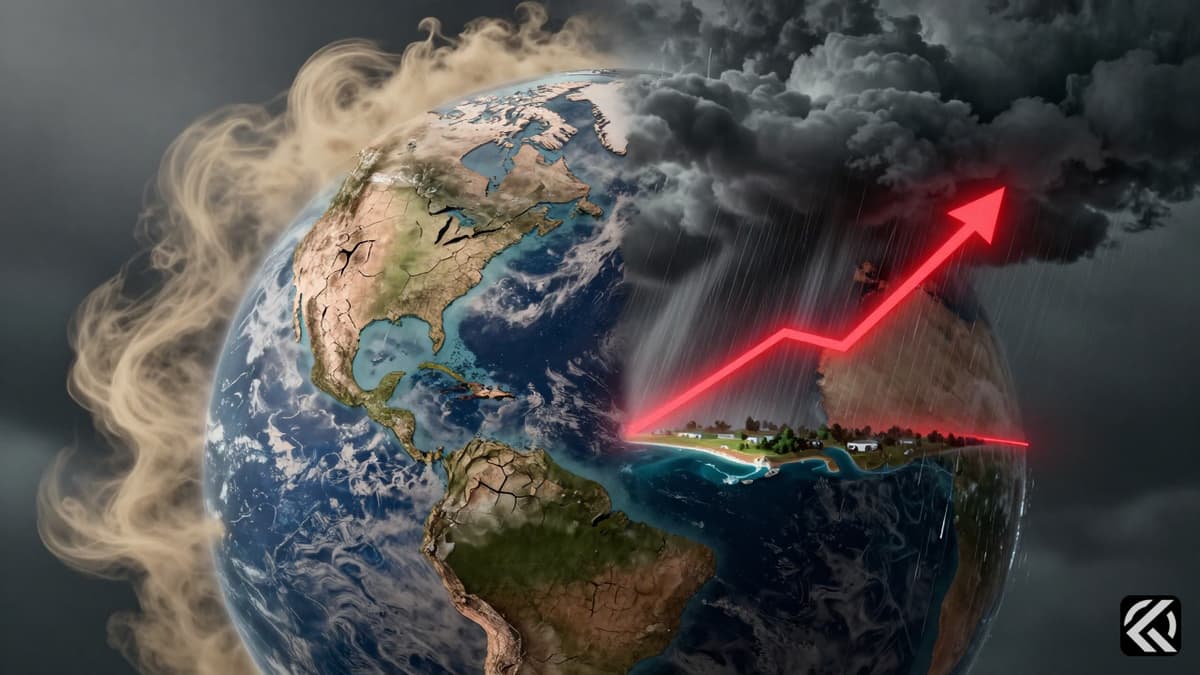
Odds of a historically strong Super El Niño are climbing, with NOAA predicting peak strength by winter. This climate phenomenon could intensify global warming effects and disrupt weather patterns worldwide.
El Niño is emerging in the Pacific Ocean faster than anticipated, with odds increasing that it could develop into a historically strong "Super" El Niño by the fall or winter of 2026. According to a recent update from the National Oceanic and Atmospheric Administration’s Climate Prediction Center, there is now a 2 in 3 chance that El Niño’s peak strength will be classified as strong or very strong.
This shift marks a significant departure from last month’s projections, which favored neutral conditions through June. The increase in confidence is attributed to a vast pool of warm water that has built up in the depths of the central and eastern equatorial Pacific Ocean in recent weeks. This water mass is expected to rise to the surface, kickstart the phenomenon, and sustain its strengthening phase through the summer and fall. The probability of the event lasting through the winter has also climbed to 96%, indicating a near certainty of its presence during the Northern Hemisphere’s colder months.
While forecasters are more certain about the formation of the event, substantial uncertainty remains regarding its ultimate peak strength. The definition of a Super El Niño requires water temperatures to rise more than 2 degrees Celsius above average, whereas weak conditions begin at just 0.5 degrees. Current average temperatures are just below the 0.5-degree threshold but are expected to climb above it by next month. For a Super El Niño to materialize between November and January, atmospheric changes must continue to sync with ocean temperatures, such as weakening equatorial winds coinciding with rising waters.
If these conditions align, some reliable computer models suggest this year’s potential Super El Niño could be the strongest on record. It would mark the first such event since the 2015-2016 episode, which remains the strongest in NOAA records dating back to 1950. Other historically significant Super El Niños occurred in 1997-1998, 1982-1983, and 1972-1973. Michelle L’Heureux, a scientist leading El Niño and La Niña forecasting at the Climate Prediction Center, noted that the likelihood of a stronger event depends heavily on the continued synchronization of atmospheric and oceanic changes this summer.
The implications of a stronger El Niño are profound, particularly regarding its interaction with human-caused climate change. The phenomenon acts as a wildcard that causes already rising global temperatures to spike even higher. NOAA stated on Monday that it is "very likely" 2026 will be one of the five-warmest years on record, a projection that does not yet fully account for the warming effects of an El Niño event. Consequently, the combination of a strong El Niño and baseline climate trends loads the dice toward 2026 or 2027 becoming Earth’s warmest year on record, significantly exacerbating global warming impacts.
The ripple effects of El Niño extend across the globe, influencing everything from drought patterns to hurricane activity. When the tropical Pacific Ocean warms sufficiently, it triggers shifts in wind patterns throughout the atmosphere, leading to diverse weather conditions worldwide. In some regions, droughts and heat waves flourish, fueling wildfire danger and straining water supplies. Conversely, other areas may be swamped by flooding rainfall.
For the United States, the impacts will be most pronounced during the winter. A warmer-than-average winter is typical from the northern US to western Canada and Alaska, although harsh cold can still occur intermittently. The southern tier of the US is often wetter and cooler, as a strengthened jet stream steers more storms over this region. However, the specific impacts do not always pan out exactly as expected based on historical precedents. The 2015-2016 Super El Niño caused serious drought in the Caribbean but failed to produce the historically wetter winter expected in Southern California.
Another critical area of impact is the Atlantic hurricane season. Stronger El Niños typically produce storm-killing conditions in the Caribbean and tropical Atlantic, resulting in fewer tropical storms and hurricanes in those areas. This effect is reversed in the central and eastern Pacific Ocean, where hurricane season is usually busier. This shift could lead to more tropical threats for Hawaii and the Southwest US, depending on the tracking of the storms.
While this El Niño is likely to be strong even if it falls short of "super" status, the increased probability of a historic event underscores the volatile nature of current climate dynamics. The built-up warm water in the Pacific serves as the fuel for this climate cycle, which occurs every two to seven years and lasts between nine and twelve months. As the event strengthens through the summer and fall, monitoring the synchronization of winds and ocean temperatures will be crucial for refining strength predictions.
The convergence of a potentially historic Super El Niño and baseline climate trends presents a significant challenge for global weather stability. With NOAA projecting a 2 in 3 chance of peak strength being strong or very strong, the potential for amplified heat waves and droughts in susceptible regions is high. The event is expected to further disrupt the Atlantic hurricane season while increasing tropical activity in the Pacific. Furthermore, the synergy between this natural climate cycle and human-induced climate change suggests that 2026 or 2027 may surpass all previous records for global temperature. Planners and meteorologists must prepare for the likelihood that current weather models may need to account for extreme anomalies previously associated only with the most severe Super El Niño events in modern history.
Jun 8, 2026 20:56 UTC
Netanyahu Halts Iran Fighting, Vows Future Force
Jun 8, 2026 14:20 UTC
Xi Jinping Returns to North Korea for Strategic Leverage
Jun 8, 2026 12:37 UTC
Iran Halts Strikes on Israel, Warns of Harsher Retaliation
Jun 8, 2026 06:24 UTC
Magnitude 7.8 Earthquake Shocks Philippines, Killing Four in General Santos
Jun 9, 2026 00:00 UTC
INDIA Bloc Leaders Gather in Delhi to Forge Strategic Unity


