Section
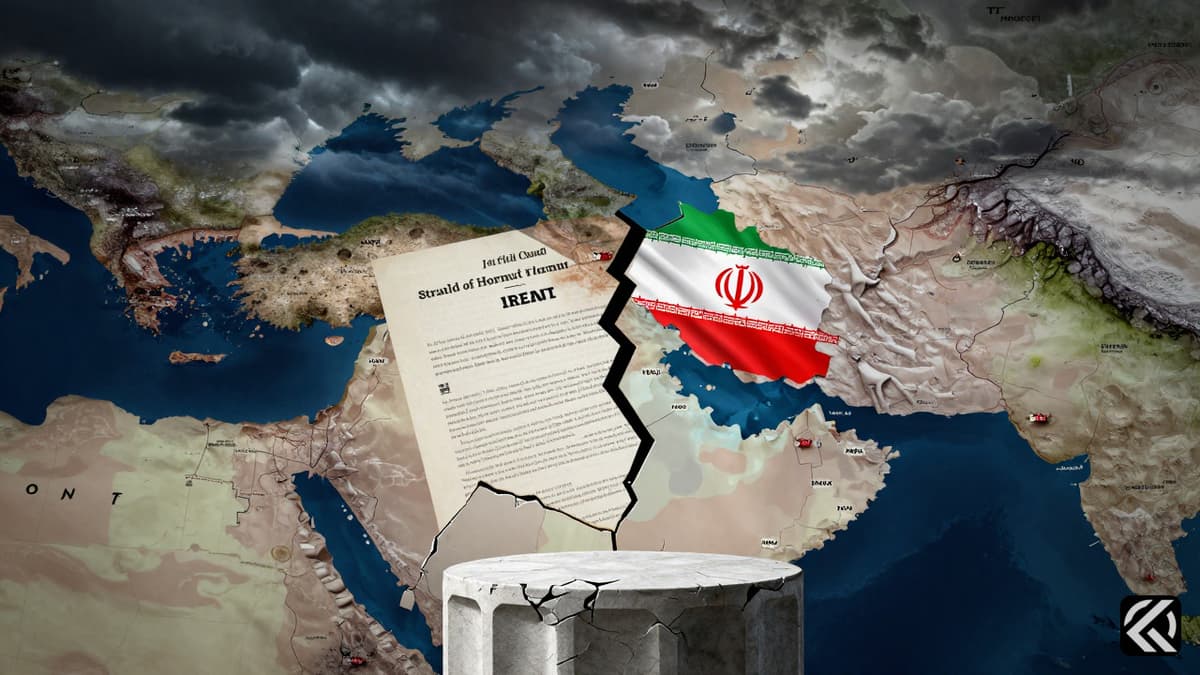
As the US brokered a peace without Israel, Netanyahu faces domestic backlash and strategic failure, with critics calling it his worst political disaster.
The headlines across Israel have turned sharply against Prime Minister Benjamin Netanyahu following a three-and-a-half-month conflict with Iran that has left the nation’s primary ally, the United States, negotiating a separate peace. As Israel’s foremost ally, the United States recently brokered an interim agreement regarding the conflict without any apparent input or consent from Israeli officials. This diplomatic maneuver has sparked intense criticism from within Israel, where opposition figures and former allies argue that Netanyahu’s push for war has resulted in his biggest failure since the October 7 attacks.
The outcome has been particularly jarring for Israeli politicians who spent years characterizing Iran as an existential threat. Now, the Iranian state remains standing and appears arguably more powerful than before, largely due to its control over the critical Strait of Hormuz. Meanwhile, Israel finds itself in a precarious position regarding its military operations in Lebanon. The ability to continue strikes against Hezbollah must now be weighed against the risk of undermining the broader diplomatic efforts, creating a complex obstacle for any potential Israel Lebanon ceasefire in the north.
The backlash against the Prime Minister is bipartisan, originating from both the center and the far right of the Israeli political spectrum. Gadi Eisenkot, a centrist military figure and a leading contender to challenge Netanyahu in upcoming elections, delivered a scathing critique of the current administration. Eisenkot described the situation as the "dismal outcome of a failed government," highlighting the vast disconnect between Netanyahu’s previous promises of "total victory" and the reality of the diplomatic settlement. He argued that the Prime Minister’s rhetoric was detached from the geopolitical outcomes that have actually transpired.
Similarly, members of Netanyahu’s own coalition government have expressed uncompromising dissatisfaction. National Security Minister Itamar Ben-Gvir and Finance Minister Bezalel Smotrich, both from the far right, criticized the agreement with an eye toward future electoral consequences. Ben-Gvir explicitly stated that Israel "must not act according to the agreements between Trump and [Mojtaba] Khamenei," referring to the deal between the US and Iranian leadership. Smotrich echoed this sentiment, dismissing the accord simply as a "bad deal." These internal fractures suggest that Netanyahu’s political base is crumbling as he attempts to distance himself from the conflict's end.
Netanyahu faces the difficult task of justifying an end to a war he famously championed. Knowing that ending the conflict is unpopular domestically, he has attempted to create distance between himself and what he termed "Trump’s decision" to end the hostilities. At the same time, he maintains that Israel was an equal partner in the military campaign. In a recent press conference, Netanyahu claimed success, asserting that Israel had "removed, for years to come, this danger hanging over us of the elimination of Israel’s population." He continued, "That is what we did. We saved the State of Israel from annihilation."
This rhetoric mirrors his claims after the June 2025 12-day war with Iran, where he declared a "historic victory" that would "abide for generations." However, experts and former officials view these claims with deep skepticism. Daniel Levy, a former Israeli government adviser, told Al Jazeera that the claims are "not credible." Levy explained that the prevailing assumption was that involving America would guarantee Iran's destruction or capitulation, a result that has not materialized.
"The assumption itself is infused with colonial racism and Israeli hubris," Levy noted. He pointed out that Israeli strategists had failed to consider that Iran could "outsmart, out-strategise, and gain leverage," a possibility that was notably absent from their original planning.
The conversation within Israel has largely shifted to Iran’s enhanced status as a regional and potential nuclear power. While US President Donald Trump has insisted Iran will never acquire nuclear weapons, the path for Iran to surrender enriched uranium stockpiles remains unclear. This uncertainty is compounded by the economic fallout from the effective closure of the Strait of Hormuz, which many Iranians perceive as a victory for their regime.
Ahron Bregman, a senior teaching fellow in War Studies at King’s College London, described the result as a "strategic catastrophe" inflicted by Netanyahu. "He initiated a war with Iran which aimed to topple its regime, but the regime is still standing and it is [more] radical than before," Bregman said. He predicted that Iran will rebuild its missile arsenal, further destabilizing the region.
Another critical issue is the future of Israeli operations in Lebanon. Iran has long insisted that halting attacks on Lebanon is a precondition for any war-ending agreement. Netanyahu claims the US-Iran pact does not restrict Israel’s freedom of movement in Lebanon, but analysts warn this could derail a ceasefire. This divergence has drawn reprimands from Washington. Trump emphasized his displeasure with Israel’s conduct, telling Netanyahu he must be "more responsible with respect to Lebanon."
Bregman warned that "Lebanon will be the spark, the trigger to forthcoming rounds of blows between Israel and Iran." He expressed doubt that any US president would join Israel in another war with Iran, noting that "geography is on Iran’s side." He referred to the Strait of Hormuz as an "economic nuclear bomb" that Iran can utilize without hesitation.
Alon Pinkas, a former Israeli ambassador, summarized the political reality for Netanyahu. "He now finds himself coming into an election carrying the disaster of October 7, failure in Lebanon, and a catastrophic war against Iran behind him," Pinkas said. He characterized Netanyahu as a leader who squandered a "opportunity of a lifetime," despite having favorable conditions including US support and military advantage. "For 30 years, he’s been talking about this and, when it came to it, he blew it," Pinkas concluded, adding that Netanyahu has ultimately changed the Middle East's political landscape in Iran’s favor.
The convergence of a failed war strategy and diplomatic isolation presents a severe challenge for Benjamin Netanyahu ahead of this year's elections. Critics argue that the Prime Minister has exhausted military and political capital without achieving regime change or regional security. As the US-Iran deal solidifies and tensions in Lebanon remain volatile, Netanyahu’s political survival will depend on his ability to reframe a widely perceived strategic defeat as a diplomatic success, a task compounded by the lack of Israeli input in the final accord.
Jun 17, 2026 00:58 UTC
US-Iran 60-Day Challenge: Peace Deal Leaves Nuclear Details Pending
Jun 16, 2026 22:51 UTC
G7 Summit: Modi Warns of Hormuz Risks, Trump Pushes Russian Sanctions
Jun 16, 2026 18:58 UTC
G7 Leaders Intensify Pressure on Russia with New Sanctions
Jun 16, 2026 18:36 UTC
Trump Claims US-Iran Agreement Opens Strait of Hormuz Without Tolls
Jun 17, 2026 06:48 UTC
US Proposal Brings Financial Hope to Iran Peace Talks