Section
Amidst the G7 gathering, global leaders confront critical maritime trade disruptions and intensified pressure on Russia, signaling a pivotal moment for international security and economic stability.
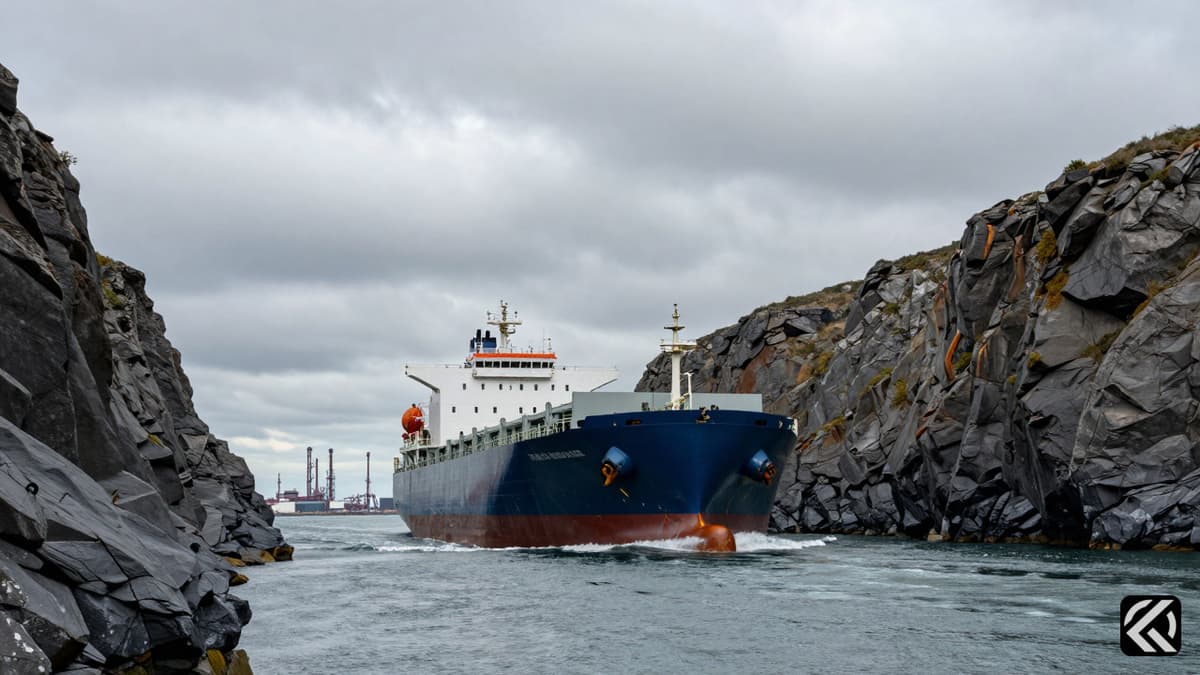
Prime Minister Narendra Modi expressed grave concern regarding the global economic fallout caused by disruptions in maritime trade through the Strait of Hormuz during the ongoing conflict in West Asia. Speaking at the G7 summit, Modi highlighted the human cost of the regional instability, noting that several Indian civilians had lost their lives amidst the turmoil.
Meanwhile, significant moves were made regarding European security. Canadian Prime Minister Mark Carney announced new sanctions targeting Russia’s shadow fleet, energy revenues, and defense-industrial sectors, alongside entities linked to disinformation. This announcement followed a meeting with Ukrainian President Volodymyr Zelenskyy at the summit in France.
President Donald Trump stated that the U.S. would soon reimpose sanctions against Russian oil, signaling a hardening stance by Washington. G7 leaders agreed to intensify pressure on Moscow to end the war in Ukraine, with Trump urging the Kremlin to "make a deal."
The June 15 to 17 gathering in Evian-les-Bains, situated on the shores of Lake Geneva, brings together the leaders of France, Britain, Canada, Germany, Italy, Japan, and the United States, alongside the European Union, to address these pressing global crises.
The first day of the G7 summit in Evian-les-Bains was marked by distinct but interlinked diplomatic priorities. On one front, the leadership from India underscored the tangible dangers posed by instability in West Asia. Prime Minister Modi’s remarks focused heavily on the Strait of Hormuz, a critical artery for global energy supplies. His concern was not merely economic but humanitarian, as he pointed out the loss of life among Indian civilians due to the conflict. This highlights the far-reaching impact of regional wars, where geopolitical conflicts directly threaten the safety of citizens and the stability of global supply chains. The disruption of trade routes through such chokepoints poses a significant risk to the broader international economy, affecting everything from fuel prices to industrial manufacturing.
On the other front of the summit, the focus remained squarely on the war in Ukraine. The consensus among G7 leaders was clear: Moscow must face intensified pressure to cease its invasion. This was operationalized through concrete policy announcements. President Donald Trump’s declaration that the U.S. would soon reimpose sanctions on Russian oil serves as a critical lever of economic coercion. By targeting the energy sector, the U.S. aims to strangle the financial lifelines that sustain the Russian war machine.
Complementing this, Canadian Prime Minister Mark Carney detailed new measures designed to dismantle Russia’s logistical and informational capabilities. The sanctions target the "shadow fleet," which has become instrumental in bypassing existing restrictions, as well as the defense-industrial complex and disinformation networks. This multi-pronged approach reflects a growing sophistication in how Western nations are countering Russian aggression. It is no longer just about diplomatic condemnation but about systematically dismantling the infrastructure that allows Moscow to continue its military operations.
The meeting between Carney and Ukrainian President Volodymyr Zelenskyy prior to the broader G7 discussions signaled a unified front among key Western allies. Their joint presence at the summit underscores the importance of coordinated action. The agreement to ratchet up pressure is not just rhetorical; it is backed by the threat of renewed economic isolation. Trump’s suggestion that Moscow should "make a deal" indicates a potential opening for negotiation, but only on terms dictated by the collective will of the G7. This approach balances the threat of increased hardship with the promise of a negotiated peace, a classic diplomatic strategy employed in high-stakes geopolitical conflicts.
The gathering in Evian-les-Bains is particularly significant given its location and composition. Brought together by France, the summit includes the leaders of the U.S., UK, Canada, Germany, Italy, Japan, and the EU. This coalition represents a substantial portion of the global economy. Their collective decision to prioritize both maritime security and anti-Russian pressure sends a strong message to adversaries. The juxtaposition of Modi’s concerns about West Asia and the Western focus on Ukraine illustrates the complex, multi-polar nature of current global challenges. Leaders are not dealing with a single crisis but with overlapping spheres of instability that require nuanced, coordinated responses.
The decisions made at the G7 summit in Evian-les-Bains are poised to have profound effects on global geopolitics and economic stability. The intensified pressure on Russia, coupled with the threat of reimposed oil sanctions, suggests a long-term strategy to weaken Moscow’s war capacity. This could lead to increased volatility in global energy markets, particularly if the Strait of Hormuz remains unstable. For countries dependent on these trade routes, the situation will remain precarious until diplomatic resolutions are reached. The unified stance of the G7 may force Moscow to reconsider its strategic options, potentially opening new avenues for negotiation, though the path to peace remains fraught with obstacles. The loss of life and economic disruption highlighted by PM Modi serves as a stark reminder of the human cost of these geopolitical struggles, urging the international community to pursue diplomatic solutions with urgency.
Jun 17, 2026 00:58 UTC
US-Iran 60-Day Challenge: Peace Deal Leaves Nuclear Details Pending
Jun 16, 2026 22:51 UTC
G7 Summit: Modi Warns of Hormuz Risks, Trump Pushes Russian Sanctions
Jun 16, 2026 18:58 UTC
G7 Leaders Intensify Pressure on Russia with New Sanctions
Jun 16, 2026 18:36 UTC
Trump Claims US-Iran Agreement Opens Strait of Hormuz Without Tolls
Jun 17, 2026 06:48 UTC
US Proposal Brings Financial Hope to Iran Peace Talks