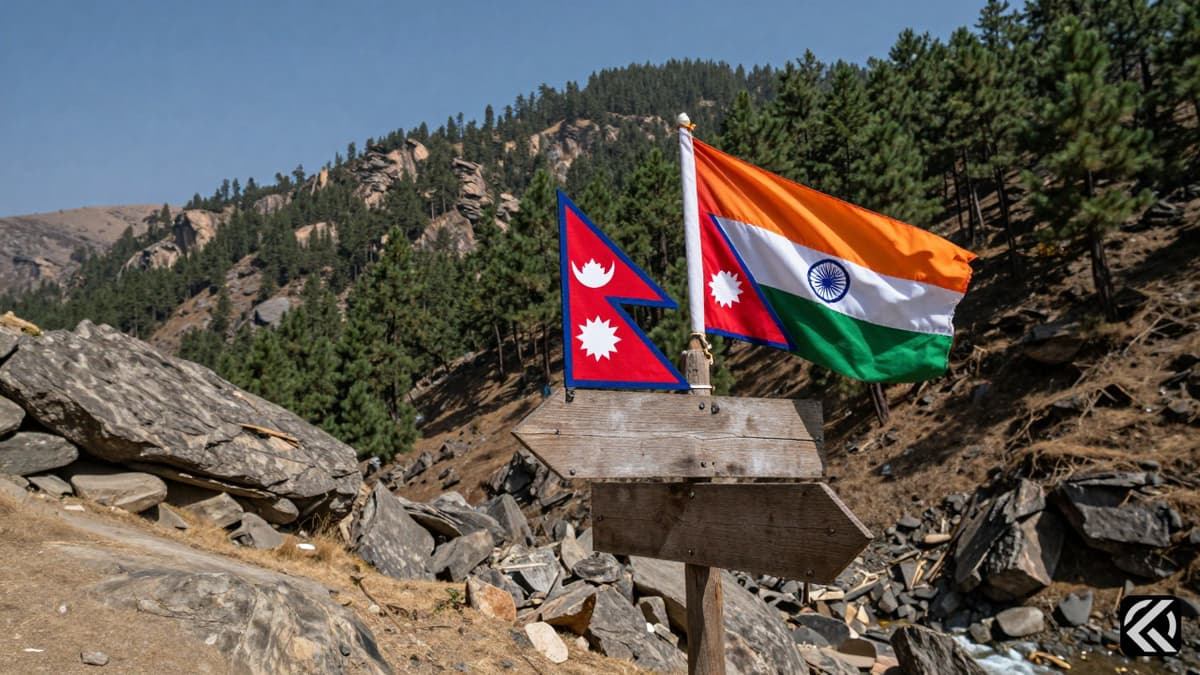
Nepal’s new leadership asserts it will resolve the border disagreement through diplomatic channels rather than seeking external mediation, marking a shift in foreign policy strategy.
Foreign Minister Shisir Khanal addressed the press in New Delhi on Sunday, June 7, 2026, clarifying that Nepal is not seeking mediation from any third parties regarding the ongoing territorial disagreements. Instead, Kathmandu remains focused on establishing its historical claim over the Kalapani-Lipulekh-Limpiyadhura trijunction through established diplomatic processes.
The clarification came in response to recent remarks by Prime Minister Balendra Shah, who stated that Nepal is in contact with the United Kingdom and China regarding the dispute. Khanal emphasized that the new government, led by Shah, does not wish to tie Nepal-India relations to "old baggage" or the distorted lens of twentieth-century geopolitics.
"The problems that existed when British India left the region still persist, so we believe Britain also has a role to play in this matter," Shah had previously noted, a statement that sparked significant debate and a rebuttal from India’s Ministry of External Affairs.
The ministry had firmly reiterated that India and Nepal have an established bilateral mechanism for discussing the border dispute, leaving no scope for third-party intervention. Khanal sought to align the current narrative with this understanding, stating, "Our position was not that we were asking for mediation." He clarified that the government’s interest in potential documents in UK libraries or museums was aimed at accessing historical evidence to support their claim, not at inviting external arbitration.
Tensions between the two neighbors had begun to simmer earlier in the year, specifically after India’s announcement on April 30, 2026, regarding the Kailash-Manasarovar yatra for 2026. The Ministry of External Affairs in India announced that the pilgrimage would be conducted in coordination with the Government of the People’s Republic of China through the Lipulek pass, which Nepal claims, and the Nathu La pass in Sikkim. The plan involved conducting the yatra in 50 batches of 50 pilgrims each.
Nepal immediately communicated its objection to both India and China. Responding to questions, Khanal confirmed that an official diplomatic note had been sent to both countries. "We have clearly said to both countries that the land (Kalapani-Lipulek-Limpiyadhura) belongs to us. That’s been our historical claim," he said.
The current political landscape in Nepal is significantly different from previous years. The rise of Prime Minister Balendra Shah followed a Gen-Z uprising in September 2025, which led to the overthrow of the government of Prime Minister K.P. Sharma Oli. This shift was triggered by Oli’s crackdown on the Nepali digital ecosystem, leading to widespread public unrest.
Khanal described the current administration as representing a "completely new political reality in Nepal." He noted that the Rastriya Swatantra Party (RSP), which defeated established players like the Nepali Congress and the Maoist parties, is driven by a historic mandate for uncompromising good governance, strict meritocracy, and direct accountability.
"We are absolutely unencumbered by the past," Khanal asserted, highlighting that the new generation of rulers refuses to view India through the hyper-sensitive lens of past geopolitical conflicts. Instead, the RSP aims to shift the vocabulary of Nepal-India relations toward "Development Diplomacy."
During Khanal’s visit, he held formal meetings with External Affairs Minister S. Jaishankar on June 6, 2026. A key outcome of these discussions was the official announcement of Peer-to-Peer (P2P) cross-border payment transactions under an MoU between Nepal Clearing House Limited (NCHL) and the National Payments Corporation of India (NPCI). This initiative is expected to enhance digital and financial connectivity between the two nations.
Khanal indicated that this visit has restarted the track of high-level visits, with more delegations expected from the Nepali side. Finance Minister Swarnim Wagle is anticipated to visit Delhi "very soon." However, Khanal declined to provide a timeline for a visit by Prime Minister Shah, noting that Shah is currently focused on the "domestic front" to deliver "early results" given the RSP’s strong electoral mandate from the May election.
Regarding the Eminent Persons Group (EPG) report, which was commissioned over a decade ago to guide bilateral relations, Khanal stated that the final report remains in a cupboard in Kathmandu. He clarified that the report was meant for the Prime Ministers of both countries and that its public release requires their mutual decision. "I have no authority to make that public, accept, or do anything," he explained, underscoring the limits of his mandate on this specific document.
The clarification by Foreign Minister Khanal signals a strategic pivot by Prime Minister Balendra Shah’s administration to de-escalate tensions while firmly asserting territorial claims. By rejecting third-party mediation, Nepal aims to preserve the bilateral framework that India favors, while simultaneously leveraging its new political mandate to prioritize economic integration and digital connectivity. The operationalization of P2P payments and the anticipated high-level visits suggest a near-term focus on stabilizing relations through tangible economic benefits rather than geopolitical posturing. However, the underlying territorial dispute over the Nepal India border dispute regions remains unresolved. If historical documentation from UK archives fails to yield new diplomatic leverage, future interactions will likely hinge on Shah’s ability to balance domestic political expectations with pragmatic regional diplomacy. The success of this "development-first" approach will determine whether the new political reality in Nepal can sustain long-term stability with India amidst persistent historical grievances.
Jun 8, 2026 22:55 UTC
Netanyahu Vows Forceful Response to Future Iran Attacks
Join 50,000+ readers getting the global briefing every morning.
No spam. Unsubscribe anytime.
Jun 8, 2026 22:55 UTC
Netanyahu Vows Forceful Response to Future Iran Attacks
Jun 8, 2026 20:56 UTC
Netanyahu Halts Iran Fighting, Vows Future Force
Jun 8, 2026 20:54 UTC
Justice Department Moves to Strip Citizenship from 17 Individuals
Jun 8, 2026 18:37 UTC
Trump Denied War Pledge Despite Clear Campaign Records


