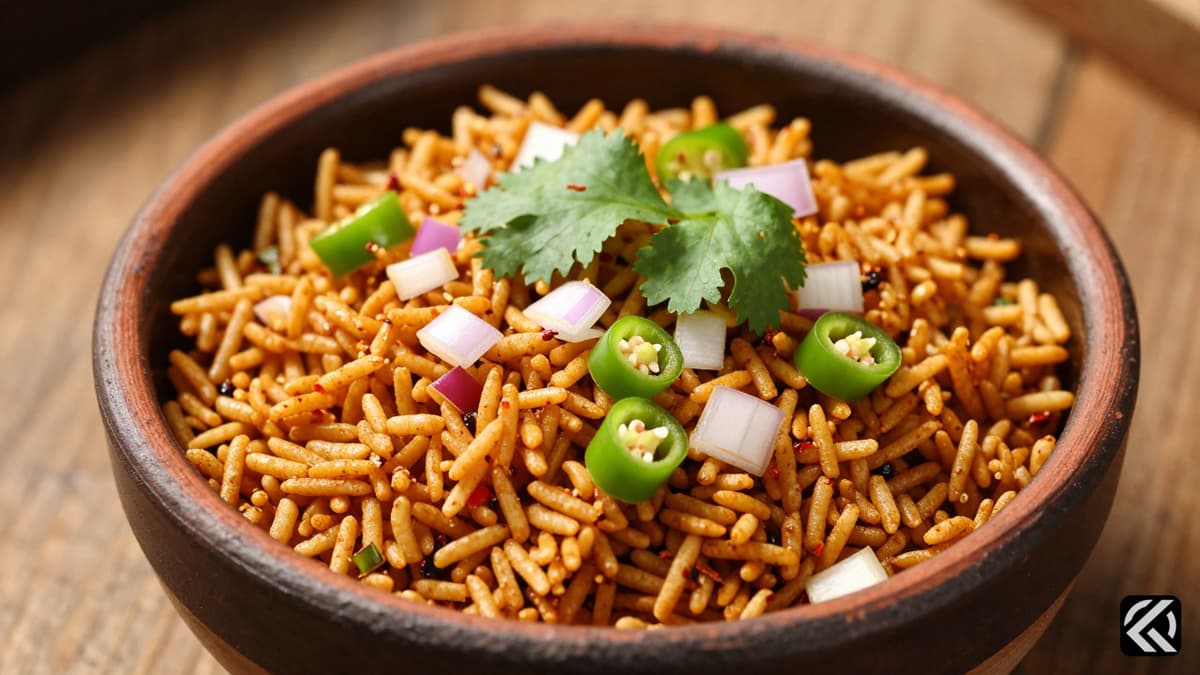
As West Bengal's second election phase unfolds, a dispute over spicy puffed rice becomes the center of political attention between the Prime Minister and Chief Minister.
As campaigning for the second phase of the West Bengal elections gained momentum on Thursday, April 23, 2026, a unique political confrontation emerged involving a popular local snack. Prime Minister Narendra Modi and Chief Minister Mamata Banerjee engaged in a public sparring match centered entirely on jhaal muri, the state’s iconic spicy puffed rice. This incident has quickly become a significant talking point, illustrating how everyday cultural items are leveraged in high-stakes political narratives.
The origin of this political squabble lies in a seemingly mundane event that occurred four days prior to the current date. Prime Minister Narendra Modi, while taking a necessary break from an exhausting schedule of back-to-back public meetings, chose to enjoy jhaal muri from a local shop in Jhargram. This simple act of taking a break to sample regional cuisine was not merely a personal moment of respite; it rapidly transformed into a focal point of political discourse. The choice of snack, coupled with the location, resonated deeply with the local electorate, turning a dietary preference into a symbolic gesture of connection with the masses.
In the competitive arena of the West Bengal polls, such gestures are rarely isolated. They are interpreted through the lens of political strategy and public sentiment. The Prime Minister’s appreciation for jhaal muri was met with immediate attention, serving as both a morale booster for his supporters and a point of contention for the opposition. Chief Minister Mamata Banerjee, a figure who has long used cultural symbolism as a pillar of her political identity, found herself in a positional spar with the Prime Minister. The discourse is not just about the food itself but what the consumption of jhaal muri represents in the context of the election. It reflects the broader struggle for cultural dominance and the assertion of local identity against national political narratives.
The timing of this sparring is critical. With the second phase of voting approaching, every move by a major leader is scrutinized. The mention of jhaal muri serves as a reminder of the deep-rooted traditions of West Bengal. By engaging in this spar, both leaders are attempting to define the narrative of the election. For Modi, it may signal accessibility and an embrace of local culture. For Banerjee, it is an opportunity to defend the state’s unique identity and critique any perceived insincerity or opportunism. The public’s reaction to this exchange will likely influence voter sentiment, as it touches upon emotions and pride associated with regional heritage.
The ongoing dispute over jhaal muri between PM Narendra Modi and CM Mamata Banerjee highlights the intricate relationship between culture and politics in West Bengal. As the second phase of the elections proceeds, this culinary clash will likely persist as a metaphor for the deeper ideological divide. The outcome of the polls may well depend on how effectively each leader can translate such cultural moments into tangible political capital, with the snack serving as a recurring motif in their respective campaign trails.
Jun 8, 2026 12:37 UTC
Iran Halts Strikes on Israel, Warns of Harsher Retaliation
Join 50,000+ readers getting the global briefing every morning.
No spam. Unsubscribe anytime.
Jun 8, 2026 12:16 UTC
Yahoo Clarifies Data Usage and User Consent Rights
Jun 8, 2026 10:44 UTC
INDIA Bloc Leaders Gather in Delhi Amidst Internal Tensions
Jun 8, 2026 08:48 UTC
NEET-UG 2026 Paper Setters Placed Under Strict Isolation
Jun 8, 2026 08:07 UTC
Five Injured in Penn Station Stabbing Before Trump NBA Finals Visit