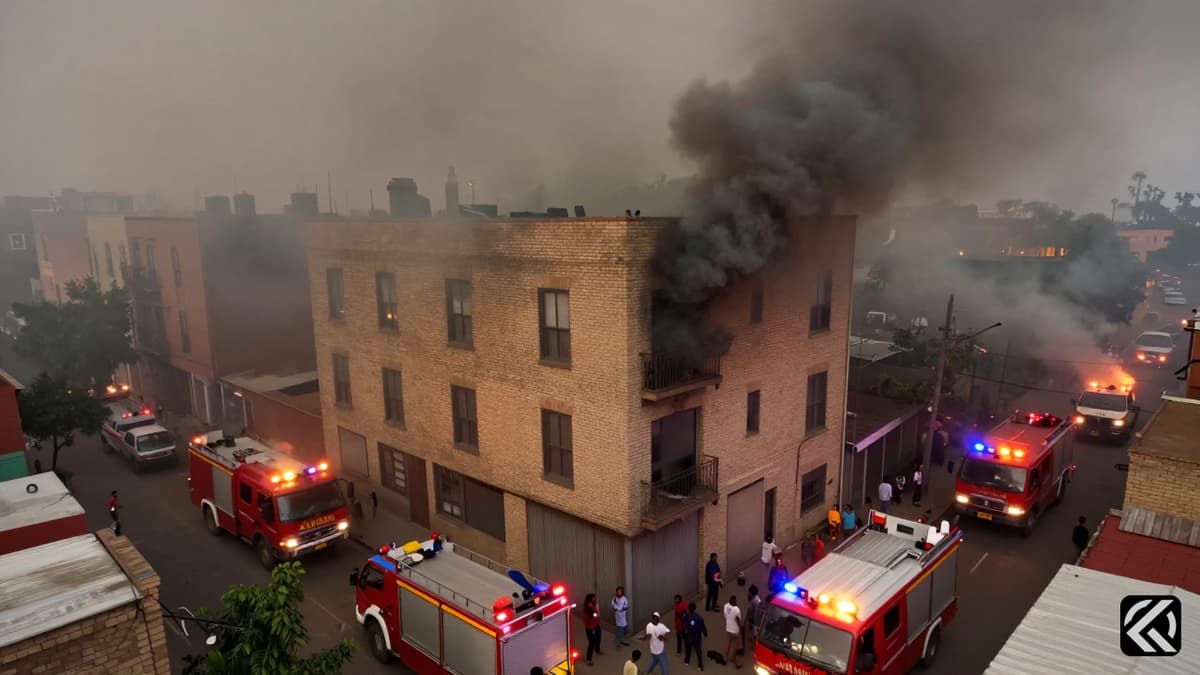
Desperate locals in Hauz Rani used mattresses to break the fall of guests fleeing a deadly blaze, as trapped victims jumped from burning windows.
As a five-storey bed-and-breakfast hotel in Delhi’s Hauz Rani area caught fire on Wednesday morning, local residents took matters into their own hands to save lives. The blaze erupted around 8:30 a.m., trapping guests inside a structure with only one entry point and no emergency staircase, prompting a desperate ground-level rescue effort before official services arrived.
The rapid spread of the fire across three floors created a scene of panic and dense smoke. With traditional escape routes blocked, trapped individuals were forced to jump through windows to escape the flames. However, the building's design, with some rooms lacking windows or having jammed shut, unbreakable glass, made the situation even more perilous for those trying to flee the inferno.
Riyazuddin, a 61-year-old shop owner opposite the building, recognized the immediate danger and acted quickly. He rushed to his nearby shed and pulled out approximately 15 mattresses, spreading them on the ground below the hotel’s windows to cushion the fall of those escaping the fire.
Moments later, the building’s occupants began jumping. “One man who rolled over from the second floor broke his leg. Everything was extremely tense,” Riyazuddin recalled, describing the chaos as people leap from the burning structure.
Mohammed Israr Khan, 40, received a call from his brother around 8:40 a.m. and immediately rushed to the scene. Along with other residents including Wasim, Amir, Shahrukh, Afzal, Hazi, and Anish, Khan helped pull victims from the windows and carry them to waiting ambulances. The proximity of the hotel to Max Hospital meant that many occupants were foreign nationals on medical visas or patients’ families, many of whom were already physically weak due to their conditions.
The interior of the building was described by Khan as a scene of absolute horror. “When we entered the building with police and rescue teams, we could not see anything. There was only smoke, screams and wailing from every floor,” he said. He noted that many were trapped in the basement and that some bodies were still burning. “We used our bare hands. Time is critical in such situations,” Khan emphasized.
Khan attempted to save as many lives as possible, performing CPR on eight individuals. The trauma of the rescue took a physical toll on him; he admitted to vomiting multiple times due to the “deadly sight.” Tragically, he noted that five people brought out were already deceased. In a heartbreaking moment during the rescue, a victim’s phone rang. It was the mother of one of the trapped guests asking about her child. Khan, unable to deliver such devastating news, handed the phone to the police rather than be the bearer of the bad news.
Wasim Raja, another resident, discovered two unconscious women inside a bathroom where they had locked themselves to escape the fire. “I carried them out on a mattress by myself. Most people staying there were already weak and had come to Delhi for treatment,” he said.
The Delhi hotel fire has left deep psychological scars on the community. Wasim Raja, a local pharmacist whose shop has been in the narrow lane for over 27 years, expressed uncertainty about the fate of some customers. “A mother and her child bought medicines from me yesterday. They were supposed to travel to Agra today. I don’t know if they made it,” he said.
Rescuers and volunteers faced significant challenges due to the building’s structural limitations. The single entry-exit point and lack of accessible windows hindered operations, causing some police personnel and volunteers to collapse after inhaling excessive smoke.
Hours after the flames were extinguished, panic continued to ripple through the neighborhood. The area is known for its narrow lanes, crisscrossed with dangling electrical wires and packed with multi-storey hotels used by patients and their families. Many guests from nearby lodges were seen checking out with their luggage, fearing that their accommodations might share the same fatal flaws-single staircases and a lack of fire safety equipment.
The incident also triggered urgent reactions from people far away. One man flew in from Lucknow upon hearing reports of the fire. “My father is staying here for treatment and cannot speak. I was supposed to come tomorrow, but I took the first flight as soon as I heard the news with name of the hotel because it sounded similar to the one where my father is staying,” he revealed, highlighting the anxiety felt by families relying on these local accommodations.
The June 3 2026 tragedy has exposed critical vulnerabilities in the city’s hospitality infrastructure, particularly in areas with high volumes of medical tourists. The reliance on informal, resident-led rescue efforts underscores the gaps in immediate emergency response capabilities in densely packed urban zones.
The Delhi hotel fire has revealed a systemic lack of fire safety measures in several multi-storey buildings in the Hauz Rani vicinity. The absence of emergency staircases and multiple exit points was a fatal flaw that turned a manageable incident into a life-threatening crisis. With many guests being foreign nationals on medical visas, the city faces reputational risks and potential legal repercussions for failing to ensure basic safety standards in tourist accommodations.
Looking ahead, this incident is likely to trigger stringent inspections by Delhi’s fire and municipal authorities across the Hauz Rani and Max Hospital vicinity. Hotel owners may be forced to invest in sprinkler systems, multiple exits, and smoke detection technology to comply with updated regulations. Furthermore, patients and their families may begin demanding verified safety certificates before booking stays in these narrow-lane hotels. The long-term impact could be a consolidation of the hospitality market, with smaller, non-compliant lodges closing down in favor of larger, regulated establishments that meet modern safety codes. This shift, while potentially disruptive to local livelihoods, is essential to prevent future tragedies and restore confidence among domestic and international visitors.
Jun 8, 2026 22:55 UTC
Netanyahu Vows Forceful Response to Future Iran Attacks
Join 50,000+ readers getting the global briefing every morning.
No spam. Unsubscribe anytime.
Jun 8, 2026 22:55 UTC
Netanyahu Vows Forceful Response to Future Iran Attacks
Jun 8, 2026 20:56 UTC
Netanyahu Halts Iran Fighting, Vows Future Force
Jun 8, 2026 20:54 UTC
Justice Department Moves to Strip Citizenship from 17 Individuals
Jun 8, 2026 18:37 UTC
Trump Denied War Pledge Despite Clear Campaign Records


