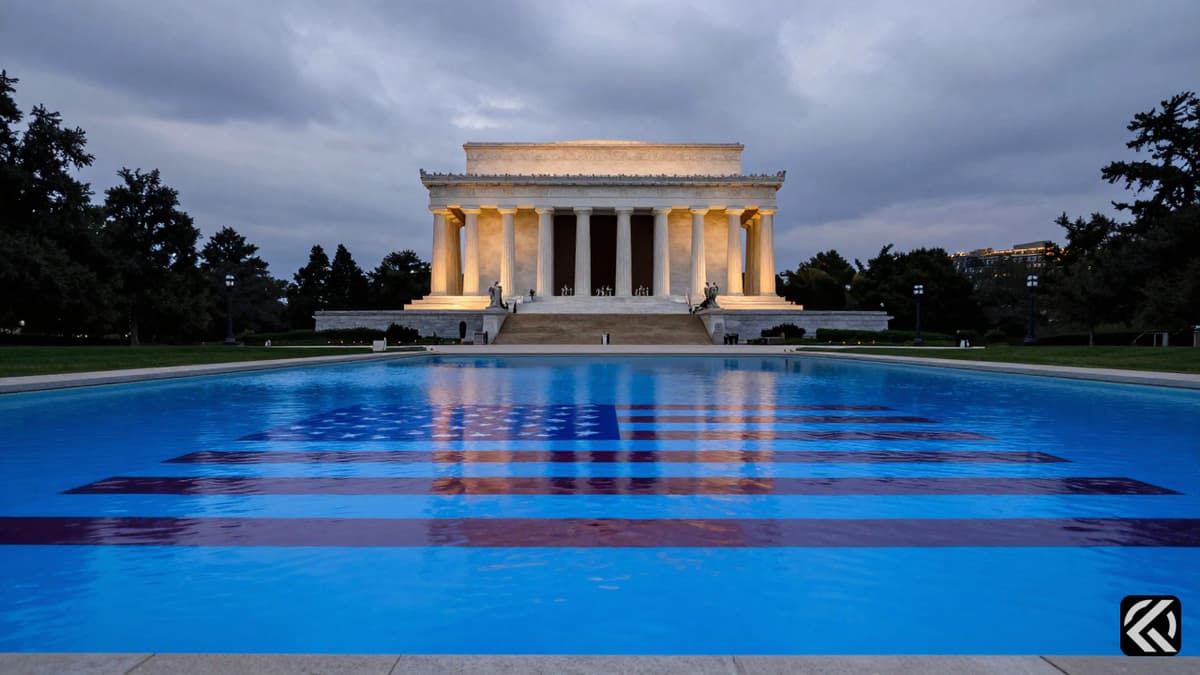
A federal lawsuit seeks to stop the Trump administration’s controversial decision to paint the Lincoln Memorial Reflecting Pool blue, sparking a battle over historic preservation and legal procedure.
In a legal move to preserve historic aesthetics, The Cultural Landscape Foundation has filed a federal lawsuit seeking an immediate injunction against the Trump administration’s decision to repaint the Lincoln Memorial Reflecting Pool. The nonprofit organization argues that the project, which transforms the pool’s traditional gray basin into a vivid blue, violates established federal statutes. The complaint, lodged in Washington, DC, on Monday, asserts that the Interior Department failed to follow required legal protocols before proceeding with the work.
The foundation’s legal team contends that the department neglected to complete a mandatory consultation process. This process includes notifying the public of the plans and securing input from other federal agencies prior to commencement. Furthermore, the lawsuit claims the project ignores a federal mandate requiring an assessment of the paint job’s environmental impact. The group describes the failure to adhere to these procedures as causing "serious and irreparable harm" to both the plaintiffs and the general public. Without immediate judicial intervention, the lawyers warned, defendants will deface an iconic American landmark in open violation of Congressionally mandated procedures.
Charles A. Birnbaum, the foundation’s president and CEO and a plaintiff in the case, emphasized the architectural significance of the site. He stated that the Reflecting Pool’s design is fundamental to the solemn and hallowed visual and spatial connection between the Washington Monument and the Lincoln Memorial. Birnbaum criticized the new aesthetic, noting that a blue-tinted basin is more appropriate for a resort or theme park than a national memorial. The case has been assigned to Judge Carl Nichols, a Trump appointee who has previously handled challenges regarding the president’s efforts to restructure the federal workforce.
Judge Nichols has requested that both parties submit arguments by Tuesday evening regarding whether an emergency hearing is necessary to halt the work. The lawsuit is the latest in a series of challenges against Trump’s efforts to remake cultural and historic institutions in the capital. Other groups have similarly asked federal courts to stop work on a massive new White House ballroom, a Paris-style arch, and the painting of a nearby federal office building.
The painting project has been a personal priority for the president. Last week, Trump drove across the drained Reflecting Pool to survey the landmark, praising its new "American flag blue" coating. He claimed the site is "much more beautiful than it was new" because it finally possesses the color people desired. An Interior Department spokesperson responded to the lawsuit by stating that the new blue color will enhance the visitor experience by making the pool reflect the grand Lincoln Memorial and Washington Monument. The department also highlighted other maintenance changes aimed at preserving water quality for the upcoming US 250th anniversary.
The intersection of presidential initiative and historic preservation has sparked intense legal scrutiny, with the Cultural Landscape Foundation leading the charge against what it views as unauthorized modifications. The lawsuit’s core argument rests on procedural compliance rather than just aesthetic preference. By alleging violations of federal consultation and environmental assessment laws, the foundation aims to prove that the Lincoln Memorial Reflecting Pool’s alteration was executed illegally. This legal strategy mirrors previous efforts to halt other Trump-era projects, suggesting a pattern of administrative overreach that plaintiffs believe must be checked by the judiciary.
Judge Nichols’ upcoming decision will be pivotal. If he grants an emergency order, the painting project would cease immediately, potentially setting a precedent for how federal agencies handle aesthetic changes to national monuments. The Interior Department’s defense focuses on visitor experience and maintenance, arguing that the changes are beneficial and compliant with broader preservation goals for the 250th anniversary. However, the foundation’s claim that the blue basin detracts from the solemnity of the site introduces a subjective element into a legal dispute grounded in statutory interpretation. The tension between the president’s desire for symbolic change and the legal requirements for public consultation and environmental review remains unresolved. As the court prepares to hear arguments, the physical state of the Reflecting Pool hangs in the balance. The outcome could influence future administrations’ ability to alter historic sites without facing significant legal hurdles. The case underscores the ongoing struggle between executive power and the statutory protections afforded to national landmarks.
Jun 8, 2026 20:56 UTC
Netanyahu Halts Iran Fighting, Vows Future Force
Jun 8, 2026 14:20 UTC
Xi Jinping Returns to North Korea for Strategic Leverage
Jun 8, 2026 12:37 UTC
Iran Halts Strikes on Israel, Warns of Harsher Retaliation
Jun 8, 2026 06:24 UTC
Magnitude 7.8 Earthquake Shocks Philippines, Killing Four in General Santos
Jun 9, 2026 00:00 UTC
INDIA Bloc Leaders Gather in Delhi to Forge Strategic Unity


