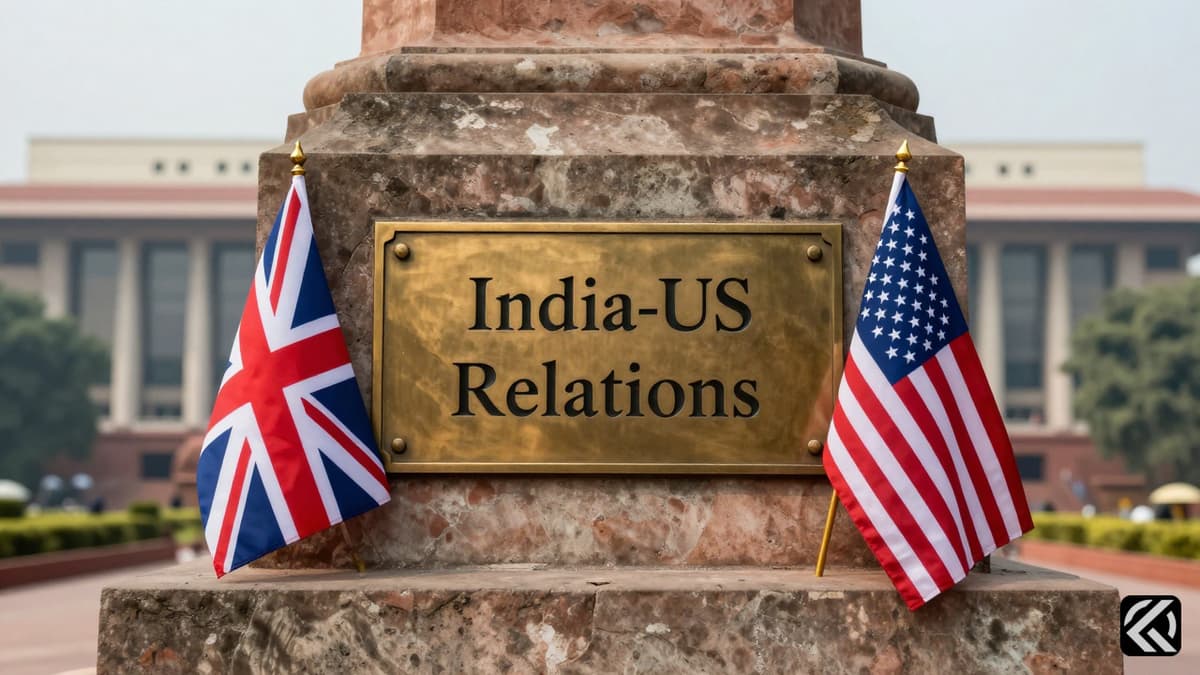
Mallikarjun Kharge confronts the government's silence regarding Donald Trump's controversial remarks, questioning if PM Narendra Modi fears addressing the insult to 140 crore Indians.
Mallikarjun Kharge has initiated a pointed political critique directed at the central government, specifically targeting Prime Minister Narendra Modi for his lack of public response to controversial statements made by US President Donald Trump. The controversy stems from a post shared by Trump on his platform, Truth Social, which utilized derogatory language to describe India and China in the context of immigration policies. Kharge, serving as the President of the Congress party, took to the social media platform X to articulate his concerns, framing the government's inaction as a significant failure of diplomatic representation and national pride.
The trigger for this diplomatic row was a reshared post by the US President that referred to India and China as part of a broader critique on immigration. The statement, which claimed that bringing families in from these nations was problematic, used the term "hellhole" to describe the origins of some immigrants. It further alleged systemic bias in US employment and immigration mechanisms, suggesting that internal structures were dominated by individuals from these countries. The post also argued that the US had shifted from a "melting pot" to a "cash in pot," implying a loss of loyalty and integration among newer immigrant classes compared to earlier European waves.
In response to the growing diplomatic furor, the Indian External Affairs Ministry issued a brief statement during a media briefing. Spokesperson Randhir Jaiswal acknowledged the reports, stating, "We have seen some reports. That’s where I leave it." This minimal response sparked immediate criticism from political opponents who viewed it as insufficient given the severity of the language used against the country.
Kharge addressed this silence directly in his post, asking, "Narendra Modi ji, what are you scared off?" He highlighted the stark contrast between the government's passive stance and the significant contributions Indians make to the United States. He questioned what was preventing the government from raising the issue at the highest levels of the American administration, emphasizing that Indians have played a vital role in America’s success. By citing the external affairs ministry’s dismissive comment, Kharge accused the center of misusing agencies and failing to protect the dignity of its citizens abroad.
The Congress leader did not limit his criticism to this single incident but broadened the scope to cover broader India-US relations. He alleged that at several points, the government had failed to protect India’s interests, linking the current diplomatic silence to a pattern of perceived concessions. Kharge pointed to trade tensions, tariff disputes, and earlier diplomatic exchanges as evidence of this alleged failure. He specifically mentioned the "skewed Indo-US Trade deal framework" and previous claims by Trump regarding mediation during Operation Sindoor.
Furthermore, Kharge criticized the government's reaction to Trump's past remarks, such as when the US President claimed "BRICS is dead." He described instances where the Prime Minister was seen "grinning" in front of Trump despite such statements. Kharge argued that these were not isolated incidents but part of a larger strategy where national interests were being compromised. He noted the US levying of 50% tariffs on India as another example of economic pressure that the government had allegedly accepted without sufficient pushback.
The core of Kharge’s argument rests on the moral and diplomatic obligation of the Indian government to protect the sentiments of its citizens, especially those in the diaspora. He urged the Prime Minister to find time to address what he termed the "intimidation and indignation of 140 crore Indians." This appeal was made despite the ongoing election campaign, suggesting that Kharge believed national dignity should transcend political timelines.
The controversy highlights the complex nature of India-US relations, balancing strategic partnerships with the need to respect national sovereignty and the sentiments of the diaspora. The US President’s remarks, while framed within an immigration debate, used language that many in India found deeply offensive and stereotypical. The response from the Indian government, characterized by brevity and minimal elaboration, has been interpreted by critics as a lack of assertiveness.
Kharge’s intervention places the issue firmly in the domestic political arena, forcing the ruling party to defend its foreign policy approach. By linking the diplomatic incident to trade deals and previous administration actions, he aims to construct a narrative of consistent diplomatic weakness under the current leadership. The Congress party’s stance suggests that they view the handling of such incidents as a critical measure of the government’s commitment to national interests.
As the story develops, the focus remains on whether the government will issue a more robust official response or maintain its current position. The incident underscores the challenges of navigating diplomatic relations with a powerful ally who frequently uses provocative rhetoric on social media platforms. For the Indian government, the challenge lies in addressing the offense without escalating tensions or disrupting the broader strategic partnership.
The incident involving Donald Trump’s remarks and the subsequent political fallout in India illustrates the delicate balance required in international diplomacy. If the government continues to prioritize strategic ties over public sentiment, it may face increased domestic criticism regarding national dignity. Conversely, a harsher diplomatic response could risk trade negotiations and strategic alignments. The long-term impact will likely depend on how effectively the government can address these controversies while maintaining a stable bilateral relationship, setting a precedent for handling future diplomatic slights.
Jun 8, 2026 02:17 UTC
Magnitude 7.8 Quake Shakes Philippines, Urging Immediate Evacuations
Join 50,000+ readers getting the global briefing every morning.
No spam. Unsubscribe anytime.
Jun 8, 2026 02:17 UTC
Magnitude 7.8 Quake Shakes Philippines, Urging Immediate Evacuations
Jun 8, 2026 00:51 UTC
Trump Claims Iran Nuclear Deal Imminent Despite Diplomatic Fractures
Jun 8, 2026 00:47 UTC
Iran Fires Missiles at Israel After Beirut Strike
Jun 7, 2026 22:38 UTC
Congress Party Claims Unity for INDIA Bloc Delhi Meeting


