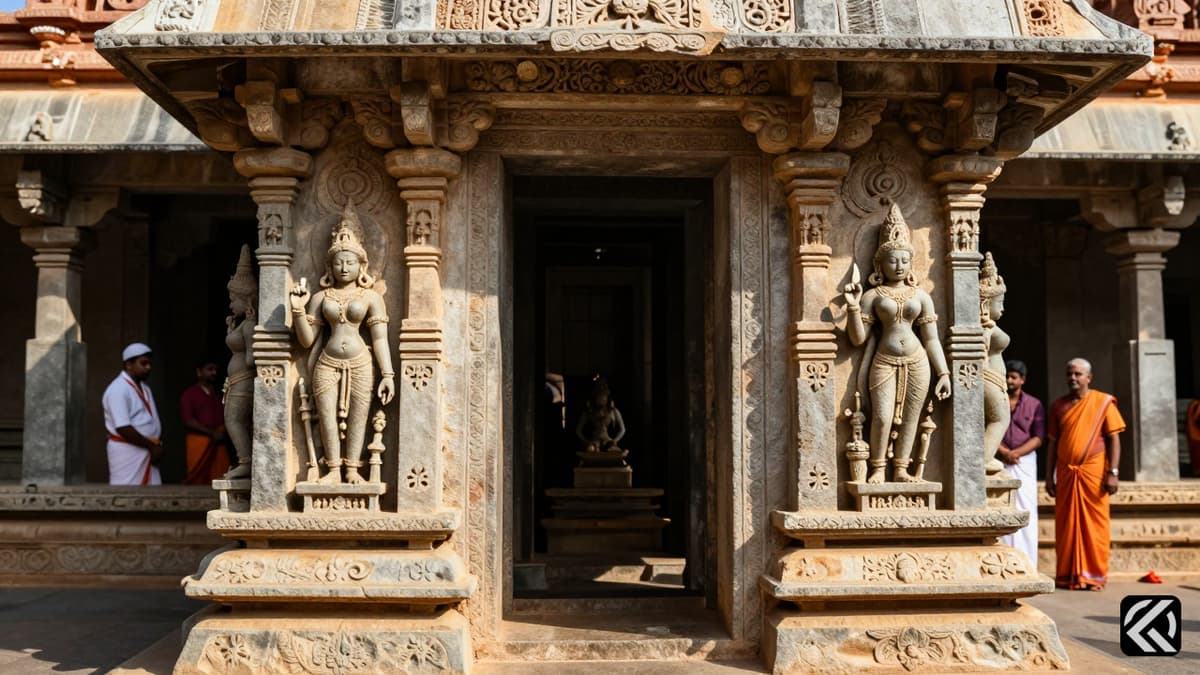
Justice Nagarathna declared the menstrual exclusion at Sabarimala temple as a form of untouchability that cannot be practiced, challenging the 2018 judgment's core premise.
In a significant legal observation made on Tuesday, April 7, 2026, the Supreme Court of India confronted the historical ban on women entering the Sabarimala temple during their menstruation. Justice B.V. Nagarathna firmly stated that treating women as 'untouchables' selectively for three days a month is impermissible. This remark directly addressed the ongoing legal and social debate surrounding the shrine's entry rules, which were previously challenged in a landmark 2018 decision.
The proceedings occurred against the backdrop of submissions referencing the erstwhile prohibition that barred women between menarche and menopause from the Kerala shrine. In that 2018 judgment, the Supreme Court had lifted the centuries-old ban, declaring the restriction a reduction of freedom of religion to a "dead letter" and a smear on individual dignity. Justice Nagarathna's comments reinforced the gravity of the issue, arguing that the practice of untouchability cannot be valid even if limited to specific days. She emphasized that Article 17, which abolishes untouchability, applies universally and cannot be suspended for three days, nor should the stigma vanish on the fourth day.
During the hearing, Solicitor General Tushar Mehta, representing the Union government, voiced strong reservations against the 2018 judgment. The 2018 ruling had included a separate opinion by Justice D.Y. Chandrachud, who termed the social exclusion of women based on menstrual status a "form of untouchability." Justice Chandrachud argued that notions of purity and pollution stigmatize individuals and that excluding women is derogatory to equal citizenship. He had earlier noted that treating women as children of a lesser God due to biological attributes blinks at the Constitution. Furthermore, he dismissed the argument that the prohibition was required to maintain the celibacy of the deity, stating that such a claim imposes a man's celibacy burden onto women, denying them access to spaces where they are equally entitled.
In response, Mr. Mehta argued that India has a unique cultural tradition of treating women with high respect, noting that the nation is the only culture to bow down to women deities. He submitted that recent judicial accusations of patriarchy do not align with historical realities where the President and Supreme Court judges bow before lady deities. Mr. Mehta contended that the prohibition was not merely for three or four days but applied to a specific age group, making it sui generis or unique to the Sabarimala shrine. He pointed out that other Lord Ayyappa temples globally remain accessible to women of all ages, suggesting the practice is specific to this particular institution rather than a universal rule for women's entry into religious spaces.
Mr. Mehta further elaborated on the concept of denominational practices, stating that fundamental rights cannot be treated as islands. He argued that while human dignity and individual autonomy are crucial, they must be balanced with the faith and tenets of a specific religion. The Centre's position, as articulated in the submissions, was that the decision of a particular religious denomination to regulate the entry of a section of society to a specific religious institution must be protected as a denominational right. The legal team suggested that courts could intervene to strike a balance between civil rights and religious denominational rights if a blanket ban was imposed on entry against an entire class of individuals in all religious institutions, but cautioned against a blanket application that might ignore unique religious tenets.
The debate highlighted a sharp divergence between the view that the ban is a violation of constitutional morality and the view that it is a protected religious practice essential to the shrine's identity. Justice Nagarathna's remarks as a woman underscored the practical reality that no legal provision should allow for selective untouchability. The Court's observation on Tuesday served as a direct challenge to the Centre's stance that the prohibition is a unique tradition that requires protection rather than correction. The intersection of religious freedom and fundamental rights remains a complex legal landscape where the Supreme Court continues to navigate the boundaries of tradition and equality.
The ongoing legal discourse surrounding the Sabarimala temple highlights a persistent tension between constitutional guarantees of equality and the protection of religious denominational rights. If the Supreme Court continues to view the menstrual exclusion as a direct violation of Article 17, future rulings may increasingly prioritize individual dignity over specific religious tenets, potentially leading to a standardized interpretation of entry rights across all Hindu shrines. However, the Centre's emphasis on the unique nature of the shrine suggests a continued argument for judicial deference to specific religious traditions. The balance struck in upcoming decisions could determine whether the exclusion of menstruating women will be viewed as a protected cultural practice or an unconstitutional form of discrimination, fundamentally shaping the trajectory of religious freedom litigation in India for years to come.
Jun 8, 2026 00:51 UTC
Trump Claims Iran Nuclear Deal Imminent Despite Diplomatic Fractures
Jun 8, 2026 00:47 UTC
Iran Fires Missiles at Israel After Beirut Strike
Jun 7, 2026 22:00 UTC
US, Iran Peace Hops Fade 100 Days Into War
Jun 7, 2026 20:57 UTC
Iran Strikes Israel: IRGC Promises Week of Continuous Offensive
Jun 8, 2026 02:28 UTC
Trump Walks Out of Meet the Press After Rejecting Evidence Demands


