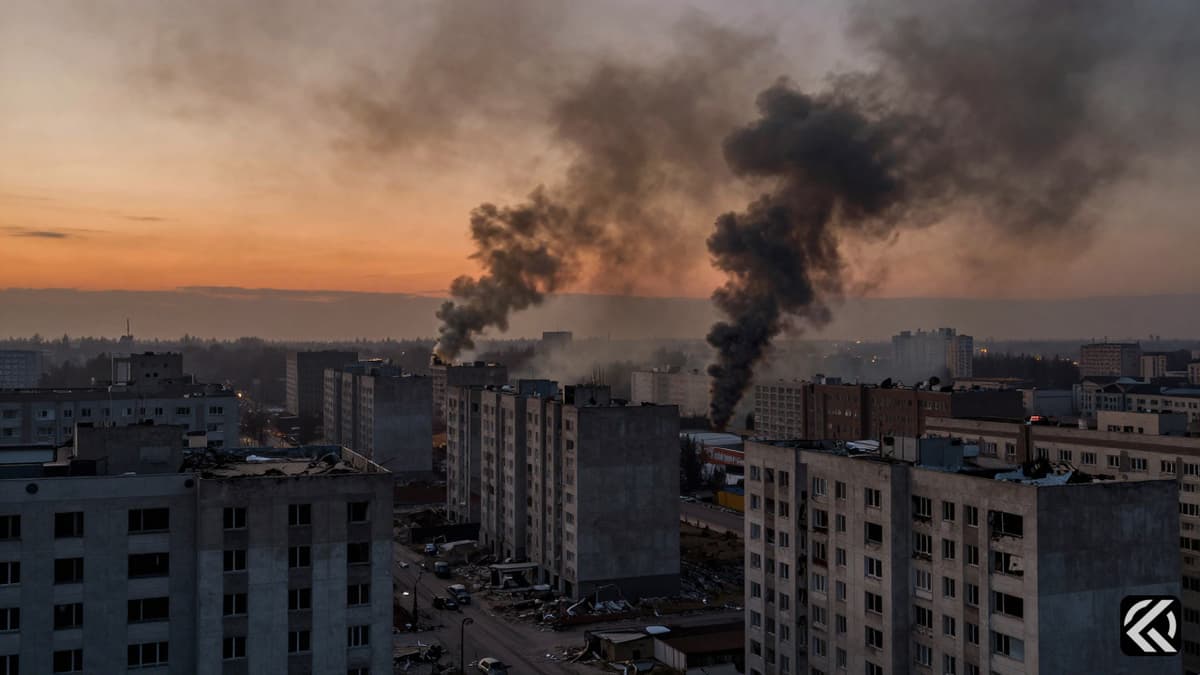
Israel launches its first air strike on Beirut since the April ceasefire agreement, directly targeting Hezbollah leadership in the Dahieh district amidst ongoing tensions.
In a significant escalation, Israel has attacked Beirut for the first time since it agreed to a ceasefire in the war with the Lebanese armed group Hezbollah, putting further pressure on a deal that has failed to stop the conflict.
The air strike hit the city's southern suburbs, known as Dahieh, where Hezbollah is based. Images posted online showed large flames and at least one building heavily damaged.
In a statement, Israeli Prime Minister Benjamin Netanyahu said he had personally approved the strike which targeted a commander of the group's elite Radwan Force. Local media reports say members of the unit were meeting when the attack happened at around 20:00 local time (18:00 BST). There has been no reaction from Hezbollah.
This is the first attack to hit Dahieh since US President Donald Trump announced a ceasefire deal between the governments of Israel and Lebanon on 16 April. Despite the agreement, Israel and Hezbollah have continued with their attacks, accusing each other of violations. Most of Israel's air strikes have hit southern Lebanon, with the military saying it is striking infrastructure and people linked to Hezbollah, the Iranian-backed militia and political party.
According to Lebanon's health ministry, the attacks have killed more than 120 people across the country in the past week alone, including women and children. The ministry does not distinguish combatants from civilians.
The Israeli military also occupies a strip of Lebanese land along the border, and officials say the aim is to create what they describe as a Hezbollah-free security zone to protect Israel's northern communities. In those areas, entire villages have been destroyed, in actions similar to the ones deployed by the Israeli military in Gaza. Rights groups say some cases could amount to war crimes.
Hezbollah, meanwhile, has carried out attacks on Israeli troops in Lebanon and northern Israel with rockets and drones. Last week, an Israeli defence ministry contractor was killed by a drone while operating an excavator in southern Lebanon.
The group, which was not involved in the negotiations for the ceasefire, had initially indicated it would observe the deal if it was respected by Israel. Dahieh, once a vibrant and densely populated district, has remained largely empty since the ceasefire, with residents saying they fear returning home because of the threat of Israeli strikes.
Netanyahu said the commander targeted had been responsible for attacks on Israeli communities and for targeting Israeli soldiers. He said in a statement: "No terrorist is immune - Israel's long arm will reach every enemy and murderer."
Talks between Israel and Lebanon, supported by the US, have continued, but largely at the ambassador level, with Lebanese President Joseph Aoun rejecting a meeting with Netanyahu any time soon.
The strike represents a direct challenge to the fragile diplomatic framework established earlier this year. By targeting a high-ranking commander in the heart of Beirut, Israel has demonstrated a willingness to breach the territorial boundaries implied by the ceasefire agreement, even while the agreement nominally stands. The lack of an immediate response from Hezbollah suggests a complex strategic calculation, possibly aimed at avoiding full-scale war while maintaining its deterrent posture. However, the destruction in Dahieh serves as a potent symbol of the ongoing threat facing the group’s political and military infrastructure.
The humanitarian situation in Lebanon continues to deteriorate. The health ministry’s report of over 120 deaths in a single week highlights the severe human cost of the conflict, which shows no sign of abating despite diplomatic efforts. The displacement of civilians in Dahieh, once a vibrant district, underscores the long-term social disruption caused by these operations. As Israel maintains its occupation of the border strip and continues air strikes, the prospect of a lasting peace remains distant. The rejection of direct meetings between the leaders further isolates the diplomatic track, leaving the region in a precarious state of suspended hostility.
May 7, 2026 13:16 UTC
Rubio Meets Pope as Iran Weighs US War Proposal
Join 50,000+ readers getting the global briefing every morning.
No spam. Unsubscribe anytime.
May 7, 2026 11:58 UTC
Operation Sindoor: One Year Since Pahalgam Attack and Military Response
May 7, 2026 11:10 UTC
Iran War Forces Strait of Hormuz Control Amid Oil Price Volatility
May 7, 2026 09:44 UTC
Suvendu Adhikari's Aide Shot Dead in West Bengal Election Violence
May 7, 2026 07:45 UTC
Tamil Nadu Assembly Election: TVK Chief Minister Race Intensifies


