Section
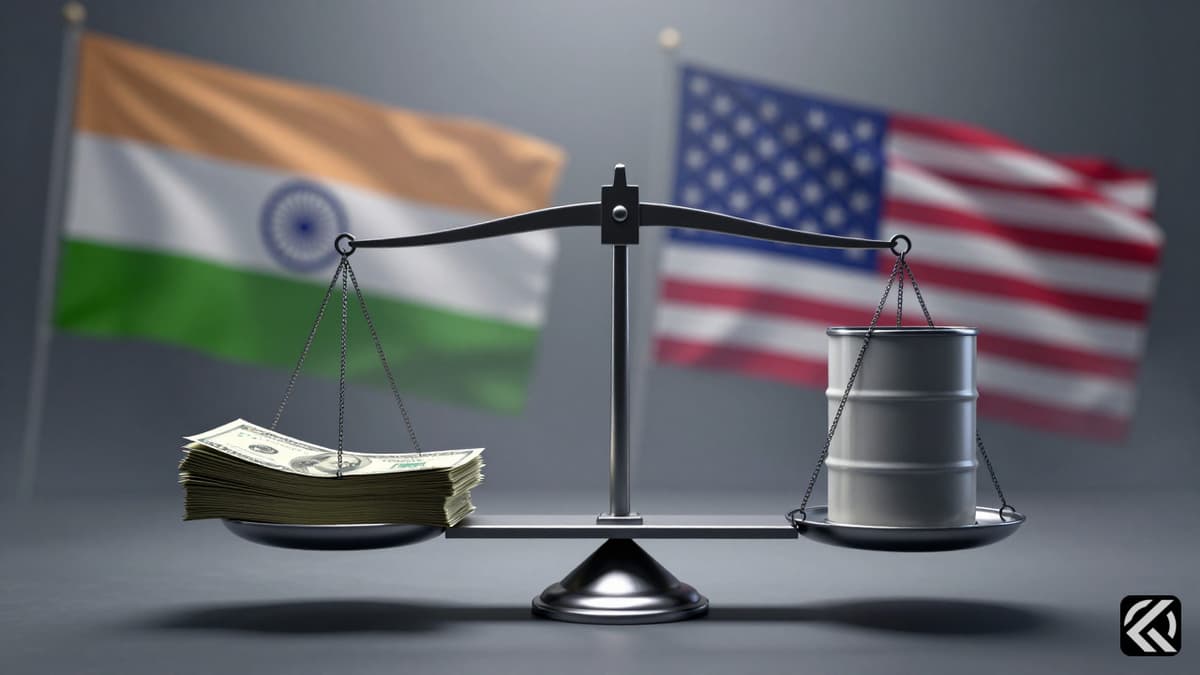
India has issued a stern warning to Washington, stating that proposed tariffs on Russian oil purchases could severely strain bilateral relations between the two nations.
India has issued a stern diplomatic warning to the United States, cautioning that new measures to levy tariffs on the purchase of Russian oil could negatively impact bilateral ties. This announcement came just hours after the US Congress approved a bill that would grant President Donald Trump new abilities to punish countries that continue to buy energy from Moscow.
The legislative move was initiated by the US House of Representatives, which passed a sweeping sanctions and tariff bill on Wednesday. This legislation is designed to increase economic pressure on Russia regarding its invasion of Ukraine. The bill specifically targets the energy and defense sectors, as well as President Vladimir Putin and other senior Russian officials. It also aims to combat Moscow’s “shadow fleet” of tankers, which are used to circumvent existing Western sanctions. Crucially, the bill authorizes the US President to impose stiff tariffs of up to 100 percent on countries that remain dependent on Russian oil and gas. India is explicitly mentioned as one of the nations potentially subject to these penalties. The legislation has now been sent to President Trump for his signature to become law.
In response to the passing of the bill, India’s foreign ministry issued a statement on Thursday reaffirming its stance. The ministry stated that India “remains firmly committed to ensuring energy security for its 1.4 billion people.” The ministry acknowledged the passage of the bill, noting that New Delhi had raised these concerns with various US interlocutors over recent months. During these engagements, New Delhi had “very clearly articulated” the potential negative implications for both the bilateral relationship and the international energy market. The statement emphasized that the Indian side has made its determination to take all necessary measures to protect its trade and economic interests. Furthermore, the government pledged to work closely with trade and industry bodies to manage the implications of this new legislation.
The tension highlights the complex economic reality for New Delhi. As the world’s third-biggest oil importer, India is among the largest buyers of Russian oil. This trade relationship is viewed as crucial for helping Moscow replenish its national budget since the launch of its full-scale invasion of Ukraine in February 2022. At that time, Russia was subjected to sweeping Western sanctions, prompting India to become a significant market for its discounted energy resources. New Delhi has repeatedly resisted external pressure to reduce its oil trade with Russia. The Indian government argues that its large population and expanding economy require secure, affordable, and reliable energy supplies to function effectively. This perspective places India in a delicate position, balancing its historical ties and economic needs against the geopolitical pressures exerted by the United States.
The potential imposition of such heavy tariffs presents a significant challenge to the established trade dynamics. A 100% tariff would effectively negate the economic benefits India has gained from purchasing discounted Russian oil. This could force New Delhi to seek alternative suppliers, likely at higher costs, which might inflate domestic energy prices. For the United States, enforcing these tariffs would serve as a strong signal of its zero-tolerance policy towards nations supporting Russia’s war economy. However, it also risks creating diplomatic friction with a key strategic partner in the Indo-Pacific region. The outcome of this legislative process will depend heavily on President Trump’s decision when he signs the bill. His administration may choose to grant waivers or exemptions to major economies like India to preserve strategic alliances, or it may enforce the tariffs strictly to maintain a unified front against Russian aggression.
The passage of this legislation marks a critical juncture in US-India relations. While New Delhi has maintained its position on energy security, the threat of maximum tariffs forces a reevaluation of its procurement strategies. India’s government is expected to engage in intense diplomatic lobbying to secure exemptions, citing the global nature of energy markets and its non-aligned stance. If no exemptions are granted, India may face a difficult choice between adhering to Western sanctions or absorbing significant economic costs to feed its domestic population. This scenario underscores the growing complexity of global energy geopolitics, where economic interests and political alliances increasingly intersect. The long-term impact will likely reshape supply chains and force other emerging economies to similarly weigh their options between diplomatic alignment and economic pragmatism.
Oct 3, 2026 04:08 UTC
FlyDubai Co-Pilot Banned in Oman Over Extremism Concerns
Oct 3, 2026 00:50 UTC
Israel-Mumbai Campaign Honors Captain Smit After Flydubai Incident
Oct 2, 2026 18:13 UTC
Captain Smit Machchhar’s Courage Saves Flydubai Flight FZ1073 From Disaster
Oct 2, 2026 16:45 UTC
Captain Smit Machchhar Saves Plane Mid-Fall
Oct 3, 2026 10:04 UTC
UAE Official: Flydubai Co-Pilot’s Attack Was Terror Act