Section
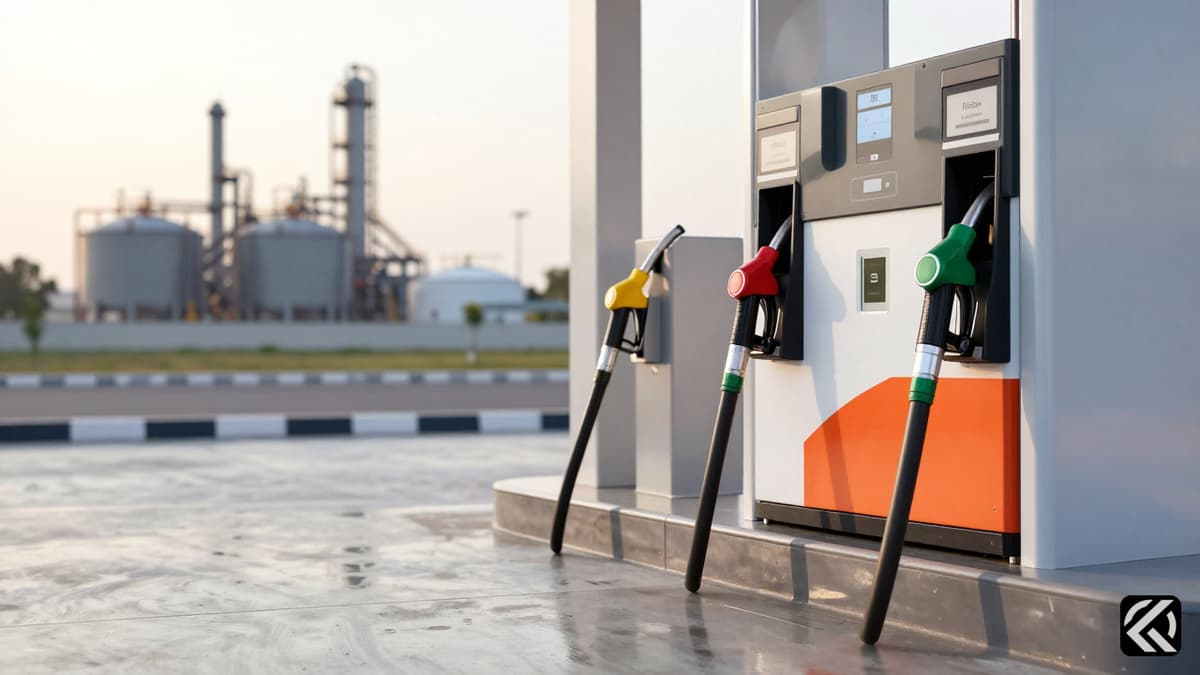
India firmly rejects consumer demands for pure petrol or lower blends, citing logistical costs and national policy to support farmers and energy security.
The Indian government has firmly rejected demands to reintroduce pure petrol or lower ethanol blends like E10, declaring such options infeasible for the nation. Officials emphasized that maintaining parallel fuel supply chains would impose unsustainable logistical burdens across more than one lakh retail outlets. This decision underscores a broader strategy to prioritize energy security and agricultural welfare over consumer preference for traditional fuel grades.
In an official release, the petroleum ministry stated that maintaining parallel nationwide supply chains would significantly increase logistics costs and complicate distribution. The ministry argued that petrol pumps cannot practically offer multiple fuel grades, including pure petrol, E10, and E20, simultaneously. Once a superior fuel has been scientifically validated and accepted by the automotive industry, the objective must be to move forward with confidence rather than retreat to an inferior standard. The government had conducted extensive consultations with automobile manufacturers, technical experts, and testing agencies before rolling out E20 fuel.
Critically, the ministry highlighted that automobile manufacturers would not have supported the product or honored vehicle warranties if they were not fully satisfied with the results. India achieved 20% ethanol blending in petrol in April 2025, and E20 is now the standard petrol variant across the country. The government also rejected the idea of reverting to E10 fuel, pointing out that dedicated ethanol plants, distilleries, storage facilities, and logistics networks have been established to meet national blending targets. These infrastructure projects are backed by bank loans of nearly Rs 1 lakh crore.
The ministry posed critical questions regarding the fate of surplus production capacity and the thousands of crores invested by farmers, cooperatives, entrepreneurs, financial institutions, and public sector companies. Public policy, according to the government, must balance consumer interest with energy security, environmental sustainability, farmer welfare, and the prudent use of national resources. The decision reflects a commitment to honoring these investments rather than abandoning them due to shifting public opinion.
Addressing concerns about the cost of blended fuel, the ministry explained that ethanol is procured at around Rs 72 per litre, a remunerative price designed to support farmers. This procurement cost makes E20 more expensive to produce than pure petrol. However, the ministry noted that E20-blended petrol would become cheaper than regular fuel if crude prices rose to $120-130 a barrel, levels observed during the peak of the West Asia conflict. This economic threshold suggests that blended fuel offers significant potential savings during periods of global crude volatility.
To address safety and durability concerns, the ministry cited data from India's largest carmaker, Maruti Suzuki. The company serviced 1.5 crore older and non-E20-certified vehicles in 2025-26 and found no E20-linked corrosion, abnormal wear, or component-life damage. Similarly, two-wheeler manufacturer Hero MotoCorp reported comparable field experiences. The government argued that if E20 were genuinely damaging rubber components, fuel lines, or engines, there would be widespread warranty claims and an avalanche of complaints across the country.
Furthermore, the ministry dismissed concerns over vehicles labeled as E10 compatible. It stated that these vehicles do not become unsafe simply because fuel standards evolve later after extensive scientific testing, engineering validation, and regulatory approval. The narrative of technical incompatibility was framed as a misunderstanding of how fuel standards advance in line with automotive engineering capabilities.
The government's stance solidifies E20 as the non-negotiable standard for Indian petrol markets. With massive infrastructure investments already in place and automotive validation complete, a policy reversal remains politically and economically unlikely. Future effects will likely include continued stability in ethanol supply chains, benefiting the agricultural sector. However, consumer acceptance will depend on sustained demonstration of long-term vehicle reliability and eventual price parity with crude-oil-dependent fuels during high-price cycles.
Oct 3, 2026 04:08 UTC
FlyDubai Co-Pilot Banned in Oman Over Extremism Concerns
Oct 3, 2026 00:50 UTC
Israel-Mumbai Campaign Honors Captain Smit After Flydubai Incident
Oct 2, 2026 18:13 UTC
Captain Smit Machchhar’s Courage Saves Flydubai Flight FZ1073 From Disaster
Oct 2, 2026 16:45 UTC
Captain Smit Machchhar Saves Plane Mid-Fall
Sep 20, 2026 06:56 UTC
Five Die in Chatsworth Bus Collision and Helicopter Crash