Section
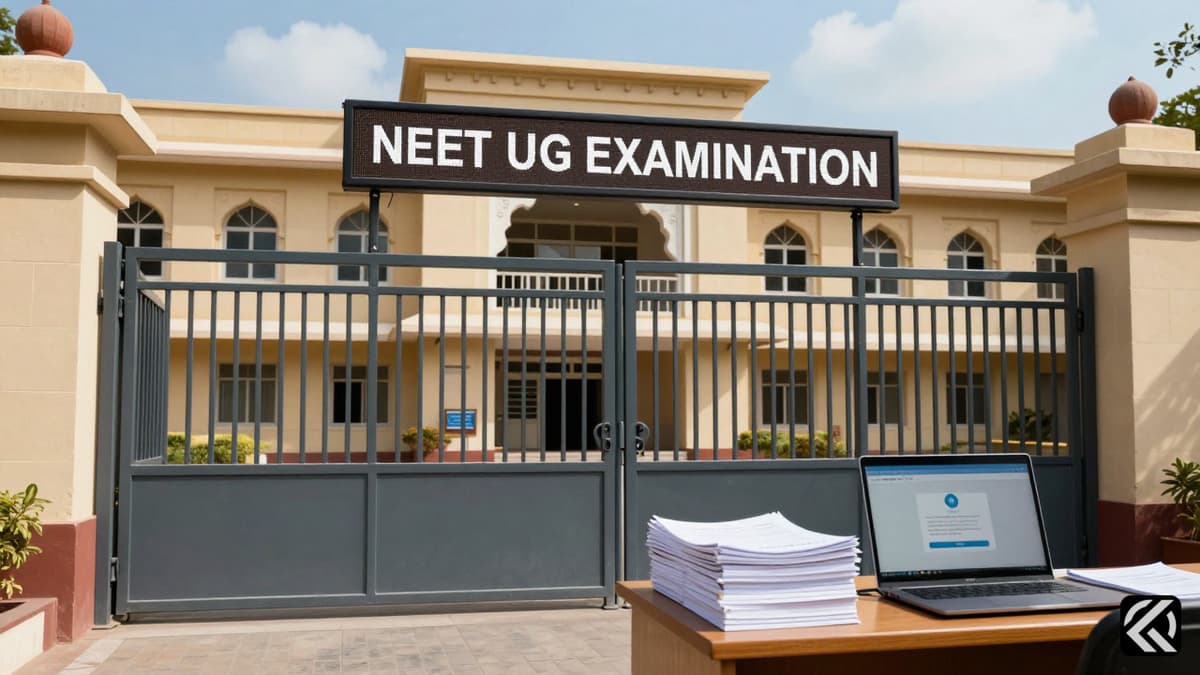
India has restricted Telegram access until June 22 to combat cheating rackets targeting the upcoming NEET-UG re-examination, ensuring candidate security.
The Indian Centre has officially ordered that access to the messaging application Telegram be restricted across the entire nation until June 22. This decisive administrative move is designed to shield candidates from organized cheating rackets that have been operating on the platform ahead of the NEET-UG 2026 re-examination scheduled for June 21. The directive, issued by the Ministry of Electronics and Information Technology (MeitY) under Section 69A of the Information Technology Act, covers the critical test day and its immediate aftermath to ensure a secure environment for all participants.
In a supplementary order also released on Tuesday, the government has required Telegram to deactivate its message-editing feature in India until June 30. The National Testing Agency (NTA) highlighted that this specific tool was exploited by fraudsters to alter old posts and falsely plant question papers, passing them off as authentic proof of a recent exam leak. By disabling this function, authorities aim to eliminate the digital mechanism used by these groups to disseminate fraudulent materials to anxious families.
For several weeks prior to this order, numerous Telegram channels with provocative names such as "PAPER LEAKED NEET," "Re-NEET 2026," and "Private Mafia" had been actively soliciting money from worried families. These groups demanded sums ranging from a few thousand to several lakh rupees in exchange for the "actual paper," capitalizing on the high stakes of the medical entrance test. The NTA issued a blunt and unequivocal rebuttal to these claims, stating clearly that no such material exists outside the secured examination chain and that every promise of such content is, in every instance, a fraud.
The decision to implement the block follows significant ground-level enforcement actions by law enforcement agencies across the country. In Ahmedabad, the City Cyber Crime unit successfully busted an inter-state gang responsible for running eight distinct Telegram channels. Investigations revealed that approximately Rs 1.5 crore was routed through fake accounts, with about a thousand phone numbers contacted in a single month alone as part of their scam operations. Simultaneously, the Bihar Police’s Economic Offences Unit had previously issued warnings to candidates against falling for such claims, while the Indian Internet Crime (I4C) under the home ministry coordinated widespread channel takedowns to disrupt these networks.
While the NTA acknowledged that the restriction would inconvenience "lakhs of citizens" who rely on Telegram for legitimate communication purposes, the agency expressed sincere regret for the disruption while firmly insisting that the restriction is limited strictly until June 22. The agency emphasized that the security of the examination remains the primary focus, stating that the action taken actually serves to protect the integrity of the test rather than hinder it. This proactive stance underscores the government's commitment to maintaining fairness in one of the most competitive and consequential medical entrance exams in the country.
Amid the intense digital crackdown, the agency provided reassurance to candidates regarding the logistical aspects of the re-examination. On Tuesday morning, it was announced that more than 10 lakh students had successfully downloaded their admit cards in roughly 24 hours after the facility opened. NTA officials confirmed that their technical teams are actively monitoring server loads to ensure that every candidate receives their admit card well in time for the examination, despite the heightened digital restrictions and potential connectivity issues.
The strategic imposition of the Telegram block reflects a broader trend in India’s approach to maintaining the integrity of high-stakes national examinations. By restricting access to a platform heavily utilized by illicit networks, the government aims to sever the primary communication channel used for distributing fake questions and coordinating fraud. This measure is particularly critical given that the May 3 test was scrapped on May 12 after a confirmed leak, leading to a massive re-examination for over 22 lakh candidates. The combination of technical restrictions, such as disabling message editing, and rigorous law enforcement actions demonstrates a multi-layered defense against organized crime. Looking ahead, this incident may prompt educational bodies to reconsider their reliance on open messaging apps for official communications, potentially leading to more secure, closed-loop platforms for candidate support and updates. The success of this intervention could set a precedent for future exam security protocols, emphasizing the need for real-time digital monitoring and rapid regulatory responses to protect the fairness of academic assessments across the nation.
Jun 17, 2026 00:58 UTC
US-Iran 60-Day Challenge: Peace Deal Leaves Nuclear Details Pending
Jun 16, 2026 22:51 UTC
G7 Summit: Modi Warns of Hormuz Risks, Trump Pushes Russian Sanctions
Jun 16, 2026 18:58 UTC
G7 Leaders Intensify Pressure on Russia with New Sanctions
Jun 16, 2026 18:36 UTC
Trump Claims US-Iran Agreement Opens Strait of Hormuz Without Tolls
Jun 16, 2026 16:49 UTC
Annamalai Criticizes NEET Re-test Security Amidst Rising Tensions