Section
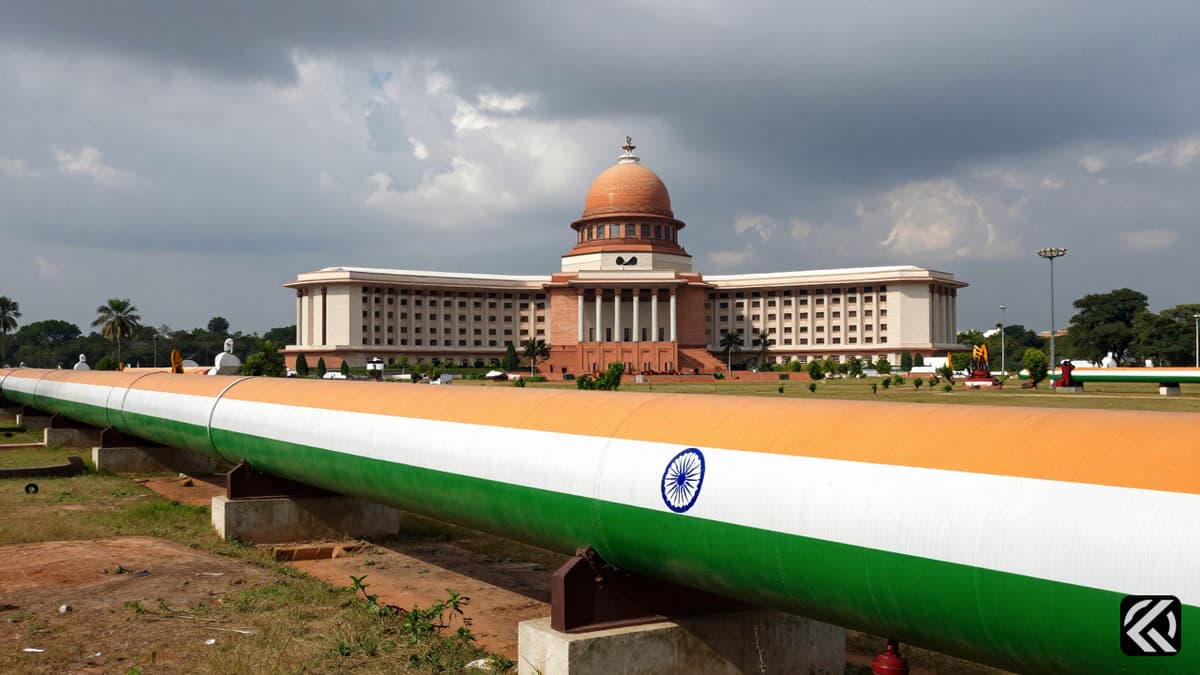
New U.S. tariff threats on Russian oil force India to publicly assert its strategic energy independence, defying past patterns of compliance.
The Ministry of External Affairs issued a powerful declaration on Thursday, September 18, 2026, reaffirming the nation's stance on energy sovereignty. This move comes as the United States proposes severe financial penalties for continued reliance on Russian fossil fuels. The government is signaling a departure from previous diplomatic norms.
For years, New Delhi has navigated a delicate balance between strategic autonomy and its relationship with Washington. Official records indicate that when the U.S. applies pressure, India often curtails purchases from nations it seeks to isolate. However, once that pressure dissipates, data shows an almost immediate return to those supply chains. This new assertion challenges the assumption that Washington can dictate global energy flows through coercive economic measures alone.
The immediate trigger for this diplomatic friction is the proposed U.S. Bill, which threatens to levy tariffs of up to 100% on India. This penalty is specifically targeted at U.S. tariffs on India related to the procurement of Russian oil. The severity of the proposed penalty indicates a significant escalation in economic statecraft. It is not merely a warning but a calculated attempt to force a cessation of trade between two major global powers.
Historically, the dynamic between New Delhi and Washington has been characterized by a cautious alignment. Over the last decade, India has complied with U.S. pressure to reduce India oil imports from countries such as Venezuela, Iran, and Russia. These nations have been the subject of international isolation efforts. Despite these countries being important sources for India’s energy needs, the geopolitical leverage held by the United States has often compelled Indian policymakers to adjust their procurement strategies.
The recent statement from the Ministry of External Affairs serves as a direct rebuttal to this leverage. By asserting Indian energy independence, the government is formally declaring that its energy security interests supersede external political pressures. This is a notable shift in tone. The ministry is not hiding behind diplomatic euphemisms; it is using strong language to define the boundary of its sovereign decision-making. The backdrop of this statement is the looming economic threat, which frames the current relationship as one of contention rather than cooperation.
The implications of this stance are profound. If India maintains its import levels despite the 100% tariff threat, it would signal a fundamental realignment in global alliances. It suggests that New Delhi views energy security as non-negotiable, regardless of the cost. Conversely, if the threat materializes and India complies, it would reinforce the historical pattern of yield under pressure. The current statement leans heavily toward the former, emphasizing resilience and strategic autonomy.
The role of Russia, Iran, and Venezuela in this equation cannot be understated. These nations have provided alternative supply chains that allow India to diversify its energy portfolio away from traditional Western-aligned suppliers. The U.S. proposal to tax these imports is an attempt to close that off-ramp. By resisting, India is defending not just its own energy grid, but the principle of multipolarity in global trade. The historical data showing quick resumption of imports after pressure eases suggests that India has historically found ways to navigate around sanctions. The current challenge is whether it can do so while facing explicit, high-level tariffs rather than indirect diplomatic pressure.
This event also highlights the growing complexity of global energy markets. The interplay between geopolitical sanctions and national energy security has become more volatile. The U.S. strategy of using economic coercion to align foreign policy is being tested against a nation that has built its modern identity on non-alignment and strategic autonomy. The Ministry’s response is a clear indicator that this test is being fought on the field of public declaration and policy consistency.
The proposal of extreme tariffs marks a critical juncture in Indo-U.S. relations. If implemented, these measures could significantly disrupt global oil markets by forcing a reallocation of supply chains. India’s resistance suggests that future energy diplomacy will require negotiation rather than coercion. The long-term impact may see India strengthening ties with non-Western energy producers, altering global trade dynamics. This stand could inspire other nations to resist similar economic pressures, reshaping the geopolitical order.
Oct 3, 2026 04:08 UTC
FlyDubai Co-Pilot Banned in Oman Over Extremism Concerns
Oct 3, 2026 00:50 UTC
Israel-Mumbai Campaign Honors Captain Smit After Flydubai Incident
Oct 2, 2026 18:13 UTC
Captain Smit Machchhar’s Courage Saves Flydubai Flight FZ1073 From Disaster
Oct 2, 2026 16:45 UTC
Captain Smit Machchhar Saves Plane Mid-Fall
Oct 3, 2026 10:04 UTC
UAE Official: Flydubai Co-Pilot’s Attack Was Terror Act