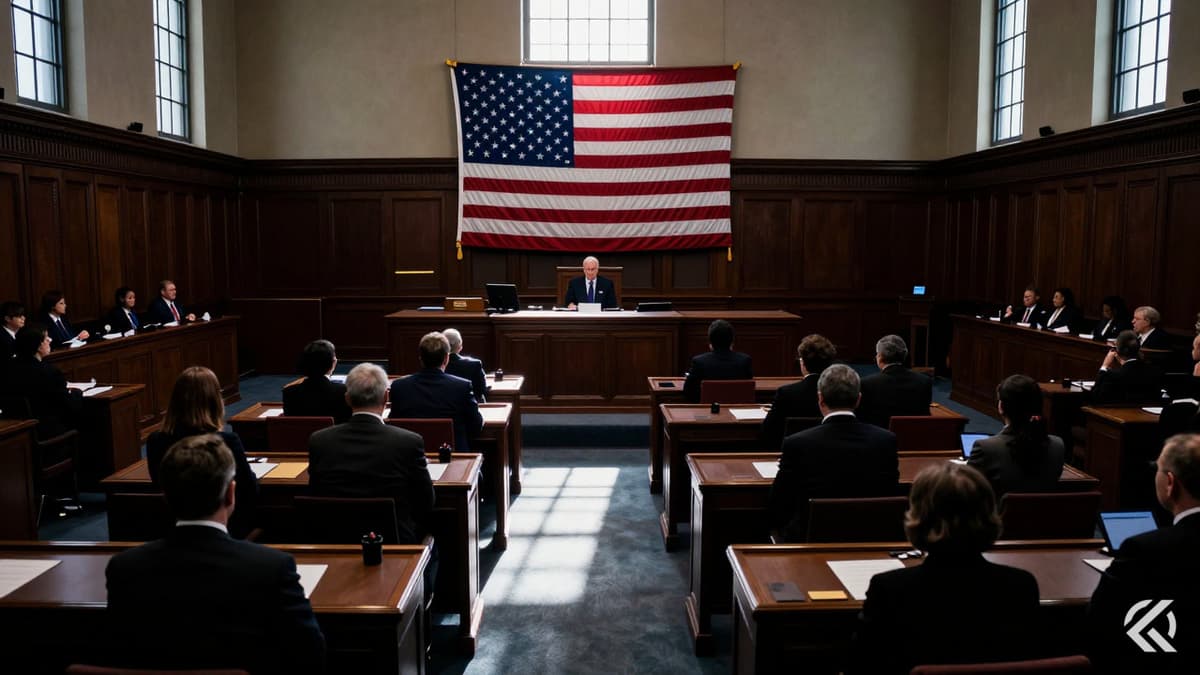
In a decisive rebuke of legislative constraints, the House has once again failed to pass a resolution aiming to limit the President's war powers regarding the Iran conflict, keeping the path to a veto clear.
The United States House of Representatives has once again failed to pass a measure intended to constrain the executive branch's military capabilities. This legislative effort aimed to limit President Donald Trump's authority to wage war with Iran. The House defeated the measure on Thursday in a closely contested session.
The outcome of the Trump war powers resolution was a defeat for the sponsors, who sought to impose statutory limits on the ongoing military engagement. This specific bill failed with a tally of 213 votes in favor and 214 against. The margin of defeat was incredibly narrow, with the resolution falling short by a single vote. This failure occurred just one day after a similar resolution was blocked in the Senate, where it faced a rejection in a largely party-line vote of 47 to 52.
Despite the narrow margin, the resolution faced significant hurdles even before the final count. Even if the House had passed the measure, it would have encountered an uphill battle in the Senate. Furthermore, the legislation would not have survived a presidential veto from President Trump, as he holds the authority to strike down such congressional actions. Consequently, the passage of this bill was largely symbolic in nature, as it faced little chance of overcoming the expected veto regardless of the vote count.
The voting pattern within the House revealed deep partisan divides, with the majority of Republicans opposing the resolution in both chambers. Only Representative Thomas Massie of Kentucky broke ranks to side with Democrats in support of the measure. He stood as the sole Republican to vote in favor. On the opposite side, Jared Golden of Maine was the lone Democrat to oppose the resolution. The sponsor of the bill, Representative Gregory Meeks of New York, expressed his determination following the vote. He stated that he would lobby Mr. Golden and other lawmakers to support the legislation in future attempts.
This was not the first time the House has considered such a measure. An earlier attempt to pass a similar resolution failed narrowly last month. In that previous vote, two House Republicans voted for the measure while four Democrats opposed it. The current vote saw a shift in the Democratic opposition, with only one Democrat voting against the resolution compared to the four in the previous attempt.
The context of the conflict remains fluid. President Trump has offered shifting timelines regarding the duration of the hostilities. Most recently, the President stated that the war was "close to over." This shifting narrative influences the legislative strategy of those seeking to limit the war. Some Republicans have indicated that their opposition to the resolution could shift if the conflict widens or persists beyond the current timeframe. Lawmakers have signaled they might reconsider their position if the war extends beyond this month.
The failure of the resolution reinforces the current executive authority over the conduct of the Iran conflict. With the House and Senate both rejecting similar measures in recent days, the path to a congressional rollback of the President's powers remains blocked. The political landscape suggests that without a significant change in the war's duration or scope, the resolution is unlikely to gain the necessary traction to become law.
The recent rejection of the Trump war powers resolution solidifies the current legislative gridlock regarding the President's military authority. As President Trump continues to indicate the war is nearing its end, the pressure on Congress to intervene may wane. However, should the Iran conflict extend beyond the current month, the previously identified potential for shifting Republican support could materialize. The narrow margin of the House vote 213-214 suggests that while the resolution is not currently viable, the political will to constrain executive power remains a live issue for a significant minority of lawmakers. The upcoming months will determine if the conflict's duration triggers a reconsideration of the resolution among skeptics.
Jun 8, 2026 00:51 UTC
Trump Claims Iran Nuclear Deal Imminent Despite Diplomatic Fractures
Jun 8, 2026 00:47 UTC
Iran Fires Missiles at Israel After Beirut Strike
Jun 7, 2026 22:00 UTC
US, Iran Peace Hops Fade 100 Days Into War
Jun 7, 2026 20:57 UTC
Iran Strikes Israel: IRGC Promises Week of Continuous Offensive
Jun 8, 2026 02:28 UTC
Trump Walks Out of Meet the Press After Rejecting Evidence Demands


