Section
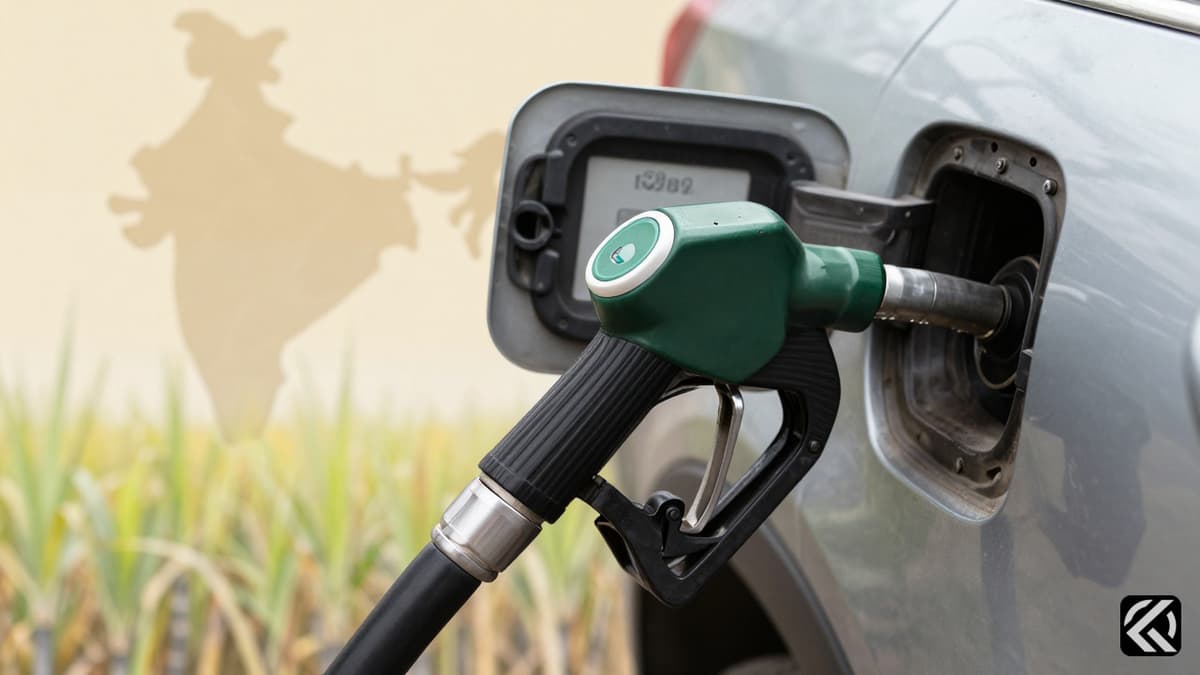
India clarifies its ethanol-blended petrol strategy, addressing mileage myths and engine safety concerns following a successful transition to 20% blending ahead of schedule.
The Government of India has released a comprehensive set of FAQs to address public concerns regarding Ethanol Blended Petrol (EBP). This move follows widespread backlash over perceived mileage drops and vehicle damage since the nationwide implementation of E20 standards. Officials emphasize that this transition is a critical pillar of the nation’s broader energy security framework.
Critics have voiced frustration over declining fuel efficiency, sparking heated debates on social media and in workplaces. In response, authorities detail the historical context, technical safety, and economic benefits of the policy. The clarification aims to reassure consumers that the rapid adoption of E20 fuel was a calculated, decades-long effort rather than a rushed experiment.
India reached the milestone of 20% ethanol blending in April 2025, achieving this target five years ahead of the original 2030 goal. Consequently, all regular petrol dispensed at stations now contains 20% ethanol. While fuel efficiency remains a primary concern for buyers, the government argues that the benefits of energy independence and environmental protection outweigh minor fluctuations in mileage. The following insights clarify the facts behind the policy.
Ethanol is not a novel invention but a long-standing fuel source. Henry Ford designed the Model T to run on ethanol over a century ago, and nations like Brazil and the United States have utilized it for decades. India’s journey began in 2001 with a pilot program, formally announced in 2004. By 2006, E5 blending was rolled out in several states.
In January 2013, the policy framework targeted 5% blending across 10 states and union territories. However, production remained stuck at 1.5% until 2014 due to insufficient sugarcane supply. The landscape changed in May 2018 when the National Policy on Biofuels expanded raw materials to include maize and surplus grains. By August 2021, major oil companies invited private investment for dedicated ethanol plants, backed by guaranteed purchase agreements.
India’s rapid shift to 20% blending was facilitated by a dramatic increase in ethanol availability. In 2021, the country needed 500 to 600 crore liters annually for 10% blending. Fresh investments expanded capacity to 1,200 crore liters, making 20% blending a logical next step. The progression was steady:
Unlike Brazil, which took decades to build its ecosystem, India leveraged existing experience. The transition was supported by public sector banks financing approximately Rs 1 lakh crore annually in ethanol infrastructure. Reverting to lower blending levels would strand these investments and harm the farming community.
The automobile industry was consulted extensively before E20 was rolled out. E10 compatibility was discussed with manufacturers in 2020-21, and India met that target five months early. For E20, engine calibration, fuel systems, rubber components, and emissions underwent rigorous testing. Manufacturers only honored warranties after confirming safety.
Concerns about engine damage have been addressed by real-world data. Maruti Suzuki serviced 2.84 crore cars in FY 2025-26, including 1.5 crore older vehicles never certified for E20. No E20-related damage was reported. Had the fuel harmed rubber hoses or engines, a wave of warranty claims would have occurred. Furthermore, ethanol supply is strictly regulated, with Chief Secretaries enforcing zero tolerance against adulteration.
Vehicles certified for E10 are safe to use with E20. Manual labels reflect the fuel standard at the time of certification, not a limit on future safety. The 2021 NITI Aayog roadmap provided manufacturers years of notice, allowing for gradual adaptation.
Some drivers report a 3 to 5 percent reduction in fuel economy. However, mileage is influenced more by driving habits, tire pressure, and air conditioning use than fuel type. E20 offers a Research Octane Number of 108.5, raising India’s effective octane rating to around 95. This improves combustion and provides smoother acceleration.
E20 delivers superior anti-knock characteristics and cleaner engine operation with lower particulate emissions. It also reduces lifecycle carbon emissions by nearly 40 percent. While pure petrol might seem like an option, India’s retail network cannot feasibly stock three separate base fuels. Doing so would complicate quality control and multiply costs.
E20 is not always cheaper than pure petrol. Maize-based ethanol is procured at Rs 71.86 per liter, plus costs. When crude oil is around USD 70 per barrel, E20 production can be more expensive. However, it becomes cheaper when crude prices hit USD 120 to 130 per barrel.
Crucially, nearly 20% of India’s fuel is now domestically produced ethanol. This shields consumers from global crude fluctuations and geopolitical disruptions. India’s fuel price stability is evident when compared to other nations. Between June 2022 and June 2026, petrol prices in India rose by just 5.58%, significantly lower than Pakistan (39.77%), Bangladesh (42.69%), and European nations.
The government’s defense of the ethanol program highlights a strategic pivot toward domestic renewable energy. By achieving 20% blending ahead of schedule, India has insulated its economy from global oil volatility. The data indicates that vehicle manufacturers’ warranties remain valid, and environmental benefits are substantial. As production capacity expands, the long-term impact will be a more resilient energy grid. Consumers can expect continued price stability, as the domestic ethanol supply acts as a buffer against international market shocks. The policy’s success validates the two-decade groundwork, ensuring that India’s transport sector remains economically and environmentally sustainable in the coming years.
Oct 3, 2026 04:08 UTC
FlyDubai Co-Pilot Banned in Oman Over Extremism Concerns
Oct 3, 2026 00:50 UTC
Israel-Mumbai Campaign Honors Captain Smit After Flydubai Incident
Oct 2, 2026 18:13 UTC
Captain Smit Machchhar’s Courage Saves Flydubai Flight FZ1073 From Disaster
Oct 2, 2026 16:45 UTC
Captain Smit Machchhar Saves Plane Mid-Fall
Sep 20, 2026 06:56 UTC
Five Die in Chatsworth Bus Collision and Helicopter Crash