Section
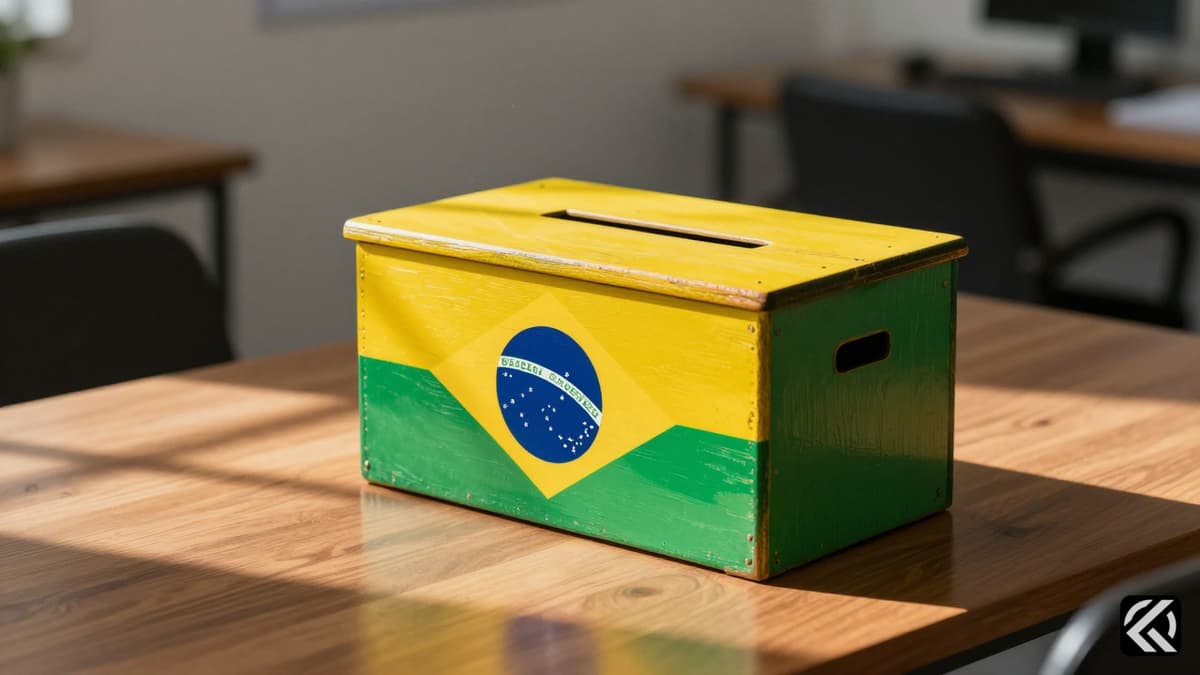
Senator Flavio Bolsonaro defied expectations to force a historic runoff against President Lula in Brazil, sparking debate over protest votes and foreign interference.
In a stunning twist for the Brazil presidential election 2026, Senator Flavio Bolsonaro has surpassed private polling forecasts to force a presidential runoff against incumbent President Luiz Inacio Lula da Silva. With just over 97% of ballots counted on Sunday, October 4, 2026, the right-wing challenger captured 47.45% of valid votes, edging out the leftist incumbent who received 44.66%.
The results, announced by the country’s electoral authority, confirm that these two leading candidates will advance to the second round of voting on October 25. They have defeated a field of 12 candidates in a fierce campaign dominated by anxieties over the rising cost of living, pervasive corruption, and daily insecurity. The outcome suggests a fragmented electorate that may be leveraging early voting as a form of protest against the current administration.
Analysts speaking to Reuters have interpreted the senator’s strong showing as evidence of “protest votes” rather than overwhelming support for his right-wing movement. Many voters appear to be opposing President Lula rather than endorsing Flavio directly. Flavio himself acknowledged this dynamic while speaking to journalists in Rio de Janeiro, stating he was confident he could secure victory in the first round if this frustration with his chief opponent was strong enough.
“I hope it’s enough to secure a victory in the first round,” the 45-year-old senator said, citing widespread voter fatigue. He is the son of former President Jair Bolsonaro, hoping to return his father’s political movement to power after a period of exclusion. His opponent, the 80-year-old Lula, is seeking a historic fourth term, a campaign marked by corruption scandals, economic anxiety, and accusations of meddling by the United States.
Voter sentiment on the ground reflected this polarization. Thaise Lima, a 41-year-old lawyer voting in Sao Paulo, admitted she did not view Flavio as the best candidate but was motivated to vote for him to remove the Workers’ Party from office. Similarly, Fernando Tempel, a management consultant, revealed he switched his vote from former governor Romeu Zema to Flavio, illustrating the fluid nature of the electorate.
The race has been heavily influenced by geopolitical tensions, with Lula’s allies warning that the Trump administration might refuse to recognize results if he wins. While President Donald Trump has not formally endorsed a candidate, he previously hosted Senator Flavio at the White House and praised him publicly. This has fueled narratives of outside influence, a concern echoed by voters like Cristiano, a 34-year-old doctor in Brasilia who noted the election felt more influenced internationally than previous ones.
Despite these concerns, Brazil’s electoral court chief, Kassio Nunes Marques, assured the public that the process remained secure. As of Sunday afternoon, teams monitoring international risks had identified no threats. This statement follows reports that Brazilian intelligence briefed French and German delegations on alleged U.S. and Russian interference, claims the U.S. has rejected. Lula’s supporters remain confident in his leadership, with voter Pedro Palacio emphasizing the need to fight for national sovereignty against external pressures.
Economic headwinds have defined the policy debate, or lack thereof, with both major candidates skipping major TV debates. Despite falling inequality and unemployment under Lula, voters are grappling with high living costs, heavy household debt, and street crime. Rising public debt above 82% of GDP has stoked fiscal fears, prompting the government to lower growth forecasts to 2.0% for this year and 2.3% for next.
Lula attempted to address these issues by banning online gambling, expanding welfare, and proposing debt relief. Meanwhile, Flavio Bolsonaro has sought to capitalize on cost-of-living frustrations, promising policies that encourage business production and wealth generation.
However, the campaign was overshadowed by the scandal surrounding the defunct Banco Master. The bank’s former head, Daniel Vorcaro, was arrested earlier this year amid accusations of a multibillion-dollar fraud scheme. Investigations have linked Vorcaro to Supreme Court Justice Alexandre de Moraes and to Flavio Bolsonaro, who is being investigated for money laundering tied to the case. While Flavio denied wrongdoing, he confirmed raising millions from Vorcaro to produce a film about his father. The banker’s connections to Justice Moraes, widely perceived as a Lula ally, created a crisis for the Supreme Court just a month before the vote.
The stakes extend beyond the presidency. On Sunday, voters also elected all 513 lower house members and two-thirds of the Senate. Congressional influence has grown since the 2016 impeachment of former President Dilma Rousseff, a Lula ally, raising the importance of these legislative races. Some lawmakers have pushed to impeach Justice Moraes, adding another layer of complexity to the political landscape.
If Flavio wins, it would extend a wave of right-wing victories across Latin America aligned with U.S. President Trump. Conversely, a Lula reelection would create diplomatic friction with Washington, which has clashed with his government over trade and security. As the nation looks toward October 25, the tension between economic survival, political accountability, and national sovereignty remains the central theme of this pivotal democratic moment.
The upcoming runoff promises a high-stakes contest between established institutional experience and populist change. If Flavio Bolsonaro secures victory, Brazil may pivot sharply toward right-wing policies and closer ties with the U.S., potentially altering regional trade dynamics. Conversely, if Lula prevails, he must navigate deep fiscal deficits and restore trust damaged by corruption scandals. Either outcome will significantly impact Brazil’s economic trajectory and its standing in global geopolitics, with the electorate’s frustration serving as the ultimate judge of their next leader.
Oct 6, 2026 02:48 UTC
Yemen Forces Recapture Mocha in Major Counteroffensive
Oct 6, 2026 00:07 UTC
Teen Loses Hand in French School Protest Clashes Amid Escalating Violence
Oct 5, 2026 22:36 UTC
UAE Shares FlyDubai Crew Data After Pilot Seize Control Attempt
Oct 5, 2026 22:00 UTC
US Withdraws Heavy Bombers From UK Base Amidst Rising Tensions With Iran
Nov 5, 2026 20:16 UTC
Pia Dandiya Claims Landmark Florida Win in 2026 Midterms