Section
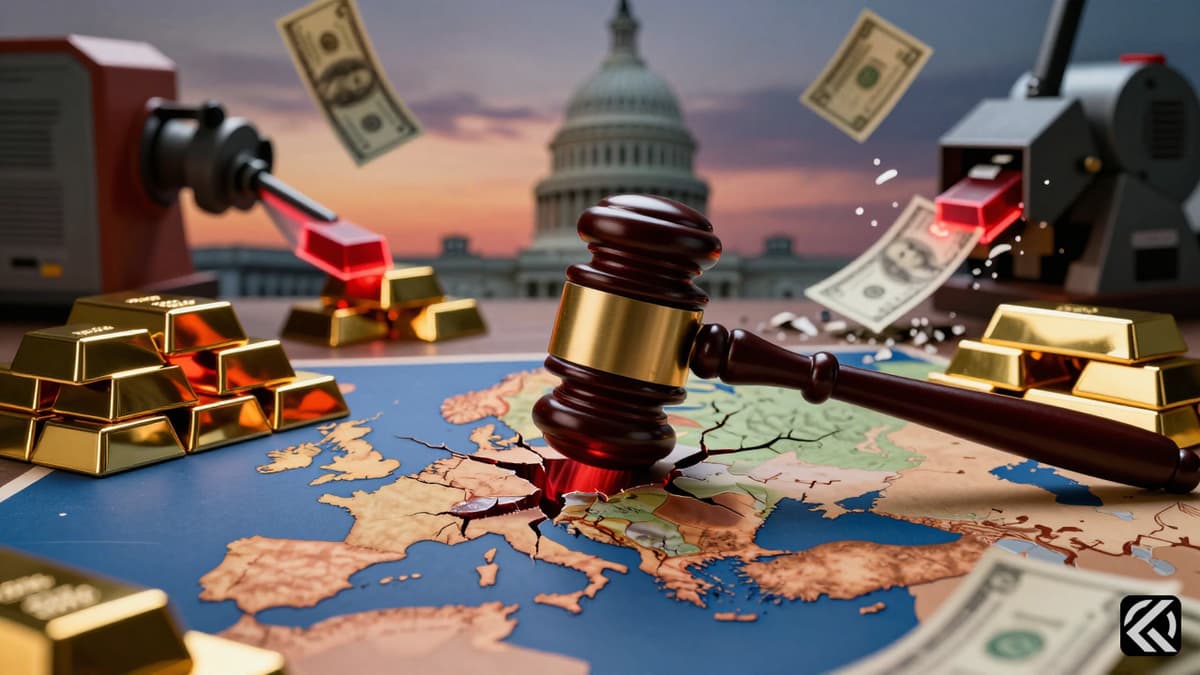
Congress has cleared major sanctions against Russia, empowering President Trump with new tariff authorities to cut off funds aiding the conflict in Ukraine.
The United States House of Representatives has approved a comprehensive sanctions package aimed at Russia due to its ongoing invasion of Ukraine. Lawmakers cast their votes on Wednesday to transmit this significant legislative measure, which has been championed by the late Republican Senator Lindsey Graham of South Carolina, to US President Donald Trump’s desk. This approval concludes a prolonged legislative battle that faced more than a year of delays and various political obstacles. The final tally in the House stood at 262 votes in favor and 159 against, following its earlier passage in the US Senate.
This highly anticipated legislation is designed to significantly expand the presidential toolkit for economic coercion. It grants the president new abilities to impose tariffs of up to 100 percent on countries, such as China and India, that continue to import energy supplies from Russia. The primary objective is to further restrict the financial funds flowing to Moscow, thereby increasing economic pressure on the Russian government. The measure also imposes direct sanctions on Russian officials, banks, and a shadow fleet of tankers that facilitate the movement of Russian energy.
Support for the bill has been widespread among members of the public and political allies of Ukraine. Ukrainian President Volodymyr Zelenskyy has been actively pushing for the bill’s passage, making a direct appeal to senators shortly before they approved it last month. The legislative breakthrough required a coalition of support that crossed traditional party lines. Fifty-eight Democrats bucked their party’s leadership to join with a majority of Republicans in passing the measure.
Despite the broad support, the Democratic Party has not been entirely united in its approach. House Democratic Leader Hakeem Jeffries opposed the bill, citing concerns about the new tariff authorities given to the White House. He argued that these powers could potentially be used to exploit US allies rather than solely targeting adversaries. During the House floor debate on Wednesday, Jeffries stated, “The manner in which this bill has been written doesn’t require the president of the United States to impose sanctions on Russia.” He further expressed skepticism about the bill’s effectiveness, adding, “In fact, there are so many loopholes written into the bill, I believe, that it’s very unlikely that the sanctions relief contemplated in the legislation will ever see the light of day.”
The passage of this bill marks a significant legislative milestone. It is the first time in more than two years that the US Congress has passed legislation explicitly supporting Ukraine. The bill is named after Lindsey Graham, following his sudden death in July. Graham had played a pivotal role in negotiating the support of President Trump for the measure. His advocacy was central to the bill’s development and its ability to secure bipartisan backing.
House Speaker Mike Johnson praised the passage of the bill, describing it as a critical step in applying maximum pressure on the Russian war machine and its President, Vladimir Putin. In a post on social media, Johnson declared, “For too long, Putin has bankrolled this devastating war with money and resources from countries willing to look the other way, and today, that ends.” He emphasized that the bill sends a powerful message of American unity and provides the Administration with every tool necessary to help bring the war to a just end.
Following the vote, a group of Republicans and Democrats from both the House and Senate held a rare bipartisan news conference to celebrate the achievement. Democratic Senator Richard Blumenthal of Connecticut, who co-wrote the bill with Graham, expressed hope that the sanctions would force Putin to the negotiating table. Blumenthal addressed Putin directly, saying, “To Vladimir Putin - we have your number,” and assured Ukraine, “you are not alone.”
President Trump is expected to sign the bill into law, which will formalize the Russia sanctions established by Congress. The new rules will allow the executive branch to target not only direct Russian entities but also third-party nations that facilitate Russian energy exports. This expansion of authority is seen by proponents as a necessary escalation to disrupt the financial lifelines of the Russian military.
The approval of this legislation represents a decisive shift in American foreign policy regarding the conflict in Ukraine. By granting the President authority to impose Trump tariffs on nations like China and India, Congress is attempting to close loopholes that have allowed Russian energy revenues to continue flowing. The inclusion of the Lindsey Graham Ukraine bill in the legislative record honors his efforts while establishing a robust legal framework for future economic warfare. The immediate effect will be increased uncertainty in global energy markets, as countries dependent on Russian imports face the threat of severe financial penalties. Long-term, this could force a realignment of global energy supply chains, reducing Moscow's economic resilience and potentially accelerating diplomatic efforts to end the war, as predicted by Senate supporters who hope the pressure will compel negotiation.
Oct 6, 2026 02:48 UTC
Yemen Forces Recapture Mocha in Major Counteroffensive
Oct 6, 2026 00:07 UTC
Teen Loses Hand in French School Protest Clashes Amid Escalating Violence
Oct 5, 2026 22:36 UTC
UAE Shares FlyDubai Crew Data After Pilot Seize Control Attempt
Oct 5, 2026 22:00 UTC
US Withdraws Heavy Bombers From UK Base Amidst Rising Tensions With Iran
Nov 5, 2026 20:16 UTC
Pia Dandiya Claims Landmark Florida Win in 2026 Midterms