Section
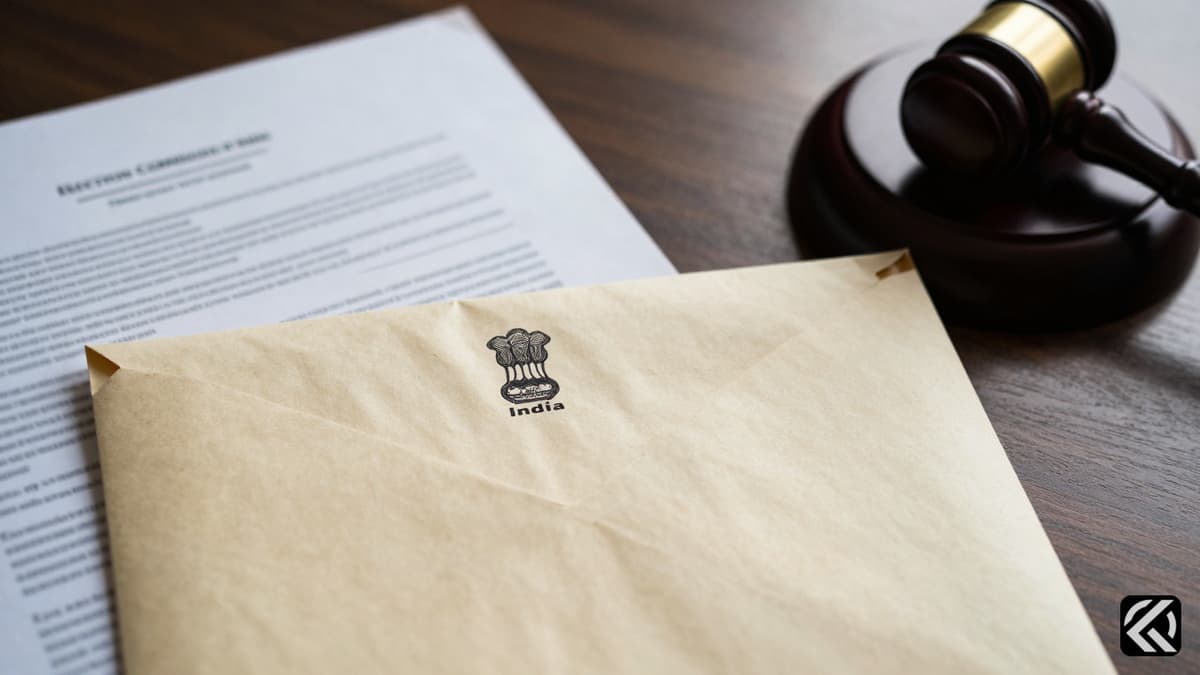
Congress leaders accuse CEC Gyanesh Kumar of illegal Form 6 modifications during the Special Intensive Revision, demanding his resignation and strict adherence to constitutional processes.
Mounting an offensive against Chief Election Commissioner Gyanesh Kumar, the Congress party accused the CEC of "lying" on Monday, October 5, 2026. This accusation follows a Supreme Court observation that the top court had not approved of any changes to Form 6 during the Special Intensive Revision (SIR) of electoral rolls in various states. The controversy centers on the integrity of the electoral process and the specific administrative actions taken by the Election Commission of India (ECI) under Kumar’s leadership.
The Leader of the Opposition in the Lok Sabha, Rahul Gandhi, took to his X handle to share a screenshot of an ECI statement dated September 26, 2026. The statement read: “The declaration attached to Form 6 for SIR has been upheld by the Hon’ble Supreme Court. For non-SIR period, the Forms applicable as per Rules (the Registration of Electors Rules 1960) will be used.” Gandhi interpreted this judicial clarification as definitive proof of misconduct. “It is now established beyond doubt that Gyanesh Kumar changed Form 6 illegally and unilaterally,” Gandhi asserted. He further characterized the action as an abuse of position designed to help the BJP, warning that those involved in this "criminal assault on our democracy" would be held accountable.
The political fallout intensified after the Supreme Court issued notices to the ECI and the Centre regarding a petition alleging that the poll body took several decisions without the approval of the other two Election Commissioners. This legal scrutiny provided the groundwork for the Congress party’s aggressive stance. The Opposition leader’s remarks were not isolated; they were part of a coordinated response from the highest levels of the party leadership.
In a separate post on X, Congress President Mallikarjun Kharge outlined the party’s hardline position. He declared that the resignation of the CEC, the annulment of the SIR, and conducting elections on ballot papers are “non-negotiable demands” of the principal Opposition party. Kharge emphasized the widespread nature of the discontent, stating that Congress workers and INDIA bloc partners are currently on the streets across the country to protest these three specific issues. He expressed solidarity with civil society members and youth organizations that are struggling on these issues in various locations.
“The dictator is extremely panicked; get ready for another chapter in the distraction tactics,” Kharge said, framing the political conflict as a struggle against authoritarianism. He reiterated the Congress Party’s three demands: first, the resignation of Gyanesh Kumar; second, the annulment of SIR; and third, conducting elections on Ballot Paper. This unified front highlights the depth of the party’s objection to the current electoral administration.
Taking note of the Supreme Court’s notices and its observation that it will annul decisions found not to be in accordance with law, Congress communication chief Jairam Ramesh commented on the potential for judicial intervention. Ramesh stated that the Supreme Court has a “remarkable opportunity to restore public confidence in the ECI.” He accused the CEC of “betraying” the Constitution in letter and spirit at the behest of Prime Minister Narendra Modi and Home Minister Amit Shah.
Ramesh elaborated on the specific grievances driving the opposition’s anger. He cited recent damning revelations regarding the ad-hoc, illegal, and slip-shod manner in which the SIR was taking place. He pointed to criticism from both sitting and retired Judges of the Supreme Court as evidence of the administration’s flaws. Furthermore, Ramesh highlighted the vast and indiscriminate deletions of voters without adequate due process as a critical failure. “Based on the recent damning revelations... the Supreme Court has a remarkable opportunity to restore public confidence in an institution vital to the integrity of our republic,” he said.
In another post, Ramesh made a direct allegation regarding the motive behind the electoral changes. “Obviously and very clearly the CEC lied. Form 6 was deliberately modified by the CEC himself to delete Gen Z voters of whom the PM is simply terrified,” he claimed. This assertion suggests a political motive linked to the demographics of young voters and their potential alignment against the ruling party.
The controversy regarding Form 6 is significant because this form is an application through which an eligible person seeks inclusion in the electoral roll for the first time. Changes to this form, particularly during a Special Intensive Revision, can have profound implications for voter registration and the eventual composition of the electorate. The Supreme Court’s involvement indicates that the legal boundaries of the ECI’s authority are being seriously tested.
The situation remains volatile as the Supreme Court reviews the petition against the ECI and the Centre. The opposition’s demands for the CEC’s resignation and the annulment of the SIR are unlikely to be met easily, potentially leading to prolonged legal and political battles. The Congress party’s mobilization of workers and their alliance with civil society groups underscores the severity of the crisis they perceive within the electoral framework.
The intersection of judicial oversight and political accusation creates a complex landscape for Indian democracy. If the Supreme Court upholds the opposition’s claims, it could force a restructuring of the ECI’s recent actions. Conversely, if the court finds no illegality, the political tensions will likely persist. The upcoming days are critical as the court’s decision on the notices will set the precedent for the legality of the Special Intensive Revision and the handling of Form 6 modifications.
The Supreme Court’s pending decision on the ECI and Centre notices will determine the legal standing of the Special Intensive Revision. If the court annuls specific decisions, it could invalidate parts of the current electoral roll, forcing the ECI to restart or revise the SIR process. This would validate the Congress party’s claims and potentially lead to the resignation of CEC Gyanesh Kumar due to loss of confidence. Furthermore, the demand for Form 6 to be used strictly according to the 1960 Rules could result in tighter regulatory frameworks for future electoral revisions, limiting unilateral administrative changes. The long-term impact may include a more cautious approach by the ECI, prioritizing judicial scrutiny over rapid administrative action to maintain institutional credibility.
Oct 6, 2026 02:48 UTC
Yemen Forces Recapture Mocha in Major Counteroffensive
Oct 6, 2026 00:07 UTC
Teen Loses Hand in French School Protest Clashes Amid Escalating Violence
Oct 5, 2026 22:36 UTC
UAE Shares FlyDubai Crew Data After Pilot Seize Control Attempt
Oct 5, 2026 22:00 UTC
US Withdraws Heavy Bombers From UK Base Amidst Rising Tensions With Iran
Nov 5, 2026 20:16 UTC
Pia Dandiya Claims Landmark Florida Win in 2026 Midterms