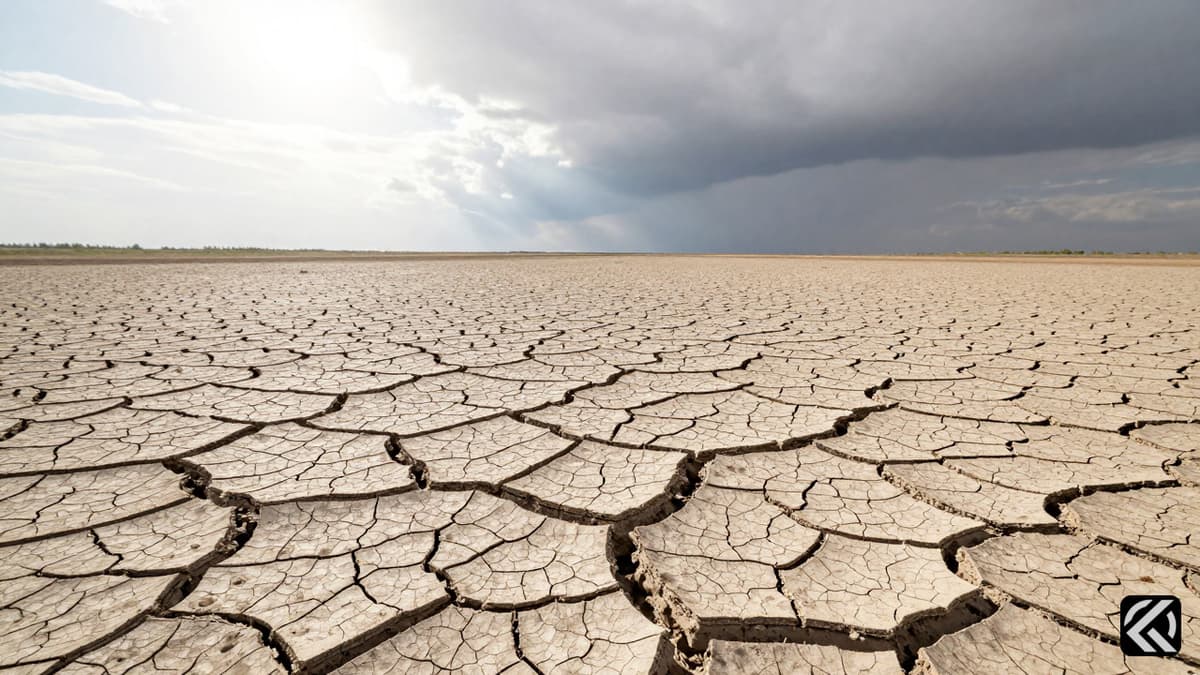
Devastating heat grips central India while the monsoon remains offshore. With El Niño 2026 threatening rainfall, experts warn of severe economic and human impacts.
Large swathes of central and northwestern India are currently enduring a punishing heatwave as of Wednesday, May 27, 2026, with the southwest monsoon yet to make its customary landfall in Kerala. This delay in the monsoon’s arrival exacerbates the crisis for millions, as the mercury continues to climb across multiple states, creating hazardous conditions for outdoor workers and vulnerable populations.
Banda in Uttar Pradesh recorded the season’s highest temperature, with the mercury touching 47.4°C on Tuesday, according to the India Meteorological Department (IMD). The IMD monsoon forecast indicates that while the southwest monsoon has advanced into the Arabian Sea and the Bay of Bengal, its entry into Kerala remains within the predicted margin of error. However, the prolonged wait for rains is intensifying the discomfort and health risks associated with the current weather patterns.
Prime Minister Narendra Modi has issued a stern appeal to citizens via social media, urging them to stay hydrated and carry water while stepping out. He specifically cautioned that children, the elderly, and outdoor workers are especially vulnerable to heat exhaustion. In a call for communal care, he appealed to people to keep bowls of water outside homes and shops for birds and animals, highlighting the widespread impact of the heat.
The IMD reports that heatwave to severe heatwave conditions have prevailed in isolated pockets over eastern Uttar Pradesh and western Rajasthan. Similar conditions are being recorded in parts of eastern Madhya Pradesh, southern Haryana, western Uttar Pradesh, western Madhya Pradesh, Vidarbha, and Chhattisgarh. While maximum temperatures range between 45°C and 47°C in these specific zones, other parts of the country are experiencing highs between 40°C and 45°C, with the northeast, western Himalayas, west coast, and interior Tamil Nadu largely spared.
This intense heatwave India is not just a meteorological event but a significant economic and human challenge. Simon Stiell, the United Nations Framework Convention on Climate Change (UNFCCC) executive secretary, stated that large parts of India are enduring “a punishing summer of extreme heat.” He attributed this trend chiefly to worsening climate change driven by the burning of coal, oil, and gas, noting that the crisis has severe human and economic impacts.
The strain on infrastructure is already visible. Modi noted that India had seen record peak electricity demand in recent days as citizens and businesses struggle to cope with the temperatures. He highlighted that solar and other renewables have helped meet these daytime peaks, underscoring the critical role of renewable energy in managing climate-related stress on the power grid.
Relief may finally be on the horizon for northern India. A fresh western disturbance is likely to affect northwest India from May 28, which could cause maximum temperatures to fall by 6°C to 8°C over the region between May 28 and 30. This weather system is expected to bring thunderstorms, squally winds up to 70 kmph, hail, and duststorms. However, such relief is temporary and localized, with conditions expected to abate in central and northwest India only after May 29.
The broader context of this weather crisis is clouded by the prospect of El Niño 2026, the Pacific warming pattern that typically suppresses monsoon rainfall over India. As of mid-May, the equatorial Pacific was rapidly transitioning into El Niño conditions, with weekly sea-surface temperature anomalies in the Niño3.4 region firmly reaching +0.9°C. Forecasters place the probability of El Niño through the May-July period at around 98%.
This looming threat is a major concern for the roughly 60% of Indian farmers who depend on the seasonal rains for the kharif crop. The IMD has already projected below-normal monsoon rainfall for 2026. The combination of delayed onset and reduced intensity poses a significant risk to agricultural productivity and food security in the coming months.
The intersection of immediate heat stress and long-term climatic shifts presents a dual challenge for India. While western disturbances may offer brief respite, the structural impact of rising global temperatures and specific Pacific Ocean anomalies like El Niño 2026 suggests a volatile agricultural season. Farmers preparing for the kharif crop must anticipate below-normal rainfall, necessitating adaptive strategies for water management and crop selection to mitigate potential losses.
Jun 8, 2026 22:55 UTC
Netanyahu Vows Forceful Response to Future Iran Attacks
Join 50,000+ readers getting the global briefing every morning.
No spam. Unsubscribe anytime.
Jun 8, 2026 22:55 UTC
Netanyahu Vows Forceful Response to Future Iran Attacks
Jun 8, 2026 20:56 UTC
Netanyahu Halts Iran Fighting, Vows Future Force
Jun 8, 2026 20:54 UTC
Justice Department Moves to Strip Citizenship from 17 Individuals
Jun 8, 2026 18:37 UTC
Trump Denied War Pledge Despite Clear Campaign Records


