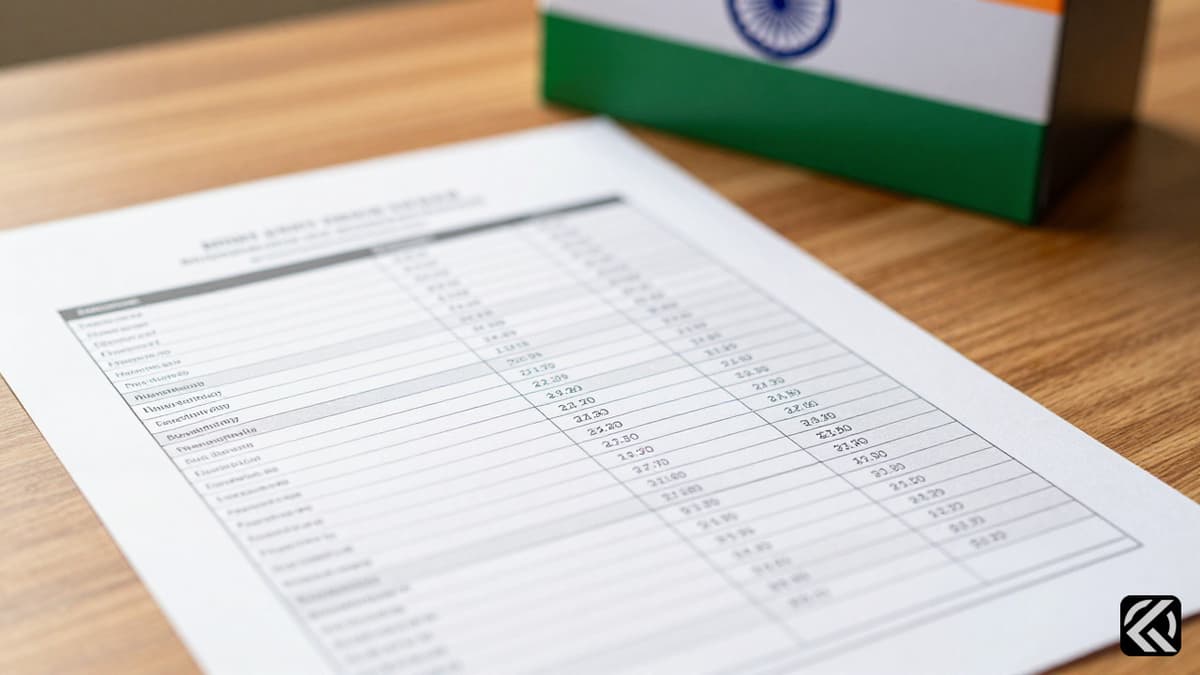
A stark data analysis of the recent special intensive revision in West Bengal reveals that while 90 lakh voters were excluded, the majority of deletions affected the Hindu community, contradicting broader assumptions about voter roll modifications.
In the wake of the special intensive revision (SIR) process in West Bengal, a comprehensive review of booth-level data has revealed a significant demographic shift regarding voter exclusions. Out of a total of 90 lakh names removed from the electoral rolls, 63% or 57.47 lakh are identified as Hindus, while 31.1 lakh, or 34%, are Muslims. This statistical breakdown indicates that Muslim voters deletions represent a disproportionately higher percentage relative to their actual demographic presence in the state compared to the Hindu majority.
The data presents a complex picture when viewed against the backdrop of the last official census in 2011, which recorded Muslims as comprising only 27% of the state's population. Consequently, the 34% figure for deleted Muslim voters is notably higher than their population share. However, in absolute terms, the largest number of deletions occurred among the Hindu community, accounting for the majority of the 90 lakh exclusions. This disparity highlights the nuanced nature of the electoral roll cleanup, where the sheer volume of Hindu names removed outweighs the percentage-based exclusion of Muslim names.
The special intensive revision was designed to purge duplicate and ineligible entries from the voter list. While the primary goal is to ensure the accuracy of the electoral rolls, the resulting statistics have sparked immediate analytical focus on the demographic impact of these deletions. The process, which culminated in the removal of these 90 lakh individuals, has been scrutinized for its potential political and social implications. The data suggests that while the Hindu community bears the brunt of the absolute number of removals due to its larger population size, the Muslim community faces a higher rate of exclusion relative to their demographic weight.
This analysis relies strictly on the comparison of booth-level data before and after the revision. The figures of 57.47 lakh Hindu deletions and 31.1 lakh Muslim deletions are derived directly from this comparative review. The fact that Muslims account for 34% of the deleted voters, despite being only 27% of the population according to 2011 census data, is a point of significant statistical observation. It suggests that the SIR process may have impacted the minority community at a rate higher than its proportional representation in the electorate. Conversely, the fact that Hindus account for the largest absolute number of deletions underscores the scale of the exercise and the sheer volume of the community being reviewed and modified.
The implications of these numbers extend beyond simple arithmetic. In a state where electoral dynamics are deeply influenced by religious demographics, the exclusion of nearly a third of the Muslim voting population, when compared to their total population, could alter the political calculus in specific constituencies. The removal of 90 lakh names is a massive administrative undertaking, yet the distribution of these removals tells a story of disproportionate impact. The 63% figure for Hindu voters reflects the larger population base, but the 34% figure for Muslim voters, when contrasted with the 27% census figure, indicates a targeted or perhaps systemic effect on that specific group during the revision process.
As the electoral rolls stand following the SIR, the new baseline reflects these sharp demographic shifts. The data serves as a stark reminder of how administrative processes can have uneven effects on different communities. The 90 lakh exclusions are not a random sample but a specific set of names removed through a rigorous verification process. The resulting distribution, with 63% Hindus and 34% Muslims, raises questions about the methods used during the revision and whether the criteria applied were uniform across all demographic lines. The disparity between the 34% deletion rate for Muslims and their 27% population share is particularly notable, suggesting a potential over-representation of Muslims among the excluded voters relative to their actual numbers in the state.
The West Bengal electoral rolls now reflect a new reality, one shaped by the outcomes of this intensive revision. The data confirms that while the majority of exclusions affect the Hindu population in absolute terms, the impact on the Muslim community is statistically significant relative to their size. This nuance is crucial for understanding the current electoral landscape. The 2011 census figure of 27% serves as the benchmark for this comparison, highlighting the deviation caused by the SIR. The 63% and 34% figures are not just numbers; they represent the changing composition of the electorate and the potential shifts in political dynamics that may follow.
The immediate aftermath of the SIR reveals a clear pattern: the Hindu community, being the majority, saw the highest absolute number of names removed. However, the Muslim community, while smaller in population, saw a higher percentage of their numbers removed relative to their share of the electorate. This dual reality-high absolute numbers for Hindus and a high relative rate for Muslims-creates a complex demographic picture. The data does not suggest a bias in one direction or another in a simple sense, but rather highlights the different scales of impact on the two major communities. The 90 lakh figure is the aggregate of these diverging impacts.
The statistical evidence from the special intensive revision indicates a lasting impact on the composition of the West Bengal electoral rolls. With 63% of the 90 lakh excluded voters being Hindu and 34% being Muslim, the demographic balance of the electorate has shifted. While the absolute number of Hindu deletions is higher, the relative impact on the Muslim community, which saw 34% of its exclusions despite a 27% population share, suggests a significant alteration in the voting landscape. If the SIR continues to operate with similar proportional outcomes in future revisions, the Muslim community may face a continued trend of exclusion relative to their population size, potentially altering the electoral balance in favor of the Hindu majority in key constituencies. The long-term effect will likely be a voter base where the Muslim vote is structurally reduced compared to its 2011 baseline, while the Hindu vote remains the dominant force in terms of volume, albeit with a slight reduction in absolute numbers due to the 57.47 lakh exclusions. This trend points toward a future where the relative political weight of the Muslim electorate is diminished, even as the Hindu community maintains its numerical supremacy.
Jun 8, 2026 00:51 UTC
Trump Claims Iran Nuclear Deal Imminent Despite Diplomatic Fractures
Jun 8, 2026 00:47 UTC
Iran Fires Missiles at Israel After Beirut Strike
Jun 7, 2026 22:00 UTC
US, Iran Peace Hops Fade 100 Days Into War
Jun 7, 2026 20:57 UTC
Iran Strikes Israel: IRGC Promises Week of Continuous Offensive
Jun 8, 2026 02:28 UTC
Trump Walks Out of Meet the Press After Rejecting Evidence Demands