Section
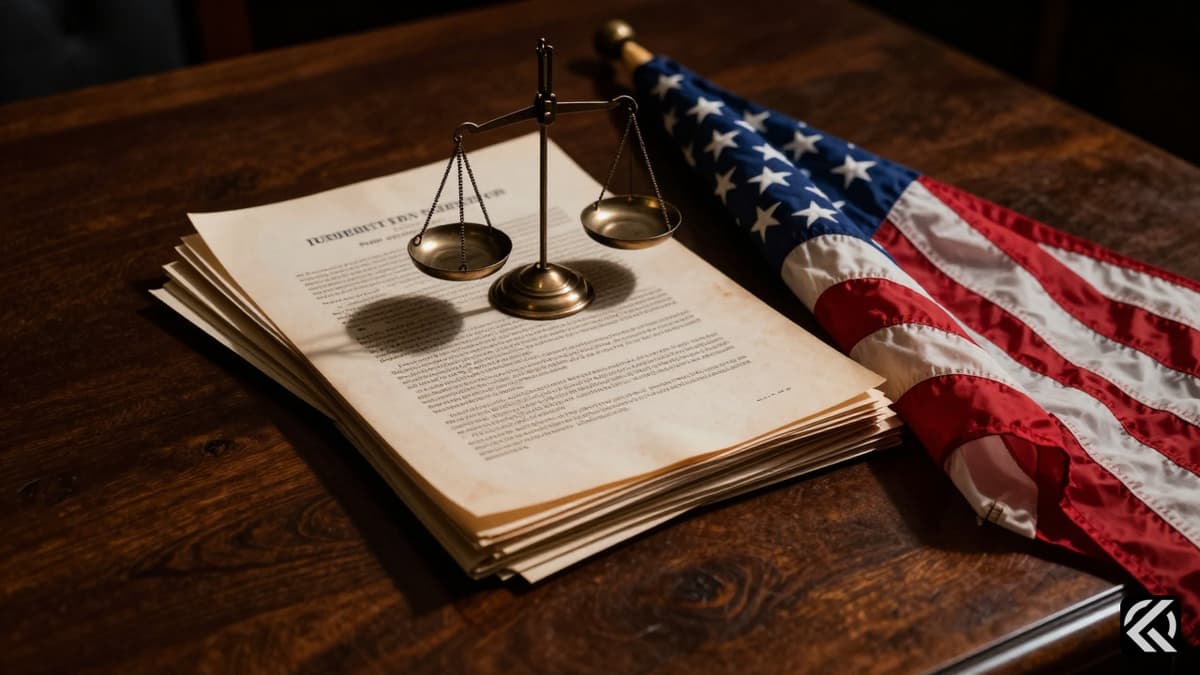
A coalition of states and cities has filed a federal lawsuit to block a new rule expanding government aid scrutiny for immigration applicants.
New York and 21 other states, along with the District of Columbia, have initiated a federal immigration lawsuit to prevent a new Department of Homeland Security (DHS) rule from taking effect. This legal challenge aims to block regulations that would allow immigration officials to deny green cards, visas, or entry to the United States by scrutinizing whether applicants might become dependent on government aid.
The controversy centers on changes to the "public charge" rule, which allows the government to deny entry or residency to those deemed likely to rely on state assistance. New York State Attorney General Letitia James and New York City Mayor Zohran Mamdani announced the coordinated legal action on Monday, arguing that the new policy unfairly penalizes immigrants for accessing basic necessities. The lawsuit was filed in the Southern District of New York, seeking to declare the rule unlawful and halt its implementation immediately.
The new regulation, set to take effect Friday, significantly expands the scope of the public charge assessment. Historically, immigration officers evaluated only cash benefits, such as Temporary Assistance for Needy Families or Supplemental Security Income. However, the Trump administration’s pending change removes specific limitations, allowing officials to consider any "means-tested public benefits." This includes non-cash safety net programs like Medicaid, housing vouchers, and participation in school meal programs.
“The rule would allow immigration officers to consider use of critical benefits like Medicaid and SNAP (the Supplemental Nutrition Assistance Program), and even participation in school meal programs, as part of an applicant’s circumstance,” James explained during a news conference at Manhattan City Hall. She highlighted the impossible dilemmas this creates for applicants, asking, “Will getting health insurance hurt my chances of getting a green card? Will accepting food assistance when I fall on hard times be held against me?”
The legal challenge argues that the DHS is exceeding its authority because Congress did not approve such a broad interpretation of what constitutes a public charge. The plaintiffs contend the rule is “arbitrary and capricious” and that the agency failed to adequately justify the harmful consequences of the change. James characterized the policy’s intent as malicious, stating, “Cruelty is the point... Immigration animus is the point. Having a chilling effect on immigrants is the point.”
Historical Context of the Public Charge Rule
The public charge provision dates back to the Immigration Act of 1882, originally intended to ensure immigrants could support themselves. The first Trump administration widened this category in 2020 to include Medicaid, food stamps, and housing vouchers. The Biden administration later reverted to longstanding practice in 2022 by excluding non-cash benefits from consideration. The current rule rescinds the Biden-era policy, creating a standard more expansive than the first term’s version because it does not specify which safety nets are considered, only that they are means-tested.
Critics, including the suing states, emphasize that the rule disproportionately affects legal residents and mixed-status families. Undocumented immigrants are not eligible for public benefits, so the regulation focuses on those already with legal status. The states argue that the policy will drive a climate of fear, causing eligible individuals to disenroll from essential programs. This disenrollment could result in billions of dollars in lost federal funding for states. The lawsuit estimates that nationwide, states will lose $4.05 billion annually in Medicaid and CHIP transfers, with the plaintiff states standing to lose approximately $2.2 billion.
Mayor Mamdani, leading a coalition of cities including Chicago, San Francisco, and Seattle in a parallel lawsuit, noted that fear is already driving people away from benefits they qualify for. “We’re talking about something that we know categorically does not apply to certain sets of New Yorkers, and yet we’re already seeing evidence of those kinds of New Yorkers unenrolling from life-saving benefits,” Mamdani said. He criticized the federal government for making “hungry New Yorkers hungrier” and “poor New Yorkers poorer.”
Advocates warn of severe confusion and public health risks. Arline Cruz, director of health programs at Make the Road New York, reported that families are questioning whether to unenroll US citizen children from SNAP out of fear it would impact immigration proceedings. “This rule has created a lot of confusion because a lot of our families depend greatly on benefits to access health care, food assistance and other resources that help them maintain the health of their families,” Cruz said.
In response, the Department of Homeland Security defended the rule as a necessary reinforcement of immigration integrity. The agency stated on social media that it is “restoring the basic principle that immigrants must be able to support themselves.” DHS emphasized that the policy aims to protect public resources and end policies that encourage dependency on American taxpayers. The agency noted that about 588,000 applicants are subject to public charge reviews annually.
The legal documents filed by the states highlight New York’s specific vulnerability due to its large immigrant population and reliance on federal Medicaid and SNAP funding. They argue that if families stop using legally entitled benefits, the ripple effects will damage public health, local economies, schools, and public safety. As of early Monday afternoon, no judge had been assigned to either lawsuit, and no hearing dates were scheduled. The ongoing legal battle underscores the deep political and social divides surrounding immigration policy in the United States, with states and cities pushing back against federal directives they view as harmful to their communities.
Oct 3, 2026 04:08 UTC
FlyDubai Co-Pilot Banned in Oman Over Extremism Concerns
Oct 3, 2026 00:50 UTC
Israel-Mumbai Campaign Honors Captain Smit After Flydubai Incident
Oct 2, 2026 18:13 UTC
Captain Smit Machchhar’s Courage Saves Flydubai Flight FZ1073 From Disaster
Oct 2, 2026 16:45 UTC
Captain Smit Machchhar Saves Plane Mid-Fall
Oct 3, 2026 06:56 UTC
Supreme Court Hears Cases on Guns, Voting Rights, and Climate