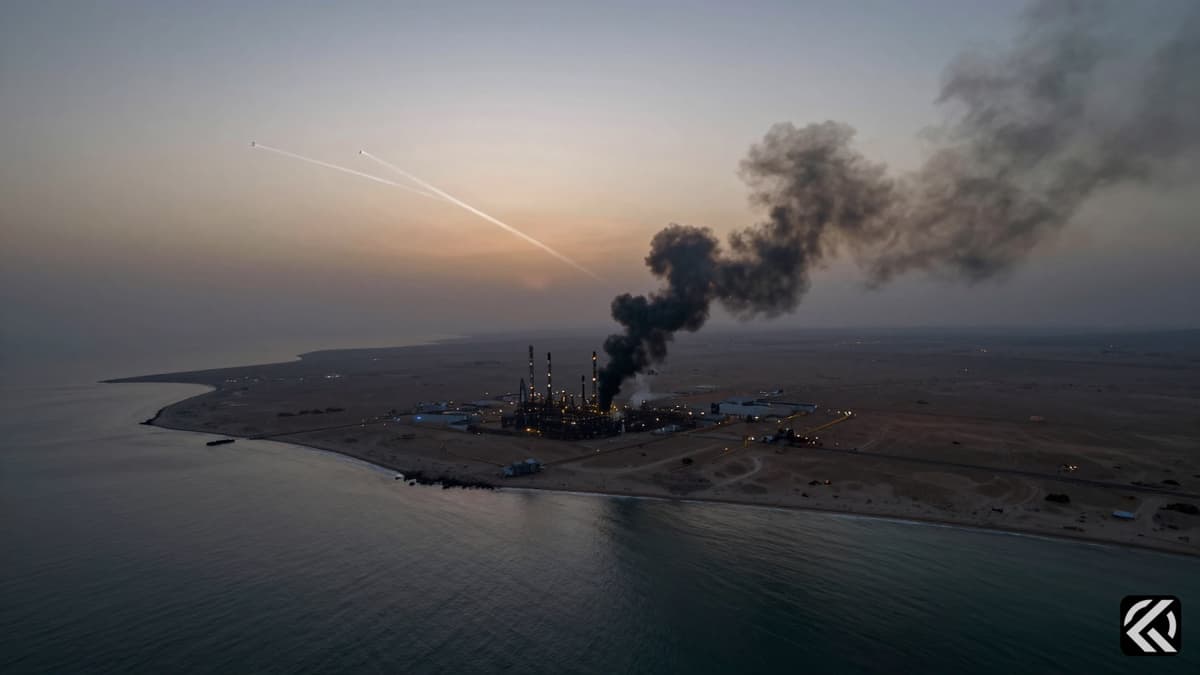
In a bold move, the US has targeted Iran's Karaj surface-to-surface missile plant, significantly degrading its ballistic missile capabilities.
The ongoing military campaign between the United States and Iran has taken another dramatic turn. The US has struck an Iranian missile manufacturing facility in Karaj, as part of its "Operation Epic Fury," with satellite imagery indicating extensive damage to the site. This bold move aims to significantly degrade Iran's ballistic missile capabilities, which had been threatening American interests, neighboring countries, and commercial shipping.
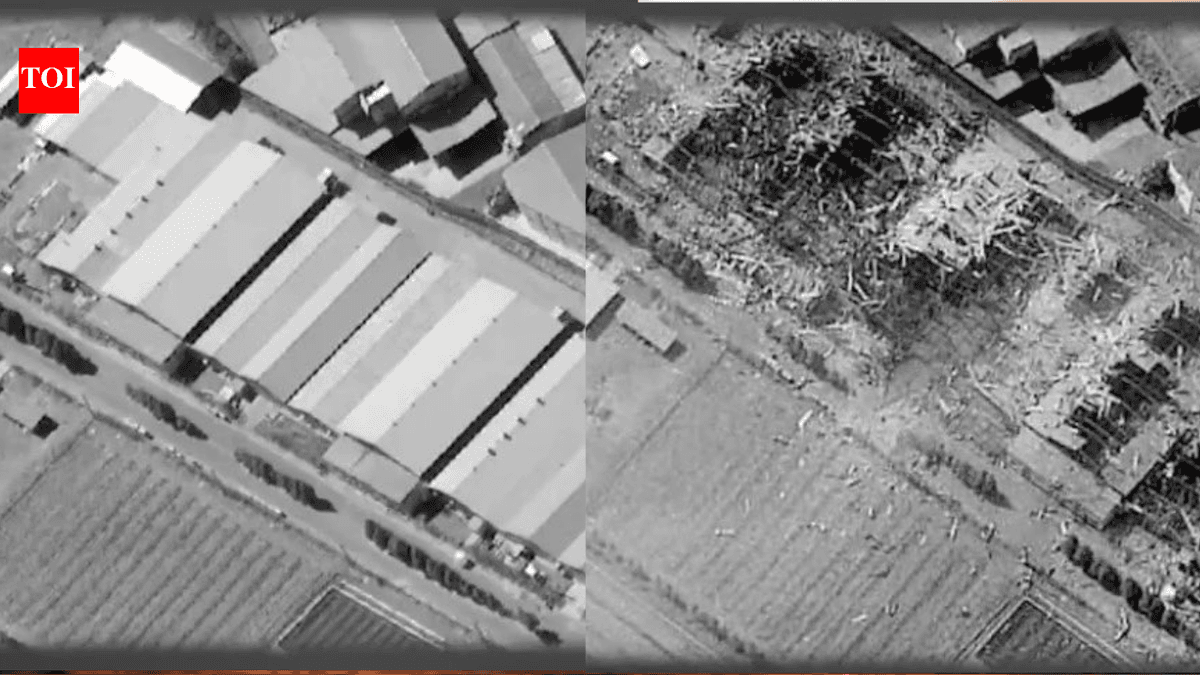
The US strike on the Karaj surface-to-surface missile plant was precisely targeted, with no visible impact beyond the site in the available frames. The facility, which was used to assemble ballistic missiles that threatened Americans, neighboring countries, and commercial shipping, is now reduced to rubble. Satellite images released alongside the statement show that structures visible on March 1, including long assembly halls and support buildings at the Karaj plant, were destroyed by March 11.
Military assessments based on open-source data suggest Iran's missile launch capacity has declined significantly since late February. Estimates indicate cumulative launches of around 1,100 to 1,700 missiles, with an initial surge of over 400 on the first day, followed by a drop of 86–94% by early March to low daily figures. This reduction points to a "harassment-level" capability, with sporadic missile launches likely constrained by a reduced number of operational launchers and degraded production capacity.
The US has been conducting a broader campaign against Iran that includes counter-proliferation strikes, maritime security operations, and cyber and electronic warfare efforts. The country has also deployed B-1 bombers, using 5,000-pound munitions to target threats to commercial shipping in the Strait of Hormuz. Several countries, including the UK, France, the Netherlands, Italy, and Japan, have indicated their willingness to support efforts aimed at ensuring freedom of navigation in the region.
The ongoing conflict has resulted in regional tensions escalating. Iran is believed to retain a dispersed network of facilities and capabilities, including proxy forces and cyber tools, which could be used in response below the level of conventional warfare. Israel launched fresh strikes on Tehran early Friday following overnight missile fire from Iran. The Israeli military said its forces had "begun a wave of strikes targeting infrastructure of the Iranian terror regime across Tehran," without providing further details.
The US strike on the Karaj surface-to-surface missile plant is a significant escalation in the ongoing campaign against Iran's ballistic missile capabilities. While tensions remain high, the reduction in Iran's missile launch capacity is a step towards de-escalation and ensuring freedom of navigation in the region. As the situation continues to unfold, it remains crucial for stakeholders to monitor developments closely and engage in diplomatic efforts to prevent further escalation.
May 4, 2026 17:13 UTC
UAE Intercepts Iranian Missiles Amid Escalating Strait of Hormuz Tensions
Join 50,000+ readers getting the global briefing every morning.
No spam. Unsubscribe anytime.
May 4, 2026 17:13 UTC
UAE Intercepts Iranian Missiles Amid Escalating Strait of Hormuz Tensions
May 4, 2026 15:53 UTC
BJP Secures Historic Mandate in West Bengal
May 4, 2026 15:20 UTC
US Launches Project Freedom to Guide Ships Through Strait of Hormuz
May 4, 2026 13:50 UTC
Rudy Giuliani Hospitalized in Critical Condition Amid Trump Praise