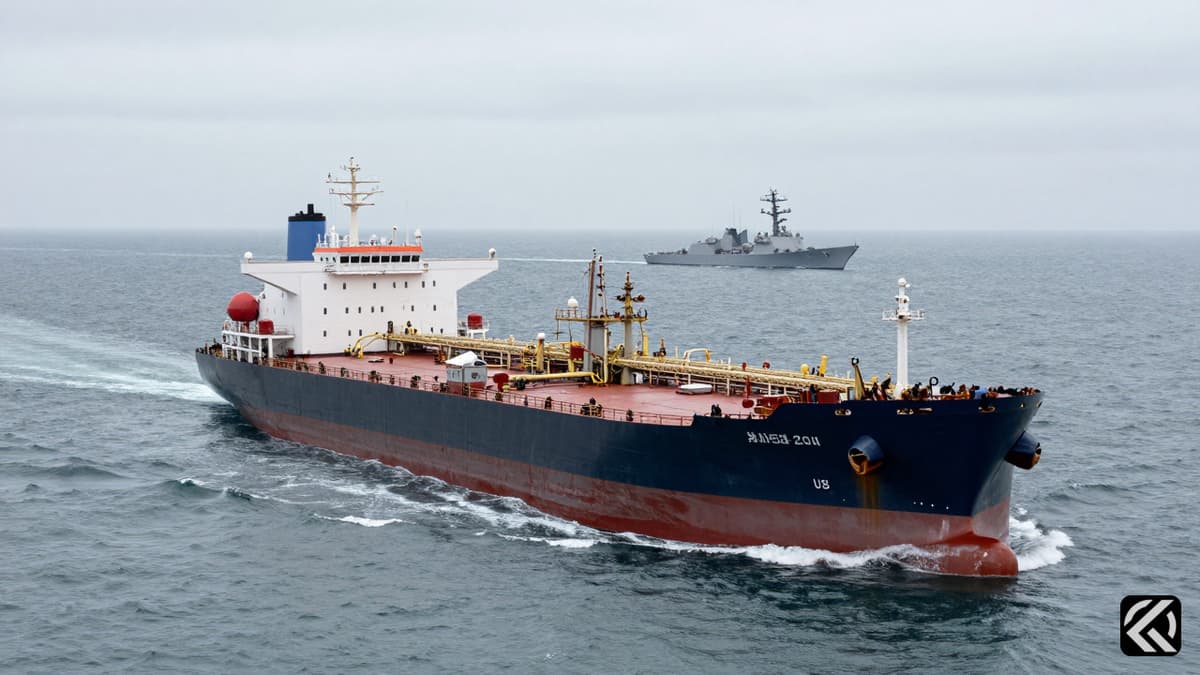
Amidst a naval blockade, the US initiates Project Freedom to guide neutral vessels through the Strait of Hormuz, sparking immediate military clashes with Iran.
The United States has launched a controversial new operation aimed at aiding vessels trapped in the Strait of Hormuz. President Donald Trump announced the initiative to assist neutral ships stranded by Iran’s blockade, declaring it a humanitarian effort to free "innocent bystanders" caught in the conflict.
This announcement follows days of escalating hostilities between Washington and Tehran, with Iran blocking the crucial waterway used by 20% of global oil and liquefied natural gas. The US response involves significant military assets, including guided-missile destroyers and over 100 aircraft, to support the transit of commercial vessels despite Iranian threats.
President Trump stated that the United States had received requests from countries worldwide to help free up ships "locked up" in the Strait. Describing the affected vessels as "victims of circumstance," Trump framed the move as a humanitarian gesture not just for the US and Middle Eastern nations, but specifically for Iran. He highlighted the deteriorating conditions for crews running low on food and essential supplies.
To execute this plan, dubbed Project Freedom, the US military mobilized substantial resources. US Central Command (Centcom) announced the deployment of guided-missile destroyers, 15,000 service members, over 100 land and sea-based aircraft, and multi-domain unmanned platforms. Centcom later confirmed that US Navy destroyers had successfully transited the Strait in support of the mission.
However, the operation faced immediate resistance. The Iranian military issued a firm warning, stating that the Strait is under Iranian armed forces control and that safe passage must be coordinated with them. When American destroyers entered the waters, Iran claimed its naval forces prevented their entry through a "swift warning." Shortly after, an Iranian official asserted that missiles had hit a US warship, a claim immediately denied by Centcom.
The tension extended beyond military posturing to affect regional commerce. The United Arab Emirates reported that a tanker affiliated with its state-owned oil company, ADNOC, was targeted by two drones while transiting the strait. While no injuries were reported, the incident underscored the risks facing commercial shipping.
The strategic situation remains precarious. An estimated 20,000 sailors and 2,000 ships have been trapped in the Gulf since the war began. The International Maritime Organisation has expressed growing concern over the physical and mental health of sailors facing dwindling supplies.
Iran has strictly limited traffic through the Strait, allowing only a handful of vessels, primarily from allied nations. Despite the US claims of assistance, it remains unclear how much of the transit is genuinely enabled by American forces or if the guidance is merely informational, which may offer little protection against Iranian attacks.
On Monday, Centcom reported that two US-flagged merchant vessels had safely transited the Strait, marking the first success of the operation. Yet, broader progress remains elusive. A ceasefire meant to enable a peace deal has seen little movement, with Iran forcefully objecting to US naval blockades on its ports.
Oil tanker captain Ramoon Kapoor, trapped in the region, described witnessing various missile explosions and attacks. He noted the situation was "pretty tense," though the announcement of Project Freedom drew no immediate reaction from those on the ground.
The announcement of Project Freedom did not immediately stabilize the markets or ease tensions. While there was a spike in attention following the conflicting reports of missile hits, the price of Brent crude remained steady at over $100 per barrel, more than 50% higher than pre-war levels.
Iran maintains that it controls the waterway and will attack any foreign force attempting to bypass its authority. The US continues to assert its right to assist neutral parties, threatening to use force if the humanitarian process is interfered with. The divergence in these positions suggests a high risk of further direct military confrontation as both sides probe each other’s resolve.
The Strait of Hormuz continues to serve as a critical flashpoint in the ongoing conflict between the US and Iran. While the US has successfully moved two merchant vessels through the waterway under its new humanitarian mandate, the fundamental disagreement over control and access remains unresolved. Iran’s firm stance on its sovereign control over the strait, coupled with its threats against foreign naval forces, indicates that any future US-led transit operations will likely encounter continued resistance. As commercial shipping faces persistent risks from drone attacks and naval posturing, the global energy market remains vulnerable to further disruptions. Without a breakthrough in ceasefire negotiations or a diplomatic de-escalation, the region is poised for continued military friction and economic instability, keeping oil prices elevated and geopolitical tensions at a breaking point.
May 4, 2026 17:13 UTC
UAE Intercepts Iranian Missiles Amid Escalating Strait of Hormuz Tensions
Join 50,000+ readers getting the global briefing every morning.
No spam. Unsubscribe anytime.
May 4, 2026 17:13 UTC
UAE Intercepts Iranian Missiles Amid Escalating Strait of Hormuz Tensions
May 4, 2026 15:53 UTC
BJP Secures Historic Mandate in West Bengal
May 4, 2026 13:50 UTC
Rudy Giuliani Hospitalized in Critical Condition Amid Trump Praise
May 4, 2026 13:07 UTC
Mamata Banerjee Urges TMC Agents to Remain at Counting Centres Amid BJP Surge


