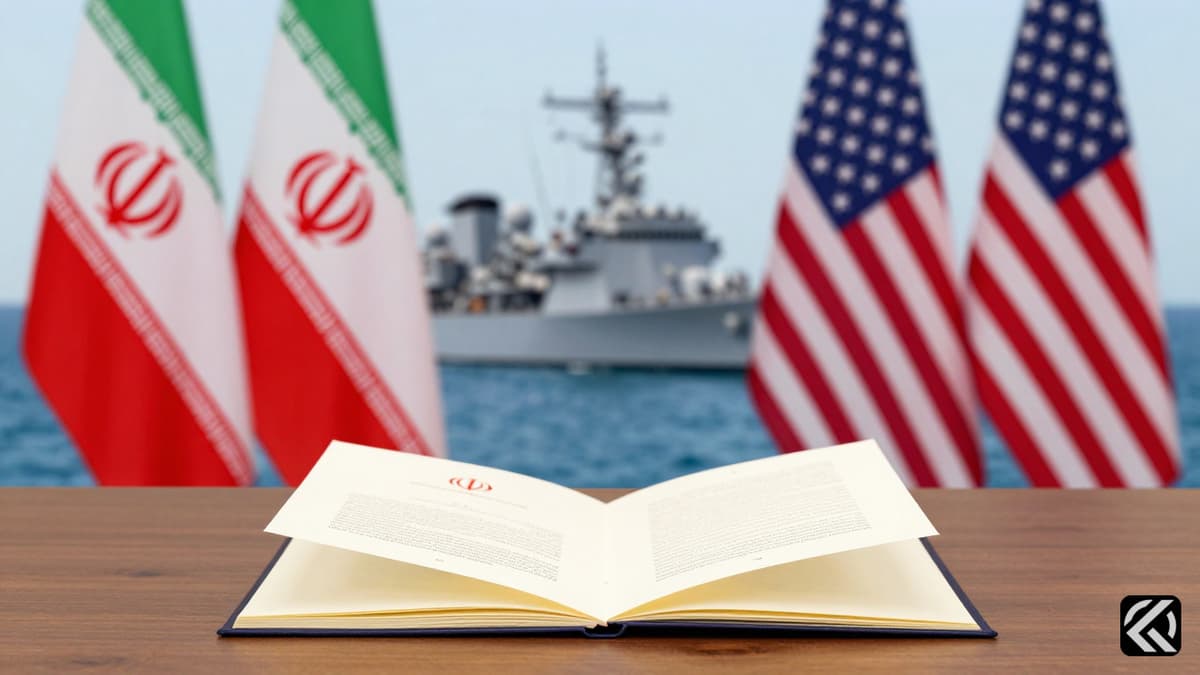
State media report the US has responded to Tehran's ceasefire plan, though President Trump remains skeptical of the offer's viability amid ongoing hostilities.
The Iranian government has stated that it received a response from the United States regarding its most recent diplomatic overture, marking a critical juncture in the escalating US-Iran tensions. According to reports from Iranian state-linked media, the foreign ministry spokesperson confirmed that the reply, delivered through Pakistani intermediaries, is currently being examined by Tehran. This development arrives as President Donald Trump publicly reviews the terms of the Iran peace proposal, signaling a complex diplomatic landscape where military pressure and political negotiation intersect.
The substance of Tehran's 14-point plan calls for a significant de-escalation, demanding that Washington withdraw its military forces from near Iran's borders and immediately end the naval blockade currently restricting access to Iranian ports. The proposal further insists on a total cessation of hostilities, specifically including the cessation of Israel's offensive in Lebanon, and seeks a binding agreement between the two nations within a 30-day window. Iranian state media emphasized that the initiative urges both warring parties to prioritize "ending the war" entirely rather than merely extending a temporary ceasefire, aiming to secure a lasting resolution to the conflict that began in February.
Despite these diplomatic efforts, the White House has yet to formally confirm the receipt of the response, although President Trump addressed the situation on social media platform Truth Social. He acknowledged receiving the latest Iranian plan but voiced strong skepticism about its acceptance, writing that he could not imagine it being viable because Tehran has "not yet paid a big enough price for what they have done to Humanity, and the World, over the last 47 years." This sentiment was reinforced when Trump spoke to reporters in Palm Beach, Florida, noting that while he had been briefed on the "concept of the deal," he awaited the exact wording before making a final determination.
President Trump also utilized a social media post to announce "Project Freedom," a new initiative aimed at guiding ships safely through the restricted waters of the Strait of Hormuz, which Iran has severely limited in traffic since the war’s inception. He declared that the US would assist countries with stranded vessels, warning that any interference with this process "will have to dealt with forcefully." This announcement coincides with the ongoing US naval blockade of Iranian ports, a key element of the pressure campaign that Iran seeks to dismantle through its diplomatic channels. The juxtaposition of these military actions with diplomatic overtures highlights the dual-track approach currently defining the administration's strategy.
On the political front, the timing of these developments is critical due to legal constraints on executive power. Trump notified Congress of strikes against Iran on March 2, making Friday the 60th day of military engagement. Under US law, the president must receive Congressional approval within this window or cease hostilities. Trump argued that the conflict was effectively "terminated" following a ceasefire on April 8, claiming that the ongoing port blockade did not constitute a continuation of the conflict, thereby pausing the legislative clock. This legal interpretation remains controversial as the 60-day deadline looms.
Simultaneously, the administration is facing growing pressure from within its own ranks. Republican Senator Josh Hawley of Missouri called for the redeployment of forces, stating, "I want to wind it down," and rejecting the idea of a "blank check for another endless war." This sentiment reflects a broader frustration among US lawmakers, including some Republicans, who view the military operation as costly and complex with unclear objectives. The political landscape is thus tense, balancing the president's hardline stance with legislative demands for accountability and withdrawal.
President Trump’s reluctance to fully withdraw from the conflict, asserting that "we're not leaving," suggests a continued military presence regardless of diplomatic outcomes. His threat of renewed strikes if Iran "misbehaves" indicates that the peace proposal may be viewed by Washington as insufficient without prior concessions. With the Congressional deadline for military authorization expiring, the administration faces a binary choice: seek legislative renewal of authority or redefine the scope of its military engagement to comply with existing laws. The failure to secure a broad political consensus or achieve a decisive diplomatic breakthrough could lead to prolonged instability in the Strait of Hormuz. As naval blockades persist and diplomatic channels remain strained, the risk of miscalculation remains high, potentially prolonging the conflict and exacerbating regional volatility in the absence of a comprehensive settlement.
May 4, 2026 15:20 UTC
US Launches Project Freedom to Guide Ships Through Strait of Hormuz
May 4, 2026 11:22 UTC
Iran Threatens Attack as US Guides Ships in Hormuz
May 4, 2026 01:55 UTC
Nepal Blocks Kailash Mansarovar Yatra via Lipulekh Pass
May 3, 2026 23:02 UTC
Trump Reviews Iran's Latest Ceasefire Offer Amid Blockade
May 4, 2026 19:32 UTC
West Bengal Elections 2026: Counting Begins Amidst SIR Impact


