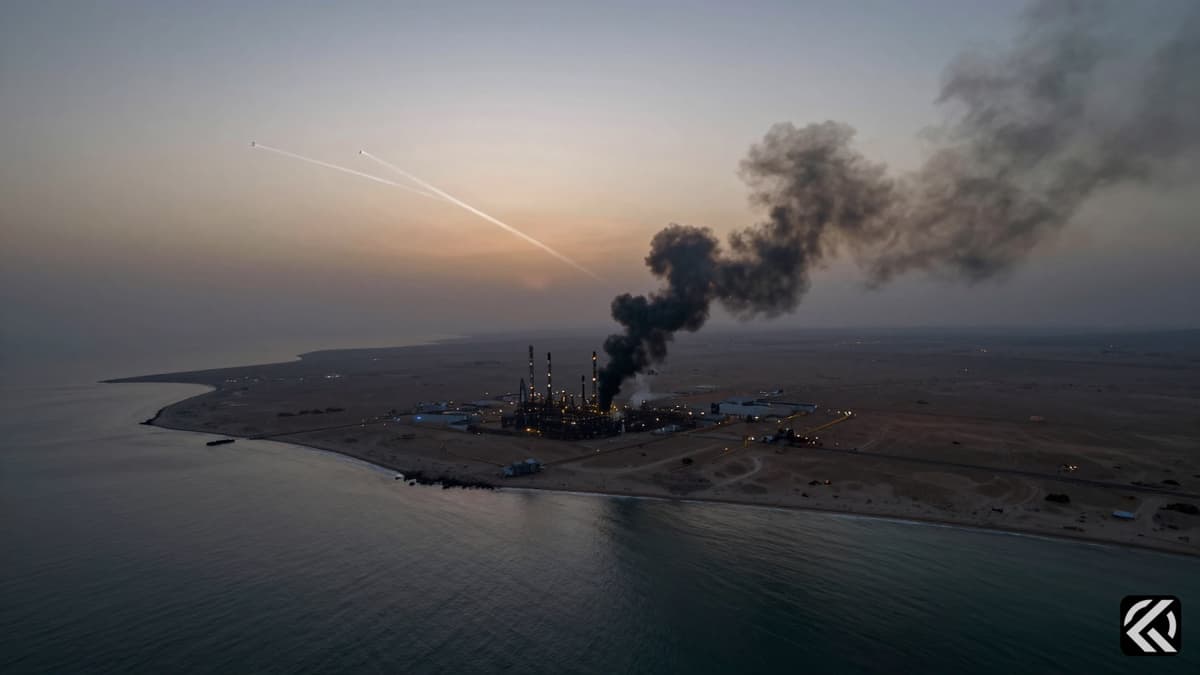
The UAE intercepted incoming Iranian ballistic missiles and drones, shattering a fragile ceasefire. Rising tensions in the Strait of Hormuz threaten further regional instability.
Air defences in the UAE successfully intercepted a barrage of incoming missiles and drone attacks launched from Iran late on Monday afternoon. The Ministry of Defence reported that its systems were actively engaging ballistic missiles, cruise missiles, and unmanned aerial vehicles across the nation. By the evening, the ministry confirmed that three missiles had been intercepted, while a fourth failed to hit its target and fell harmlessly into the sea.
These strikes shattered a period of relative calm in the region, which had persisted since a Pakistani-mediated ceasefire between Washington and Tehran began on April 8. This truce had paused more than two months of intense fighting in the Gulf region, making the sudden return of hostilities a significant escalation. The immediate trigger for the renewed violence remains linked to the broader geopolitical standoff, particularly regarding the blockades in the Strait of Hormuz and the failure of efforts to extend the ceasefire.
The attack on infrastructure had tangible consequences on the ground. In the emirate of Fujairah, an Iranian drone sparked a fire at an oil facility, prompting an immediate response from civil defence teams. The Fujairah Media Office stated that crews were deployed instantly to contain the blaze. Tragically, the attack resulted in injuries; three Indian citizens were moderately injured during the incident and subsequently taken to hospital for treatment. This event underscores the vulnerability of critical energy infrastructure amidst the escalating conflict.
Simultaneously, diplomatic channels have reached a stalemate. Efforts to extend the ceasefire in the United States-Israeli war on Iran have failed to make a breakthrough. Tensions are elevated on both sides as they face off regarding the blockades in the Strait of Hormuz. Negotiations between Washington and Tehran have been deadlocked since the ceasefire started on April 8, with Tehran’s control over the strait identified as a main point of contention. Although direct talks were held in Islamabad on April 11, no agreement on a lasting peace was reached. President Trump later extended the ceasefire without setting a new deadline, following a request from Pakistan, but the situation on the ground proves this extension is fragile at best.
The maritime situation has also deteriorated significantly. Tension was high throughout Monday after President Donald Trump declared that the US military would start an operation to help trapped commercial vessels leave the blockaded Strait of Hormuz by guiding them through the waterway. The president claimed this was a humanitarian effort to assist stranded crews. In response, Iranian media reported that Iran’s navy had fired “warning shots” at US warships near the strait, indicating a dangerous naval standoff.
Iran has attempted to distance itself from the direct targeting of Emirati territory. A senior Iranian military official stated later on state TV that “Iran had no plans to target the UAE.” However, the reality of the strikes contradicts this denial, especially after the UAE strongly condemned an Iranian drone attack on the oil tanker Barakah off the coast of Oman. UAE state oil giant ADNOC reported that no one was injured on the vessel, which was not loaded, but the act of targeting an oil tanker highlights the aggressive nature of the Iranian strategy.
This incident marks a sharp reversal from the previous phase of the conflict. The UAE was previously heavily targeted by retaliatory strikes from Iran, during which it intercepted and destroyed thousands of Iranian drones and missiles. The return of such attacks suggests that the ceasefire is not holding, or that the rules of engagement are shifting. The involvement of third-party actors adds complexity; the UAE intercepted the initial wave of attacks, but the targeting of assets like the Barakah tanker and Fujairah facilities suggests a broader strategy to pressure Emirati economic and military capabilities.
The role of Pakistan in mediation remains a key diplomatic factor. The ceasefire was originally reached via Pakistani mediation, and its extension was also following a request from Islamabad. However, the lack of a lasting peace agreement and the resumption of hostilities suggest that Pakistani mediation may no longer be sufficient to contain the conflict. The involvement of the United States and the strategic importance of the Strait of Hormuz have internationalized the conflict, raising the stakes for any future diplomatic resolution.
The resumption of missile and drone attacks by Iran against the UAE signals a critical breakdown in the diplomatic process mediated by Pakistan and the United States. With the Strait of Hormuz blockaded and US naval forces engaged in guiding commercial vessels, the risk of a broader regional war has increased significantly. The failure to secure a lasting peace agreement since April 8, combined with the targeted strikes on oil infrastructure, suggests that military escalation may continue to outpace diplomatic efforts. Future stability in the Gulf relies heavily on whether the current ceasefire can be renewed with stricter enforcement mechanisms or if the conflict will expand to involve more direct international military confrontation.
May 4, 2026 17:13 UTC
UAE Intercepts Iranian Missiles Amid Escalating Strait of Hormuz Tensions
Join 50,000+ readers getting the global briefing every morning.
No spam. Unsubscribe anytime.
May 4, 2026 15:53 UTC
BJP Secures Historic Mandate in West Bengal
May 4, 2026 15:20 UTC
US Launches Project Freedom to Guide Ships Through Strait of Hormuz
May 4, 2026 13:50 UTC
Rudy Giuliani Hospitalized in Critical Condition Amid Trump Praise
May 4, 2026 13:07 UTC
Mamata Banerjee Urges TMC Agents to Remain at Counting Centres Amid BJP Surge


