Section
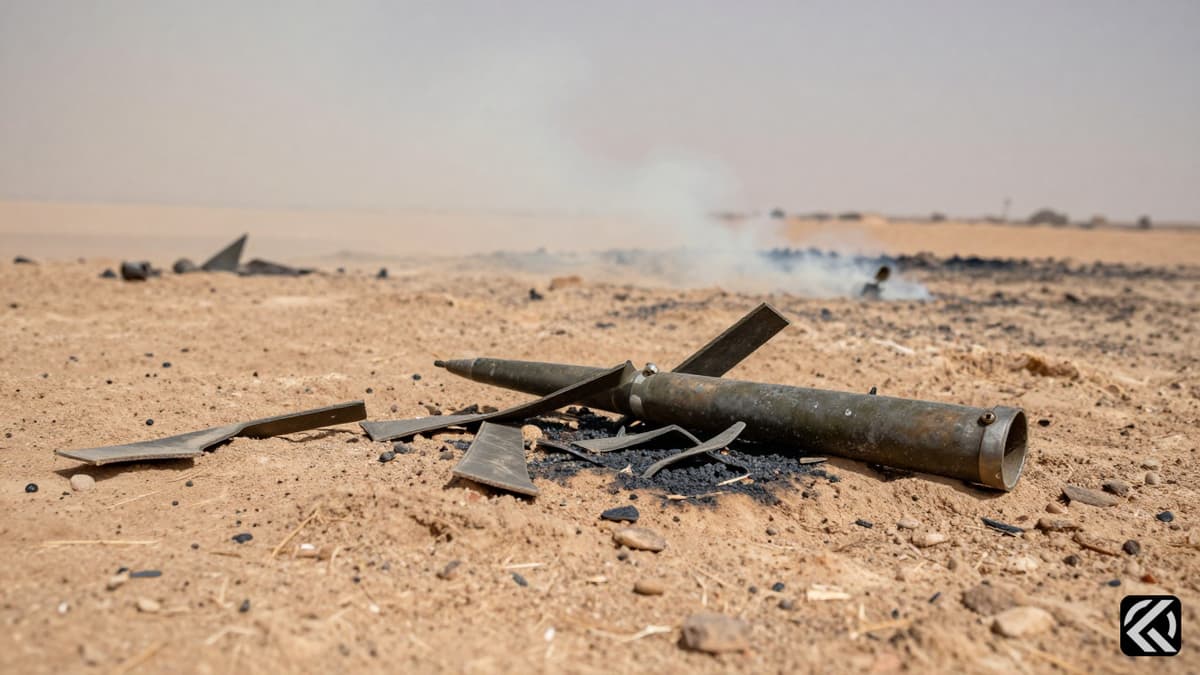
A US soldier died in northern Iraq from a controlled detonation of unexploded ordnance from a downed Iranian drone, marking the 17th US death in the ongoing conflict.
The United States military confirmed the death of a third American soldier in northern Iraq, stating he was killed during a controlled detonation of unexploded ordnance derived from a downed Iranian drone.
In a formal statement released on Sunday, US Central Command (CENTCOM) verified that the soldier died on July 18. Alongside the fatality, the command reported that a second service member sustained mild injuries during the incident involving the explosive debris. The command did not release the names or specific identities of the victims involved in this latest casualty.
This tragic event brings the total number of US service members killed since the United States and Israel launched their war on Iran to 17. The armed conflict officially began on February 28, and the pace of casualties has accelerated significantly in recent weeks. Just days prior to this incident, two other US service members were killed in Iranian strikes in Jordan, while a third went missing. CENTCOM stated that unidentified remains have been recovered from that Jordanian location, and an examination process is currently underway to identify the deceased personnel.
The announcement of this latest death coincides with a significant escalation in hostilities. The United States launched attacks on Iran for an eighth consecutive night, marking a sustained and intense campaign against Iranian targets. In response, Tehran has launched missiles and drones at US assets in the Gulf region, highlighting the reciprocal nature of the ongoing combat.
A critical factor in this conflict is the nature of the weaponry being deployed. Reports indicate that Iran utilizes highly explosive one-way attack drones, known as Shahed drones, which can be produced at a relatively low cost of approximately $30,000 each. This affordability allows for the mass deployment of these drones in attacks, posing a significant logistical and financial challenge to defensive forces. In contrast, the interceptors used to shoot down these drones can cost millions of dollars each, and they do not always successfully find their targets, creating a disparity in the economic and tactical dynamics of the war.
In recent days, the intensity of attacks between the US and Iran has surged following the collapse of an interim ceasefire agreement. The breakdown of this diplomatic effort was triggered by a struggle for control over the Strait of Hormuz, a vital global shipping channel critical to energy supplies. The fighting has already killed thousands of people, predominantly in Iran and Lebanon, while causing major disruptions to global energy supplies and fueling fears of worldwide inflation.
On Sunday, Iranian media reported that the US carried out an attack near the city of Sirik in southern Iran, as well as near Shadegan, close to the border with Iraq. An explosion was subsequently reported in Abadan, located in Iran’s southwest. Furthermore, Iran’s Atomic Energy Organization condemned a US attack on the site of a nuclear power plant under construction in Darkhovin. The International Atomic Energy Agency confirmed it was investigating reports of an overnight attack on the facility, noting that the plant was in the very early stages of construction.
Retaliatory measures from Iran continued across the Gulf region. According to Iranian state television, Iran carried out drone attacks on US military assets and equipment at Kuwait’s Al-Adiri camp and the Ali Al Salem airbase. Kuwait’s government stated that a desalination plant had been attacked for the second consecutive day, causing a fire. Kuwait described this as a direct strike on vital civilian infrastructure, emphasizing the widening impact of the conflict beyond military zones.
Bahrain’s air defenses also intercepted an Iranian attack on Sunday, as reported by Bahraini state television. Meanwhile, sirens sounded in Jordan, where the military claimed to have shot down three Iranian missiles. Jordan summoned Iran’s charge d’affaires to protest against these recent attacks, signaling diplomatic strain in the region.
The rapid deterioration of security in the Middle East, characterized by the high volume of drone deployments and retaliatory missile strikes, suggests that the US-Iran War is entering a phase of prolonged attrition. With the collapse of the ceasefire and the ongoing struggle for the Strait of Hormuz, the conflict threatens to further destabilize global energy markets and deepen humanitarian crises in Iran and Lebanon. The asymmetric cost of defense against Shahed drones will likely force continuous adaptation in US military strategy, while the destruction of civilian infrastructure in Kuwait and the targeting of nuclear sites in Iran risk expanding the war into new, more volatile territories.
Oct 3, 2026 04:08 UTC
FlyDubai Co-Pilot Banned in Oman Over Extremism Concerns
Oct 3, 2026 00:50 UTC
Israel-Mumbai Campaign Honors Captain Smit After Flydubai Incident
Oct 2, 2026 18:13 UTC
Captain Smit Machchhar’s Courage Saves Flydubai Flight FZ1073 From Disaster
Oct 2, 2026 16:45 UTC
Captain Smit Machchhar Saves Plane Mid-Fall
Oct 3, 2026 10:04 UTC
UAE Official: Flydubai Co-Pilot’s Attack Was Terror Act