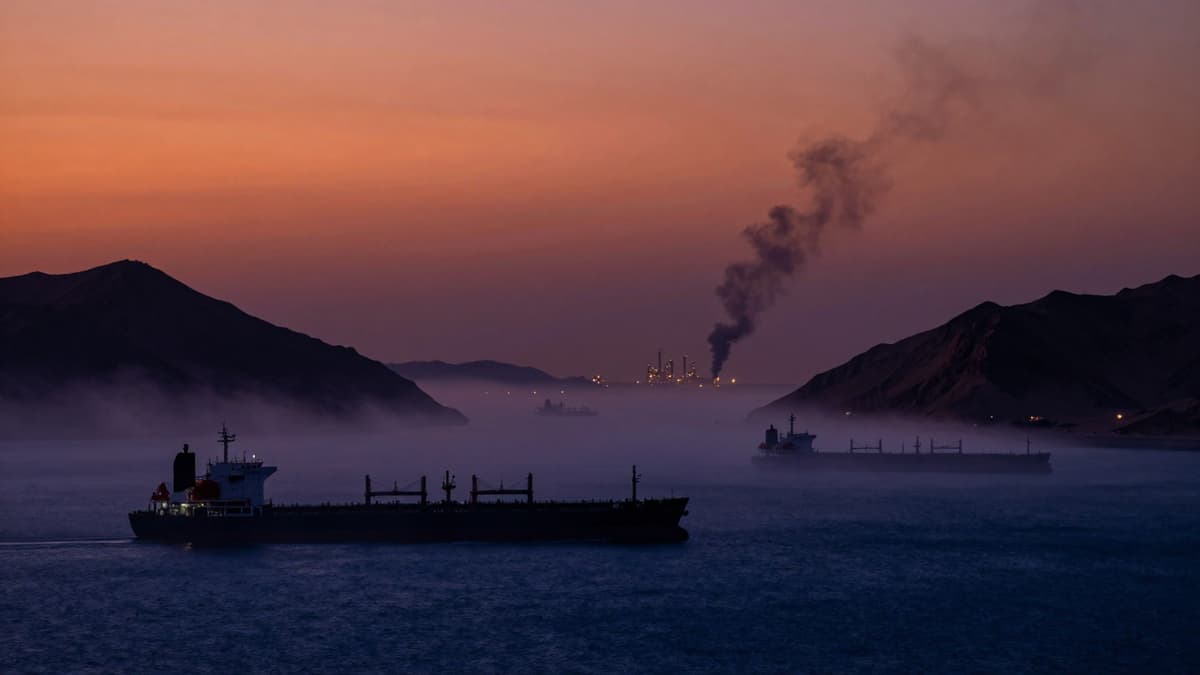
President Trump warns of devastating strikes on Iranian power and oil plants if the Strait of Hormuz remains closed, while Tehran denies active negotiations and vows to decide the war's end.
On Monday, March 30, 2026, President Donald Trump issued a stark warning that his administration is preparing to strike Iranian civilian infrastructure if Tehran does not agree to a deal. The ultimatum specifically targets oil wells, electricity generating plants, and desalination facilities if the Strait of Hormuz is not immediately reopened for business.
Earlier in the month, the President had escalated rhetoric significantly, threatening to hit Iran "20 times harder" and issuing a 48-hour deadline for the strait's reopening. Although Trump briefly delayed this deadline on March 23, extending it to April 6, the threat of obliterating Kharg Island and other critical assets remains central to the current geopolitical standoff. The White House claims serious discussions are underway to end military operations, a claim that faces immediate and harsh rebuttal from Tehran.
Iran has firmly rejected the notion of active diplomatic breakthroughs. Esmaeil Baghaei, spokesperson for Iran's Ministry of Foreign Affairs, questioned the validity of US claims, noting that global trust in Washington's diplomatic assertions is currently very limited. Baghaei stated it is unclear how seriously the US considers its own claims regarding negotiations. Meanwhile, the Islamic Revolutionary Guard Corps (IRGC) dismissed the threats entirely, asserting that Tehran is the party that will determine the end of the war.
The military situation remains volatile as US-Iran military escalation continues unabated. The Pentagon is currently sending additional troops to the region, even as the President claims the administration is negotiating with a "new and more reasonable regime." Iran contends it received a proposal through intermediaries that was rejected as "very excessive, unrealistic and irrational," while simultaneously offering its own counter-proposal.
On the ground, the conflict shows no signs of abating. On Monday, the Israel Defence Forces (IDF) claimed to have struck specific weapons production sites within Iran. These targets included facilities assembling long-range anti-aircraft missiles, manufacturing components for anti-tank and anti-aircraft systems, and a research and development site for ballistic missile engines. In retaliation, Iranian forces reportedly launched at least six missile attacks, resulting in a large blaze at an oil refinery in Haifa.
Iran's military spokesperson, Ebrahim Zolfaqari, attributed the aggression to what he termed the "child-killing Zionist regime" acting alongside Trump. Zolfaqari declared that while Trump initiated the aggression mistakenly, he will face the "heroic and seasoned Iranian nation and its armed forces." This rhetoric underscores the deep entrenchment of the conflict, where both sides believe the other is mistaken or egoistic in their approach.
The divergence between US and Iranian narratives on the status of negotiations creates a dangerous gap. While Trump asserts that "great progress has been made" in social media posts, Iranian officials maintain that the US proposal is unacceptable. The Trump Iran war scenario is further complicated by the involvement of third parties. Zolfaqari suggested that Trump is currently resorting to other world leaders to end the war, implying a lack of direct, productive contact with the Iranian leadership despite US claims of engagement.
The physical impact of the conflict is already severe. The IRGC stated it fired the 87th wave of attacks on Monday, targeting Israel and American bases. These strikes allegedly hit five US bases in the region and military positions across southern, central, and northern Israel. Specific locations named in the IRGC statement include Haifa Bay, Kiryat Shmona, Tel Aviv, Be'eer Sheva, Dimona, al‑Kharj, and Jufair. The IDF response targets a critical infrastructure sector that Iran relies on heavily for energy export and domestic power.
The potential targets listed by Trump include Kharg Island, a critical hub for Iranian oil exports, as well as desalination plants. Such a strike would not only cripple the Iranian economy but could also lead to a severe humanitarian crisis, affecting water supplies for the population. The President's language regarding "blowing up and completely obliterating" these facilities suggests a willingness to inflict total infrastructure damage to force compliance regarding the Strait of Hormuz.
As the April 6 deadline approaches, the situation remains fluid. The US claims of "serious discussions" are met with Iranian assertions that the US has not been taken seriously, even domestically. The continued exchange of fire, with the IDF claiming strikes on missile production and Iran targeting multiple US and Israeli locations, indicates that diplomatic channels are currently overshadowed by kinetic operations. The world watches closely as the threat of total infrastructure destruction hangs over the Middle East.
This intense standoff over the Strait of Hormuz crisis suggests that the conflict may spiral further before de-escalation occurs. If the US moves to destroy the power and oil infrastructure as threatened, the resulting retaliation could expand the conflict significantly, drawing in more regional actors and destabilizing global energy markets. Iran's insistence that it holds the power to end the war, combined with its willingness to strike US bases, indicates that diplomatic concessions alone may not halt the current trajectory of the Trump Iran war. The arrival of additional US troops signals a long-term commitment to this strategy, potentially leading to a prolonged period of high-intensity military engagement rather than a quick negotiated settlement.
Jun 8, 2026 00:51 UTC
Trump Claims Iran Nuclear Deal Imminent Despite Diplomatic Fractures
Jun 8, 2026 00:47 UTC
Iran Fires Missiles at Israel After Beirut Strike
Jun 7, 2026 22:00 UTC
US, Iran Peace Hops Fade 100 Days Into War
Jun 7, 2026 20:57 UTC
Iran Strikes Israel: IRGC Promises Week of Continuous Offensive
Jun 8, 2026 02:28 UTC
Trump Walks Out of Meet the Press After Rejecting Evidence Demands


