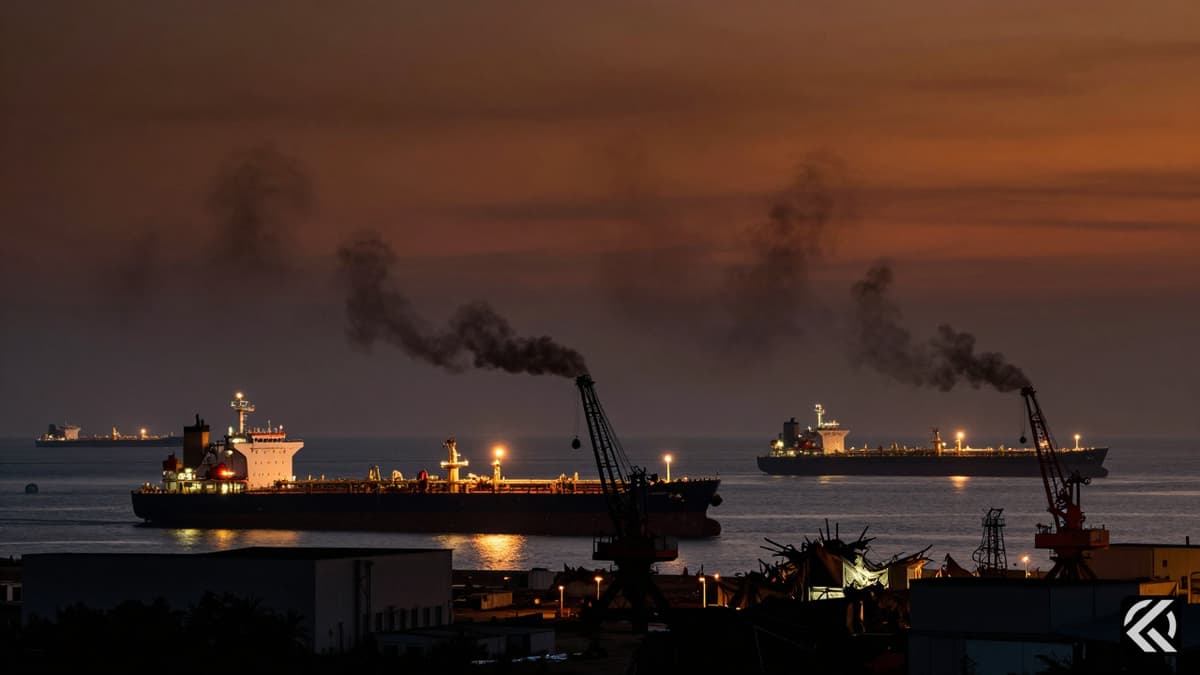
President Trump threatens massive strikes on Iranian civilian infrastructure unless the Strait of Hormuz is reopened, facing accusations that such actions violate international law and constitute war crimes.
Just five months after President Donald Trump and his allies expressed outrage over a video where six congressional Democrats warned service members not to obey illegal orders, the President is now demonstrating exactly what those lawmakers feared. He has established a strict deadline of 8 p.m. ET this Tuesday for Iran to agree to a deal and re-open the Strait of Hormuz. According to repeated statements from the White House, if no agreement is reached, the United States will strike Iranian infrastructure sites, including power plants, bridges, oil wells, and potentially water desalination plants. These proposed actions could well amount to Iran war crimes under international scrutiny.
It remains uncertain whether the President will follow through if a deal is not reached, particularly given his history of repeatedly delaying the deadline. The deadline was initially set for two weeks ago, yet it has been pushed back despite little evidence of serious negotiations taking place. When asked by reporters at the White House on Monday about the possibility of committing war crimes, Trump dismissed the concerns, stating, "You know the war crime? The war crime is allowing Iran to have a nuclear weapon."
This latest escalation follows more than a decade of the President floating actions that might constitute war crimes, alongside arguably illegal actions taken in recent months. The current threat involves the biggest theater imaginable. While civilian infrastructure can be a valid target if it has dual military use, Trump has threatened to blow up all of Iran's power plants, not just specific ones. A week ago, his social media post threatened "blowing up and completely obliterating all of their Electric Generating Plants, Oil Wells and Kharg Island." On Wednesday, the President doubled down in a primetime address, declaring, "we are going to hit each and every one of their electric-generating plants very hard and probably simultaneously."
By Sunday, in a particularly frenzied post on Truth Social, he warned that the deadline was fast approaching. He wrote, "Tuesday will be Power Plant Day, and Bridge Day, all wrapped up in one, in Iran," adding, "There will be nothing like it!!! Open the Fuckin' Strait, you crazy bastards, or you'll be living in Hell - JUST WATCH! Praise be to Allah." CNN's Fareed Zakaria noted that attacks on basic energy infrastructure appear transparently against international law. Zakaria stated, "That has traditionally been considered a war crime... and it certainly on plain reading is a violation of the Geneva Convention."
Stéphane Dujarric, spokesman for the United Nations secretary general, responded to Trump's threats last week by stating, "If there's an attack on clearly civilian infrastructure, that is not allowed under international humanitarian law." When asked the same day whether the administration was threatening war crimes, White House press secretary Karoline Leavitt responded obliquely, saying, "Of course this administration and the United States armed forces will always act within the confines of the law."
The context of these threats recalls the video released by congressional Democrats in November, which was cast as unthinkable given Trump's past behavior. At that time, the Justice Department even tried, unsuccessfully, to indict the lawmakers. However, Trump has repeatedly floated, and in some cases the administration has executed, actions that flout international law. In late 2015, Trump advocated killing the families of terrorists, which many noted would violate international law. By early 2016, he advocated torture and pledged to "bring back a hell of a lot worse than waterboarding," assuring troops he would carry them out regardless of legality.
In 2020, Trump threatened to target Iranian cultural sites, which would have violated international law and likely been a war crime. Then-Defense Secretary Mark Esper quickly acknowledged this and pledged not to do it, forcing Trump to backtrack. In 2022, Trump floated the idea of disguising US planes with Chinese flags to bomb Russia, a clear violation of the Geneva Conventions. By last summer, the administration arguably committed likely war crimes during a double-tap strike on a suspected drug boat in the Caribbean, leaving survivors after the first strike.
The New York Times later reported that the aircraft used in these strikes was painted to look like a civilian plane and hid its weaponry, a tactic similar to Trump's proposal that could amount to "perfidy," a known war crime. Even as recently as early last month, a US submarine sank an Iranian warship in international waters near Sri Lanka while it was not engaged in combat, a move some experts argued was legally problematic. Furthermore, by mid-March, Defense Secretary Pete Hegseth stated the US military would provide "no quarter, no mercy for our enemies," a phrase that appears illegal under international law.
The progression of these events follows a familiar pattern for Trump: floating something seemingly unthinkable until it becomes less unthinkable. Yet, the core issue remains that an American president is threatening actions that appear to be war crimes, even after warnings about their illegality. Following through could mean a remarkable escalation in the Iran war and a lasting change in views of US morality on the world stage. It would also mark a real shift in strategy, given Trump has spoken about spurring Iran's citizens to overthrow their government. Attacking Iran's infrastructure in ways that hurt civilians for years could turn the population more against the United States, despite Trump's claim that citizens want such bombings for freedom.
His repeated delays of the deadline seem to project uneasiness with following through. However, his administration has already conducted strikes in the Western Hemisphere that could be war crimes. Even if he declines to follow through in Iran, he still appears to have threatened war crimes as a bargaining chip. It is unclear if he still has people around him, like former Defense Secretary Esper, who would dissuade him from taking these actions. Either way, the six Democrats may have had a point.
President Trump's explicit threats to destroy civilian infrastructure in Iran represent a potential breaking point for international law and American standing. If the deadline passes without a deal and strikes occur, the global community will likely witness a permanent shift in how US military strategy is viewed, potentially normalizing the targeting of non-military assets. The failure of internal checks, evidenced by the absence of figures like Esper, suggests a future where such threats become routine, fundamentally altering the legal and moral constraints on presidential power in conflict zones.
Jun 8, 2026 02:17 UTC
Magnitude 7.8 Quake Shakes Philippines, Urging Immediate Evacuations
Join 50,000+ readers getting the global briefing every morning.
No spam. Unsubscribe anytime.
Jun 8, 2026 02:17 UTC
Magnitude 7.8 Quake Shakes Philippines, Urging Immediate Evacuations
Jun 8, 2026 00:51 UTC
Trump Claims Iran Nuclear Deal Imminent Despite Diplomatic Fractures
Jun 8, 2026 00:47 UTC
Iran Fires Missiles at Israel After Beirut Strike
Jun 7, 2026 22:38 UTC
Congress Party Claims Unity for INDIA Bloc Delhi Meeting


