The Lok Sabha Speaker and Rajya Sabha Chairman have officially rejected a high-stakes impeachment motion against Chief Election Commissioner Gyanesh Kumar, citing valid legal grounds regarding the Special Intensive Revision SIR controversy.
In a landmark procedural development on Monday, the top constitutional authorities of India rejected a historic impeachment motion against the Chief Election Commissioner. Lok Sabha Speaker Om Birla and Rajya Sabha Chairman CP Radhakrishnan jointly declined to admit the notice seeking the removal of CEC Gyanesh Kumar. The rejection comes amidst intensifying political friction over the conduct of recent assembly polls and the contentious Special Intensive Revision SIR exercise.
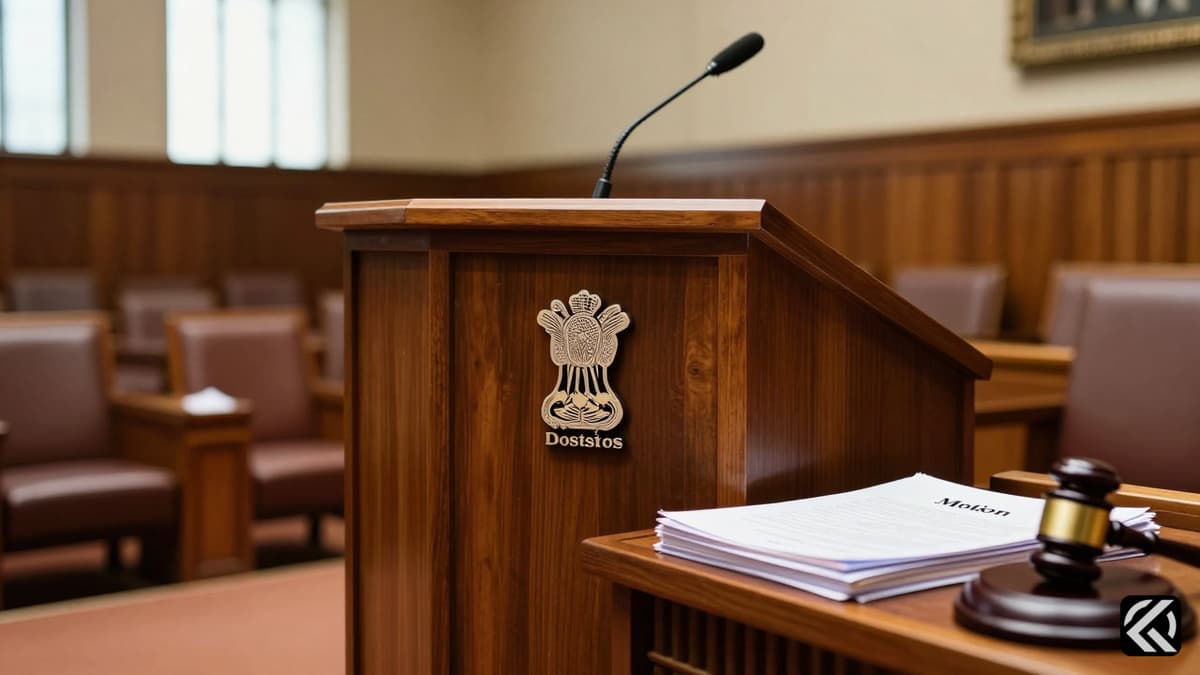
The rejection was formalized through a separate notification issued by the Lok Sabha Secretary General, clarifying the legal stance of the House. The notice of Motion, dated March 12, 2026, had been submitted to the Speaker under specific constitutional provisions, including Article 324(5) read with Article 124(4), alongside the Chief Election Commissioner and Other Election Commissioners (Appointment, Conditions of Service and Term of Office) Act, 2023, and the Judges (Inquiry) Act, 1968. The notification explicitly states that after a "careful and objective assessment of all relevant aspects and issues involved therein," the Speaker refused to admit the motion.
The initiative to move for the removal of the poll body chief was the first time such a notice had ever been given in the history of the institution. It was a significant effort that garnered support from a substantial cross-section of lawmakers, with 130 Members of Lok Sabha and 63 Rajya Sabha members signing the motion. The opposition, piloting this initiative, argued that the CEC had engaged in conduct warranting removal from office. The 10-page-long notice attached to the motion contained a detailed chargesheet covering seven distinct counts against the incumbent Chief Election Commissioner.
The charges outlined in the notice were severe and multifaceted, ranging from allegations of partisan conduct to accusations of mass disenfranchisement of voters. The opposition specifically highlighted the CEC's handling of the Special Intensive Revision SIR in previous elections, such as in Bihar, and his approach to the forthcoming elections in states like West Bengal. Beyond the procedural aspects of the revision, the notice cited the CEC's "proved misbehaviour" and alleged partial conduct towards a specific political party as grounds for impeachment. The opposition leaders had accused CEC Gyanesh Kumar of bias, claiming he was carrying out the ongoing Special Intensive Revision SIR exercise in an arbitrary manner designed to aid the ruling BJP.
The political storm began to escalate with growing accusations against the poll body chief from various opposition parties. West Bengal Chief Minister Mamata Banerjee has been at the forefront of the resistance, leading protests over the Special Intensive Revision SIR process in her state. Meanwhile, Rahul Gandhi has been steering a "vote chori" campaign, further amplifying the opposition's critique of the Election Commission's administration. The notice for the removal of the CEC was officially piloted by the TMC, reflecting the breadth of the dissent against the current administration of the poll body.
In response to the rejection of the notice, a TMC Rajya Sabha member reacted strongly, stating, "BJP keep mocking our great Parliament." This comment underscored the deep polarization surrounding the issue. Conversely, BJP leaders sharply criticized the opposition's proposal, arguing that political parties should focus on electoral contests instead of targeting the Election Commission. They viewed the attempt to remove the Chief Election Commissioner as a distraction from the core democratic process of voting.
The procedural history of this motion highlights the gravity of the event. Although the motion was submitted, it required passage in Parliament by a special majority according to parliamentary provisions to succeed. The Speaker's refusal to admit the notice under Section 3 of the Judges (Inquiry) Act, 1968, effectively halted the process at its inception. The notification clarified that the Speaker, in exercise of the powers vested to him, had made a decision based on due consideration of the notice and all relevant issues. This decision marks a significant moment in the interplay between the executive branch of the legislature and the constitutional body overseeing elections.
The rejection of the impeachment motion against CEC Gyanesh Kumar solidifies the current tenure of the Chief Election Commissioner despite the intense political pressure. The opposition's focus on the Special Intensive Revision SIR suggests that the controversy over electoral data and voter registration is likely to remain a flashpoint in the coming months, particularly with upcoming elections in states like West Bengal. The divergence in narratives-where the opposition views the revision as a tool for disenfranchisement and the ruling party sees the impeachment effort as an attack on democratic institutions-indicates that future electoral cycles may see continued scrutiny of the Election Commission's methodologies. As the Special Intensive Revision SIR process continues, the political dynamics will likely remain volatile, with the opposition potentially shifting strategies if future procedural avenues are exhausted. The precedent set by this rejection may also influence how future impeachment motions are drafted and evaluated by parliamentary authorities, setting a benchmark for the threshold of "proved misbehaviour" required to initiate such high-stakes proceedings.
Jun 8, 2026 00:51 UTC
Trump Claims Iran Nuclear Deal Imminent Despite Diplomatic Fractures
Jun 8, 2026 00:47 UTC
Iran Fires Missiles at Israel After Beirut Strike
Jun 7, 2026 22:00 UTC
US, Iran Peace Hops Fade 100 Days Into War
Jun 7, 2026 20:57 UTC
Iran Strikes Israel: IRGC Promises Week of Continuous Offensive
Jun 8, 2026 02:28 UTC
Trump Walks Out of Meet the Press After Rejecting Evidence Demands