Prime Minister Narendra Modi sharpened his campaign pitch in West Bengal, vowing a white paper on corruption and faster CAA citizenship to end fear and insecurity.
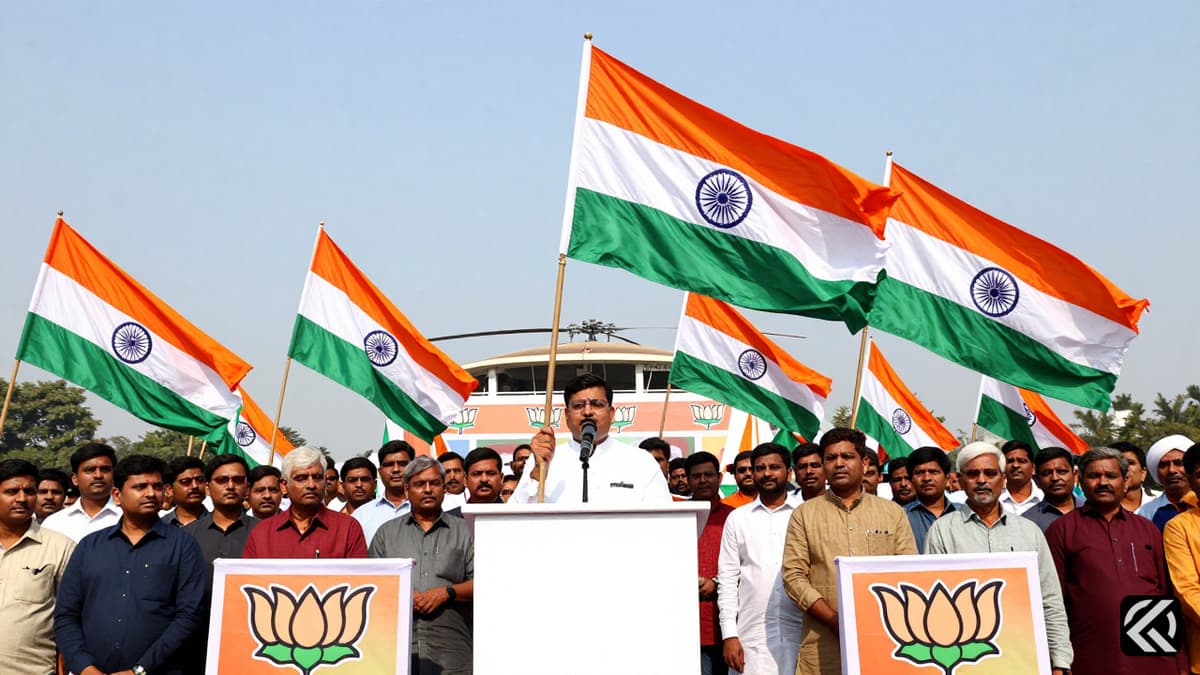
Prime Minister Narendra Modi sharpened the BJP's campaign pitch in poll-bound West Bengal on Saturday, focusing on alleged corruption and citizenship issues. Addressing a public rally in Katwa, PM Modi promised to release a "white paper" detailing graft and expedite citizenship for refugee families if the party wins the upcoming West Bengal Assembly Elections.
The Prime Minister conducted a series of three rallies across the state, visiting Katwa in Purba Bardhaman, Jangipur, and Murshidabad. During the Jangipur speech, he accused the ruling Trinamool Congress of protecting criminals and creating an atmosphere of fear over its fifteen-year rule. Specifically targeting Matua and Namasudra refugee families, PM Modi declared that the Constitution protects them and that his party enacted the Citizenship (Amendment) Act to ensure their citizenship. He pledged that a future BJP government would accelerate the CAA process for all eligible applicants, countering allegations of illegal infiltration by stating that such individuals must leave the state.
In Murshidabad, the Prime Minister also linked the election to the potential implementation of the Uniform Civil Code, vowing to end what he termed "politics of appeasement." He highlighted a promised monthly financial support scheme of Rs 3,000 for women to garner their support.
The core of PM Modi's message centered on eradicating the "era of fear" he attributed to the TMC government. He directly referenced specific incidents, stating, "From Sandeshkhali to RG Kar, this ruthless government stood up to protect rapists." He argued that the upcoming election is essential to remove this atmosphere and build a "developed Bengal." Regarding the specific issue of corruption, the Prime Minister promised a "white paper" that would ensure a legal accounting of corruption involving TMC MLAs, ministers, and syndicates. He claimed that a BJP government would not stop welfare schemes but would shut down the "shop of corruption" by removing middlemen from their implementation.
The Prime Minister also addressed the issue of migration and security, stating that "infiltrators" must start packing their bags and that anyone helping them would not be spared. He claimed that large crowds had gathered at his rallies, even at the helipad, to show strong public support. He accused the TMC of spreading misinformation about BJP schemes and asserted that his party is committed to strengthening welfare delivery without the current corruption.
The context of these rallies is the West Bengal Assembly Elections, which are scheduled in two phases on April 23 and April 29, with counting set for May 4. This follows the 2021 elections where the TMC returned to power with a strong majority, while the BJP emerged as the principal opposition with 77 seats. The Prime Minister's rhetoric suggests a strategic shift to mobilize specific demographic groups, particularly the Matua and Namasudra communities, who form a significant electoral base in South Bengal. By emphasizing the CAA and the promise of a white paper, the campaign aims to frame the election as a choice between an atmosphere of fear and one of accountability and development.
The Prime Minister also emphasized the security of the nation as paramount, stating that the BJP is resolved to implement the Uniform Civil Code in Bengal. This aligns with his broader political narrative of removing appeasement and establishing a uniform legal framework for all citizens. The announcement of the Rs 3,000 monthly support for women further illustrates the party's strategy to secure a broad voting base through direct financial benefits, a move contrasted with their critique of the current regime's inability to deliver effectively due to corruption.
The West Bengal Assembly Elections are poised to be a decisive moment for the region's governance and demographic policies. Based on the rhetoric delivered by PM Modi, a shift in power could lead to the immediate release of a comprehensive white paper detailing alleged corruption under the TMC, fundamentally altering the political discourse in the state. Furthermore, the accelerated implementation of the CAA suggests that eligible refugee families, particularly from the Matua and Namasudra communities, could see faster access to citizenship rights. If the BJP secures a mandate, the state may also witness the introduction of the Uniform Civil Code, marking a significant departure from the current political status quo. The promise of a "Bengal free of fear" implies a potential overhaul of law and order approaches, aiming to eradicate the atmosphere of insecurity that the Prime Minister claims has persisted for fifteen years. These developments point toward a significant transformation in the state's political and social fabric should the current opposition forces gain control.
Jun 8, 2026 00:51 UTC
Trump Claims Iran Nuclear Deal Imminent Despite Diplomatic Fractures
Jun 8, 2026 00:47 UTC
Iran Fires Missiles at Israel After Beirut Strike
Jun 7, 2026 22:00 UTC
US, Iran Peace Hops Fade 100 Days Into War
Jun 7, 2026 20:57 UTC
Iran Strikes Israel: IRGC Promises Week of Continuous Offensive
Jun 8, 2026 02:28 UTC
Trump Walks Out of Meet the Press After Rejecting Evidence Demands