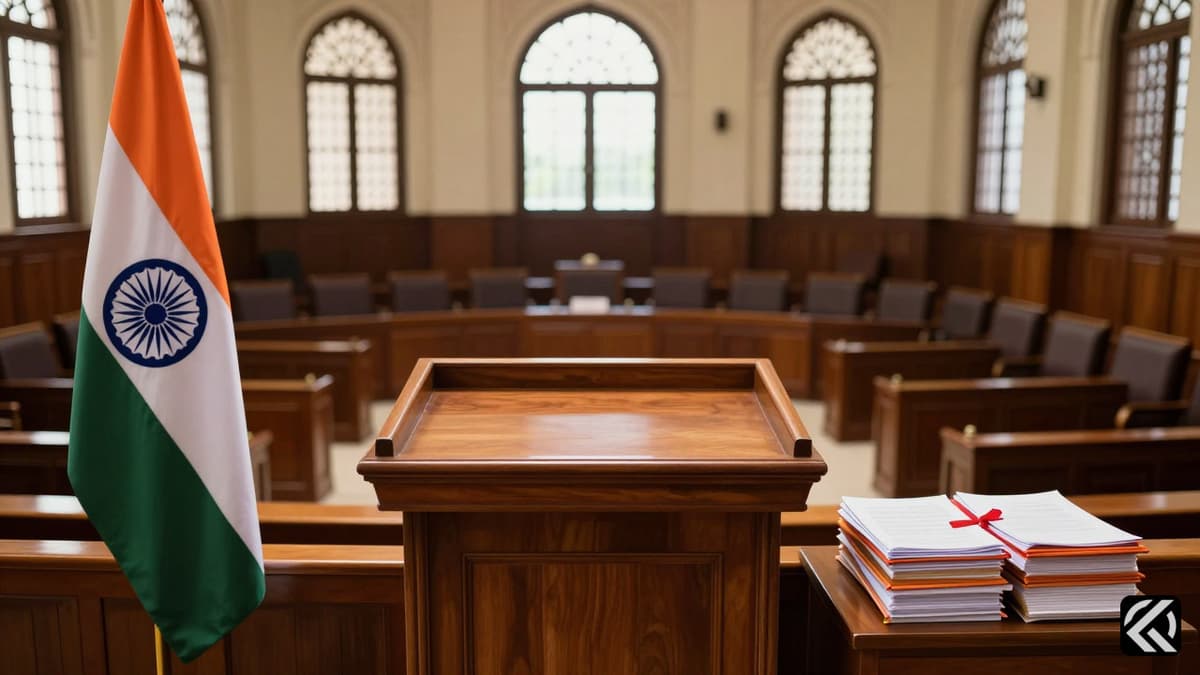
Prime Minister Narendra Modi addressed the Lok Sabha, offering a firm guarantee that no state will face discrimination during the crucial Delimitation Bill 2026 implementation.
Prime Minister Narendra Modi stood before the Lok Sabha on Thursday, April 16, 2026, making a direct and urgent appeal to political parties. His primary objective was to facilitate the swift passage of two critical legislative amendments: the Women's Reservation Act and the Delimitation Bill 2026. During this significant debate, the Prime Minister provided a solemn assurance regarding the fairness of the upcoming exercise. He explicitly stated that the distribution of seats between various States would be maintained with strict proportionality.
Addressing the concerns of the house, the Prime Minister emphasized that the process would be free from bias. He offered his personal guarantee to the assembly, stating that no injustice would be inflicted upon any State, whether located in the east, west, north, or south of the country. His language was inclusive and emphatic, suggesting that he was willing to adapt the terminology of his assurance to suit the audience, even offering to use specific Tamil words to convey the same meaning of non-discrimination.
The Prime Minister's statement was a pivotal moment in the parliamentary debate, aimed at dismantling potential fears regarding the impact of the Delimitation Bill 2026 on regional representation. By using the words "guarantee," "promise," or even suggesting the use of a specific Tamil word to convey the same sentiment, Narendra Modi sought to bridge the gap between political hesitation and legislative acceptance. The core of his message was that the exercise would be equitable for every region, from the northernmost reaches to the southernmost tips of the nation.
This assurance comes at a time when the passage of the Women's Reservation Act amendments is equally critical. The Prime Minister linked the two bills, urging all political parties to collaborate for their successful enactment. He stressed that the integrity of the Delimitation Bill 2026 relies heavily on maintaining a balance that respects the demographic realities of every state. The promise made was not merely rhetorical but was framed as a binding commitment to the constitutional principle of proportionality.
In his address, the Prime Minister demonstrated a willingness to adapt his communication style to ensure his message was understood by all political factions present in the house. This flexibility extended to his vocabulary, where he offered to replace English terms with any term, including those in Tamil, that effectively communicated the absence of injustice. This approach highlighted the gravity of the situation and the Prime Minister's determination to ensure that the legislative process is perceived as fair by all stakeholders.
The debate highlighted the delicate nature of delimitation exercises, which often stir significant political sensitivity. By placing such a strong emphasis on non-discrimination, the Prime Minister aimed to neutralize opposition that might arise from fears of reduced representation for specific states. The commitment to proportionality serves as the foundation for the upcoming legislative changes, ensuring that the demographic shifts resulting from the census and subsequent delimitation do not disadvantage any part of the country.
The assurance provided by the Prime Minister was explicit in its scope, covering all four cardinal directions: east, west, north, and south. This geographical inclusivity was a direct response to the potential for regional grievances to surface during the delimitation process. By anchoring his statement in the principle of proportionality, the Prime Minister reinforced the idea that the legislative amendments are designed to reflect the true population dynamics without bias.
The Prime Minister's assurance sets a clear trajectory for the implementation of the Delimitation Bill 2026, suggesting a future where state representation is calculated strictly on demographic proportionality rather than political maneuvering. If the political parties he addressed choose to facilitate the passage of these amendments as requested, the legislative landscape will likely see a more balanced distribution of seats that respects the demographic weight of all regions. The explicit promise that no state will suffer discrimination implies that the upcoming delimitation exercise will be conducted with a rigorous adherence to fairness, potentially stabilizing the political ecosystem by removing the fear of marginalized regions losing their voice. This commitment to equity suggests that the long-term impact will be a more robust and representative democratic structure, where the integrity of the electoral process is preserved across all geographic boundaries of the nation.
Jun 8, 2026 02:17 UTC
Magnitude 7.8 Quake Shakes Philippines, Urging Immediate Evacuations
Join 50,000+ readers getting the global briefing every morning.
No spam. Unsubscribe anytime.
Jun 8, 2026 02:17 UTC
Magnitude 7.8 Quake Shakes Philippines, Urging Immediate Evacuations
Jun 8, 2026 00:51 UTC
Trump Claims Iran Nuclear Deal Imminent Despite Diplomatic Fractures
Jun 8, 2026 00:47 UTC
Iran Fires Missiles at Israel After Beirut Strike
Jun 7, 2026 22:38 UTC
Congress Party Claims Unity for INDIA Bloc Delhi Meeting