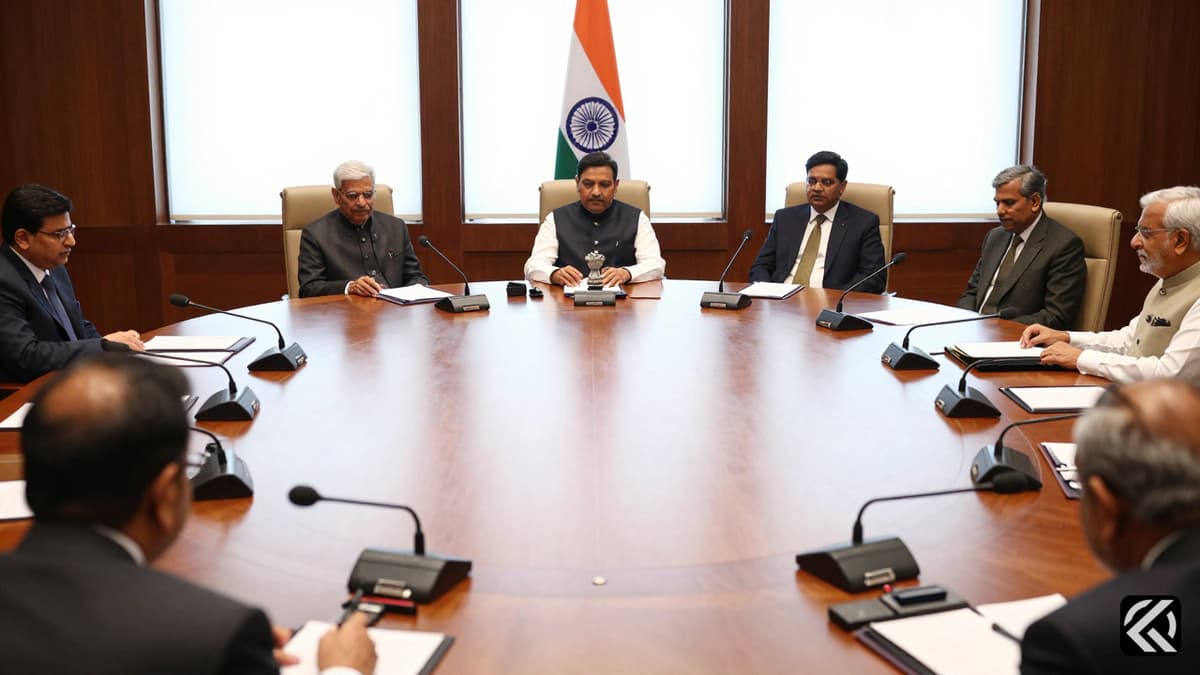
Prime Minister Narendra Modi has officially inaugurated two new Delhi Metro corridors on Sunday, marking a significant milestone with the country's first fully operational Ring Metro.
In a significant development for urban transportation infrastructure in the national capital, Prime Minister Narendra Modi took center stage on Sunday to launch two new corridors of the Delhi Metro system. This event marks a major expansion for the network, introducing features that redefine connectivity across the region. The most notable achievement highlighted during the ceremony is the inauguration of the country's first 'Ring Metro', a feat achieved through the completion and integration of specific sections into the existing Pink Line. Alongside this historic launch, the Prime Minister also laid the foundation stone for three additional corridors under the Phase-V (A) expansion plan, signaling a continued commitment to growing the city's transit capabilities. The dual launch includes substantial extensions to both the Pink and Magenta lines, introducing new elevated sections and underground routes designed to enhance accessibility for millions of commuters.
The first major component of the inauguration involves the Majlis Park-Maujpur Babarpur corridor, which is part of the Pink Line network. This specific stretch covers a distance of around 12.3 kilometers and consists of eight elevated stations. By incorporating this new section, the total length of the Pink Line has expanded to approximately 71.56 kilometers. This expansion is what officially designates the Pink Line as India's first fully operational 'Ring Metro'. The corridor connects various key areas, including Majlis Park, Burari, Jharoda Majra, Jagatpur-Wazirabad, Soorghat, Nanaksar-Sonia Vihar, Khajuri Khas, Bhajanpura, Yamuna Vihar, and Maujpur-Babarpur.
Beyond the station count, this corridor introduces significant engineering advancements to the network. Notably, the construction includes a new bridge spanning over the Yamuna River. Furthermore, the project features a double-decker viaduct structure designed to carry both a metro line and a road flyover simultaneously. This dual-purpose infrastructure aims to optimize land usage and reduce surface congestion while providing robust rail connectivity. The integration of this stretch effectively links it with the already operational Majlis Park-Shiv Vihar Pink Line, creating a continuous loop that serves as a vital artery for the city's transportation grid.
Complementing the Ring Metro launch is the second corridor inaugurated on Sunday, which runs from Deepali Chowk to Majlis Park. This section serves as an elevated extension of the existing Botanical Garden–Krishna Park Extension Magenta Line. The new stretch spans approximately 9.9 kilometers and introduces seven new stations to the network. These stations include Deepali Chowk, Madhuban Chowk, Uttar Pitampura-Prashant Vihar, Haiderpur Village, Haiderpur Badli Mor, Bhalswa, and Majlis Park. The completion of this extension has increased the total length of the Magenta Line to around 49 kilometers.

The engineering specifications for this corridor are particularly noteworthy due to its elevation. Parts of the Deepali Chowk-Majlis Park corridor reach a height of around 28.36 metres. This specific metric makes it one of the highest elevated sections within the entire Delhi Metro network. Such high-altitude construction requires specialized engineering to ensure safety and stability, representing a technical achievement for the project team. By extending the line to Majlis Park, this corridor further integrates with the broader network, facilitating smoother transfers and connections for passengers traveling between different parts of the city.
Looking beyond the immediate inauguration, Prime Modi also laid the foundation stone for three new corridors that will be constructed under Phase-V (A) of the Delhi Metro expansion plan. These projects are designed to address future connectivity needs and link critical government and commercial hubs. The first of these is the Central Vista corridor, which will run from Ramakrishna Ashram Marg to Indraprastha. This underground stretch measures 9.913 kilometers and includes several key stations such as Shivaji Stadium, Central Secretariat, India Gate, War Memorial-High Court, Baroda House, Bharat Mandapam, and Indraprastha. According to the official statement regarding this project, the corridor is expected to significantly improve connectivity to government and cultural landmarks located in central Delhi.
The second and third corridors involve extensions to the Golden Line. The first extension will connect Aerocity to Indira Gandhi Domestic Airport Terminal-1. This underground segment will cover a distance of 2.263 kilometers and includes one new station. The purpose of this link is to streamline airport access for travelers using the metro system. The third project is an extension from Tughlakabad to Kalindi Kunj, covering a length of 3.9 kilometers. Unlike the underground sections, this corridor will be elevated and will feature stations at Sarita Vihar Depot, Madanpur Khadar, and Kalindi Kunj.
A critical benefit highlighted for these new Golden Line extensions is improved access for passengers coming from Noida. Through the Kalindi Kunj station and subsequent connections to south Delhi and the airport, commuters will find it easier to navigate between the neighboring city and the national capital's transport hub. These foundational work initiatives represent a strategic move to prepare the metro network for future population growth and increased demand for public transit solutions in the region.
The inauguration of these corridors represents a substantial leap forward in Delhi's public transportation infrastructure, blending immediate operational enhancements with long-term strategic planning. With the Pink Line now claiming the title of the country's first fully operational Ring Metro, and the Magenta Line reaching record heights for elevated sections, the network is becoming more robust and extensive. The foundation laid for the Central Vista and Golden Line extensions promises to further integrate government landmarks and airport terminals with the wider transit system. As these projects move forward under Phase-V (A), the Delhi Metro continues to evolve into a comprehensive solution for urban mobility, ensuring that connectivity improves for both central Delhi residents and those arriving from neighboring regions like Noida.
Jun 9, 2026 02:39 UTC
US Warplane Strikes Tanker MT Marivex; Crew Evacuated in Gulf of Oman
Join 50,000+ readers getting the global briefing every morning.
No spam. Unsubscribe anytime.
Jun 9, 2026 00:00 UTC
INDIA Bloc Leaders Gather in Delhi to Forge Strategic Unity
Jun 8, 2026 22:55 UTC
Netanyahu Vows Forceful Response to Future Iran Attacks
Jun 8, 2026 20:56 UTC
Netanyahu Halts Iran Fighting, Vows Future Force
Jun 8, 2026 20:54 UTC
Justice Department Moves to Strip Citizenship from 17 Individuals