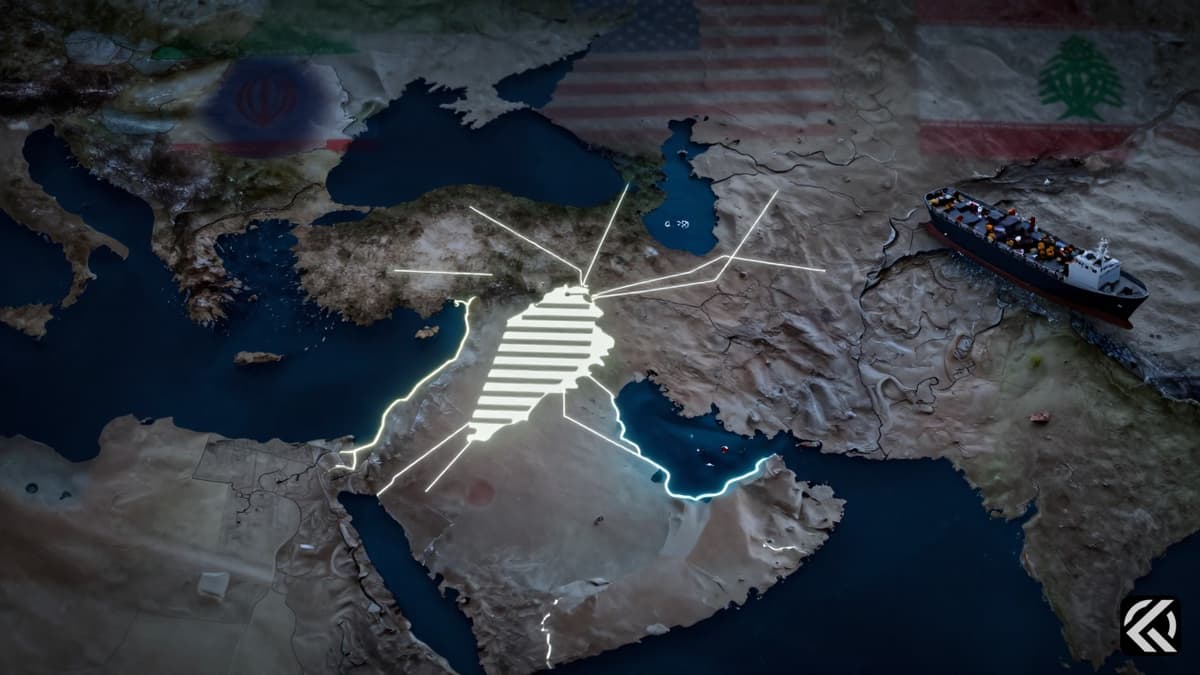
Prime Minister Netanyahu has directed his Cabinet to initiate direct talks with Lebanon, focusing on disarming Hezbollah as regional tensions intensify over ceasefire violations.
Prime Minister Benjamin Netanyahu has instructed his Cabinet to begin direct negotiations with Lebanon as soon as possible, shifting the immediate focus from purely military actions to diplomatic resolution. This announcement comes as the International Monetary Fund warns of a global economic downgrade due to the ongoing conflict, casting a dark shadow over the world economy regardless of a fragile ceasefire.
In a statement released by his office, the Prime Minister clarified that the primary objectives of these new discussions are the disarmament of Hezbollah and the establishment of peace relations between the two nations. He noted that the cabinet's direction follows repeated requests from Lebanon to open such direct channels, expressing appreciation for the Lebanese Prime Minister's recent call to demilitarize Beirut. However, conflicting interpretations of the current truce persist, with Iranian officials insisting Lebanon is part of the deal while Israel maintains its right to strike.
The situation has triggered a wave of international reactions and concerns regarding the stability of the region and global markets. Kristalina Georgieva, the Managing Director of the IMF, stated that even under the most hopeful scenario, the conflict has already necessitated a downgrade in global growth forecasts. She warned that the shock to the energy sector is particularly devastating for Sub-Saharan Africa and small island countries, urging policymakers to avoid isolationist measures that could exacerbate the crisis.
A significant point of contention remains whether the US-Iran ceasefire extends to the activities of Israel against Hezbollah in Lebanon. Tehran, through Parliament Speaker Mohammad Bagher Ghalibaf, has firmly declared that Lebanon and its allies constitute an "inseparable part" of the truce. Ghalibaf cautioned that any violations by Israel, which recently killed more than 200 people in a single day of strikes, would trigger "strong responses" and explicit costs. He emphasized that there is no room for denial regarding the inclusion of Lebanon in the agreement brokered by Pakistan.
Conversely, the United States and Israel have suggested that the truce does not cover Lebanese territory. President Donald Trump announced that the U.S. military would remain deployed near Iran until a "real agreement" is reached, while Israeli officials indicated their operations against Hezbollah would continue "wherever necessary." This divergence has led to urgent diplomatic calls, with Lebanese Prime Minister Nawaf Salam phoning Pakistani Prime Minister Shehbaz Sharif to request a confirmation that Lebanon is included in the US-Iran ceasefire to prevent further casualties.
The diplomatic landscape is further complicated by the role of various international actors. NATO Secretary General Mark Rutte revealed that President Trump has requested concrete commitments from member nations within the next few days to help secure the Strait of Hormuz. While Rutte noted that European allies were initially "a bit slow" due to the surprise nature of the initial U.S. strikes, they are now providing massive logistical support. Meanwhile, Russia and Germany have voiced strong concerns that continued Israeli bombing in Lebanon could jeopardize the broader peace process, with German Chancellor Friedrich Merz warning that the severity of the war could cause the entire peace effort to fail.
Diplomatic efforts also extend to the economic implications of the conflict. The UN's International Maritime Organisation has strongly opposed any proposal by Iran to impose a Strait of Hormuz toll on ships. A spokesperson stated that introducing such fees would set a dangerous precedent that violates the United Nations Convention on the Law of the Sea (UNCLOS), which guarantees the right of transit passage through international straits. The UN agency urged that states bordering these straits should not hamper this right or suspend transit passage, warning that such actions would impede freedom of navigation globally.
Turkey and Pakistan have both played pivotal roles in mediating the talks. Turkish Foreign Minister Hakan Fidan called for a "conciliatory" approach in the negotiations scheduled to begin in Pakistan, highlighting the need for flexibility and patience. Prime Minister Shehbaz Sharif condemned Israel's "ongoing aggression" against Lebanon, reiterating that Pakistan is engaged in sincere efforts for regional peace. The upcoming talks in Islamabad are expected to address whether the truce covers Lebanon, a point that Iran's President Masoud Pezeshkian described as critical, stating that violations signal deception and render negotiations meaningless.
The immediate future of the Middle East hinges on whether the conflicting narratives regarding the ceasefire can be reconciled. If Israel continues to strike Lebanese targets without resolution, the "strong responses" threatened by Tehran could escalate the conflict beyond the current bilateral framework, potentially drawing more of the "Resistance Axis" into direct hostilities. The economic fallout will likely deepen, with the IMF warning that growth will remain slower even if a peace agreement is eventually reached. Furthermore, any successful attempt by Iran to enforce a toll in the Strait of Hormuz, despite UN warnings, could disrupt global energy supplies, leading to a prolonged price shock that impacts economies far beyond the region. As the world watches the Pakistani-brokered talks, the alignment or divergence of U.S., Israeli, and Iranian positions will determine whether a fragile truce expands into a comprehensive peace or collapses into a wider regional war.
Jun 8, 2026 00:51 UTC
Trump Claims Iran Nuclear Deal Imminent Despite Diplomatic Fractures
Jun 8, 2026 00:47 UTC
Iran Fires Missiles at Israel After Beirut Strike
Jun 7, 2026 22:00 UTC
US, Iran Peace Hops Fade 100 Days Into War
Jun 7, 2026 20:57 UTC
Iran Strikes Israel: IRGC Promises Week of Continuous Offensive
Jun 8, 2026 02:28 UTC
Trump Walks Out of Meet the Press After Rejecting Evidence Demands


