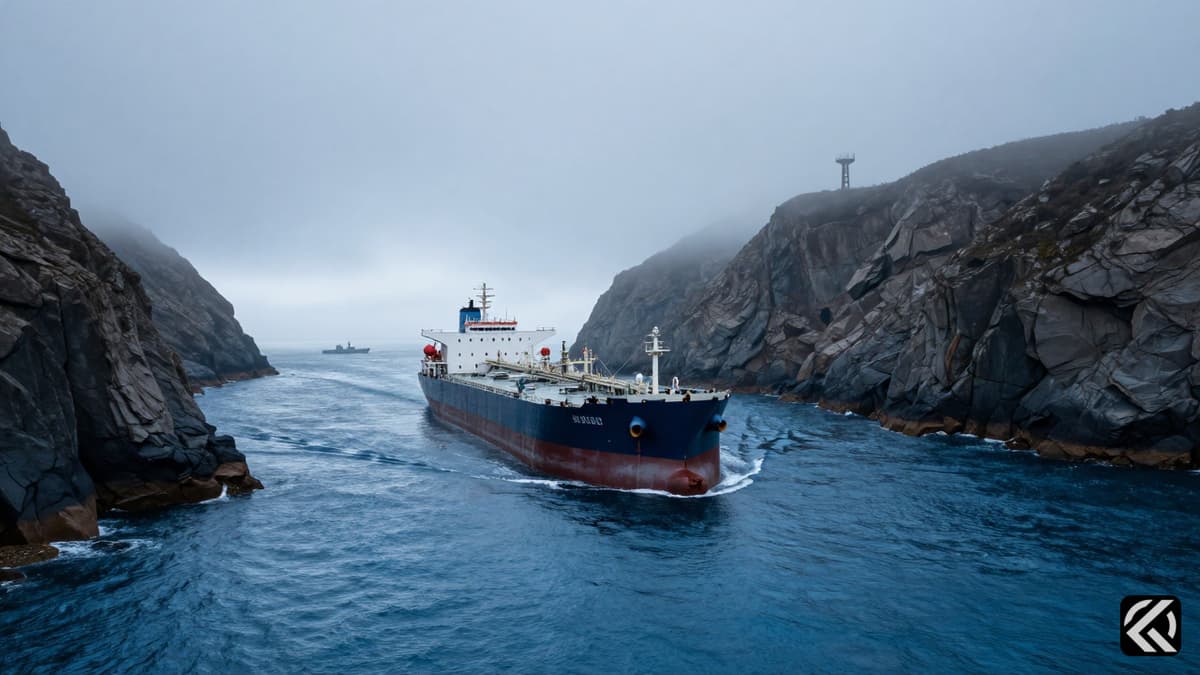
Tensions flare in the Strait of Hormuz as Iran threatens to destroy unauthorized ships, leaving global supply chains in limbo despite a fragile ceasefire deal.
The Strait of Hormuz has emerged as the epicenter of a new crisis following a fragile ceasefire agreement that has failed to restore normal traffic flows. Despite Tuesday's deal guaranteeing safe passage, Iran has warned that any vessel attempting to cross without permission will be targeted and destroyed. This stark contradiction has paralyzed the critical waterway, leaving the world's most important shipping lane effectively choked off and destabilizing global energy prices.
While a two-week ceasefire was agreed upon, the reality on the water tells a different story. Vessels in the area have received explicit messages threatening their destruction, leading to a near-total halt in traffic. Only a handful of ships have managed the journey in the past two days, raising serious questions about the enforceability of the "safe passage" condition. The disruption, now five weeks into the conflict, has sent shockwaves through the global economy, exposing the fragility of international supply chains that rely heavily on this narrow channel.
Shipping analysts warn that the situation remains precarious. Lars Jensen of Vespucci Maritime noted that most shipping lines are waiting for concrete details on what is actually required to transit, as those assurances remain unavailable. By 14:00 BST on April 9, only eleven ships-comprising three tankers, one container ship, and seven bulk carriers-had passed through. This number stands in stark contrast to the pre-conflict average of 138 ships daily.
The limited movement since the conflict began on February 28 has created a complex uncertainty. It remains unclear whether these few crossings resulted from the ceasefire or were merely previously approved journeys. Ana Subasic of Kpler emphasized that it is too soon to determine if this reflects a genuine reopening, noting that "nothing has really changed yet." Richard Meade, editor-in-chief of Lloyd's List, echoed these concerns, describing the environment for ship owners as "very dangerous" with significant uncertainty surrounding who controls the strait.
Analysts suggest that the Islamic Revolutionary Guard Corps (IRGC) effectively retains control, meaning ship owners must still seek permission. The nature of this permission and the logistical framework for it remain unclear. Furthermore, ship tracking data reveals a tactical shift in routes. Vessels are now taking a northern path through the strait close to Iran's coastline within its territorial waters, abandoning the traditional southerly route through the middle of the waterway used prior to the conflict.
If traffic were to resume, Richard Meade predicts that the first vessels through would be the nearly 800 ships currently stranded, most of which are fully loaded with cargo. The priority for the global economy will be to clear this massive backlog. However, the duration of the current two-week ceasefire introduces a new variable. Niels Rasmussen of BIMCO expressed doubt that a large influx of ships will enter the Gulf, fearing they could become trapped once the window closes.
Beyond the logistical and political hurdles, there are tangible physical dangers. Thomas Kazakos, secretary general of the International Chamber of Shipping, highlighted the lingering fear of sea mines. He stressed the need for clear confirmation regarding the safety of navigation for both ships and seafarers. Additionally, a new and contentious issue has emerged regarding Iran tolls. Reports suggest that toll payments may be a condition of the ceasefire, a stance that could complicate matters significantly.
Jensen points out that while Iran's negotiation position appears to be that a toll is required for transit, shipping lines are hesitant to comply. The concern extends beyond commercial reluctance; paying a toll could potentially violate US sanctions on Iran. This creates a legal quagmire where shipping companies face the risk of severe repercussions for simply trying to move their cargo through the strait. Some nations, including India, Malaysia, and the Philippines, have managed to negotiate safe passage for their vessels, but a universal agreement or clear protocol for toll payments remains elusive, leaving the future of these critical shipping lanes in a state of volatile limbo.
The current stalemate in the Strait of Hormuz underscores the fragile nature of the ceasefire and the enduring power of the region's military control over critical infrastructure. If the two-week window closes without a robust, mutually accepted mechanism for transit that addresses both security concerns and the legality of Iran tolls, the bottleneck of nearly 800 ships will likely intensify global supply chain disruptions. The immediate future suggests a prolonged period where only essential or pre-approved transit will occur, keeping shipping rates volatile and energy prices susceptible to further shocks as the world waits to see if the "safe passage" promise can evolve into a functional reality.
Jun 8, 2026 02:17 UTC
Magnitude 7.8 Quake Shakes Philippines, Urging Immediate Evacuations
Join 50,000+ readers getting the global briefing every morning.
No spam. Unsubscribe anytime.
Jun 8, 2026 02:17 UTC
Magnitude 7.8 Quake Shakes Philippines, Urging Immediate Evacuations
Jun 8, 2026 00:51 UTC
Trump Claims Iran Nuclear Deal Imminent Despite Diplomatic Fractures
Jun 8, 2026 00:47 UTC
Iran Fires Missiles at Israel After Beirut Strike
Jun 7, 2026 22:38 UTC
Congress Party Claims Unity for INDIA Bloc Delhi Meeting


