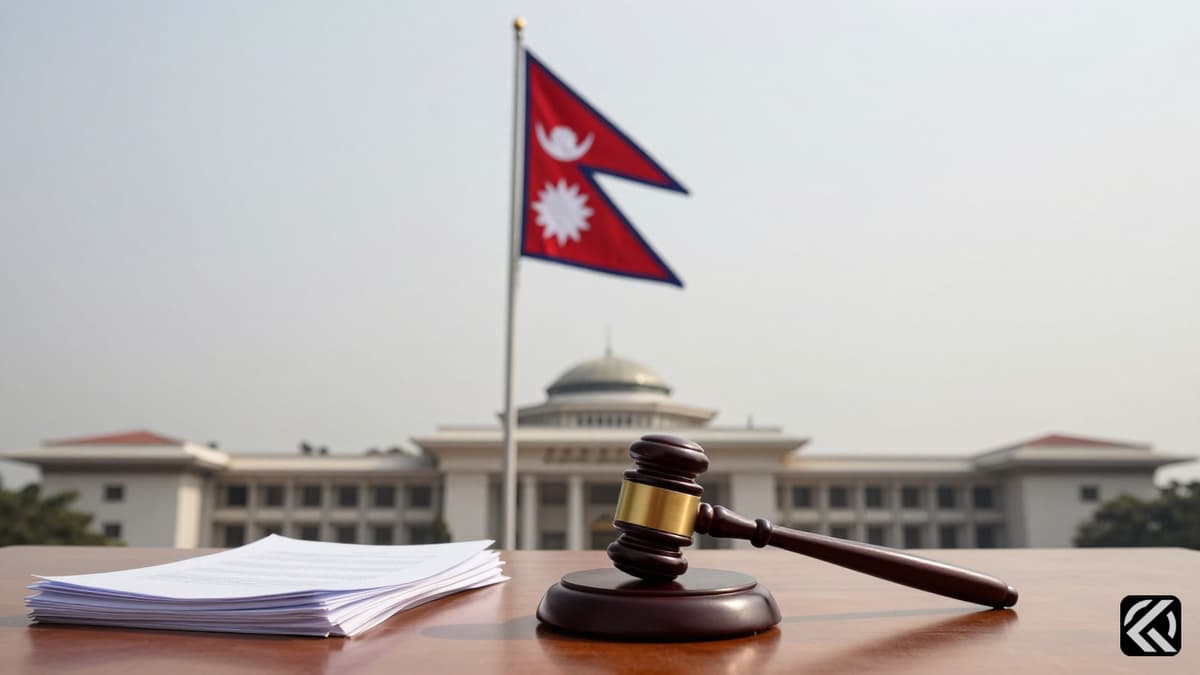
Amidst growing scrutiny regarding his personal financial dealings, Nepal's Home Minister Sudhan Gurung has stepped down, marking a dramatic exit just weeks into his tenure.
Nepal's political landscape has shifted dramatically following the sudden resignation of Nepal Home MinisterSudhan Gurung. Less than a month after his appointment to the prestigious cabinet position, Gurung has stepped down. His decision comes in the wake of mounting questions regarding his personal investments and financial conduct. This development marks an abrupt end to a tenure that was expected to be longer, leaving the country's interior ministry in a state of transition just as inquiries into his financial dealings intensify.
The trigger for thispolitical resignation appears to be the scrutiny surrounding Gurung's investment portfolio. While the specifics of the investigation were not detailed in the initial announcement, the mere presence of questions regarding financial conduct was sufficient to necessitate his departure. The timeline of events is precise: Gurung took office, faced inquiries, and within twenty-nine days of his appointment, he had to resign. This rapid sequence of events suggests a high level of sensitivity regarding financial transparency among government officials in Nepal.
Gurung made the decision public on Wednesday, April 22, 2026. The method of his announcement was a post on social media, a platform often used for direct communication with the public in modern political discourse. In his statement, he addressed the concerns directly, confirming his resignation. The brevity of his time in office-less than a month-underscores the severity of the allegations or the pressure exerted by the inquiries into his background.
The context of his resignation is particularly notable given the role of the Home Minister. As the individual responsible for the country's internal security and administrative machinery, the scrutiny of his personal finances likely raised concerns about integrity and governance. The fact that he resigned so quickly implies that the questions over his financial conduct were deemed too significant to allow him to continue in his duties.
This event is not merely a personnel change; it is a moment of accountability. The Nepal Home Minister position is one of the most critical in the government. Leaving this post vacant so soon after an appointment disrupts the chain of command and forces a reassessment of the administration's composition. The resignation serves as a stark reminder of the standards expected of public servants, especially those holding portfolios related to national security and administration.
The resignation of Sudhan Gurung leaves a void in the immediate leadership of Nepal's Home Ministry. With the minister stepping down less than a month after taking the oath, the political administration must now focus on the appointment of a replacement. The timing suggests that the authorities are prioritizing financial transparency over the continuity of the current minister's tenure.
The social media announcement indicates a modern approach to political communication, ensuring that the public receives the information directly and immediately. This transparency in announcing a resignation, even under such short notice, sets a precedent for future political transitions in the country. It demonstrates that the administration is responsive to public concerns, even when they involve high-ranking officials.
The lingering questions regarding his investments suggest that the scrutiny is not yet over. Even after his resignation, the investigation into his financial conduct may continue. This could have broader implications for how other officials are vetted before appointment. The current case may lead to stricter protocols for future ministers, ensuring that financial conduct is rigorously examined before assuming power.
Furthermore, the speed of this political resignation may influence public trust in the government. Citizens often view financial impropriety as a direct threat to national integrity. By allowing Gurung to resign immediately upon the emergence of these questions, the political leadership may be attempting to mitigate potential fallout and maintain public confidence in the institution.
The situation also highlights the delicate balance between personal privacy and public accountability. While individuals have a right to financial privacy, public servants, particularly those in such high-ranking roles, must demonstrate a higher standard of transparency. The resignation of Gurung reaffirms this principle, signaling that financial conduct is a matter of national importance.
The resignation of Sudhan Gurung marks a critical juncture in Nepal's political history. As the Nepal Home Minister, his departure was triggered by questions over his financial conduct, leading to a rapid exit from the cabinet. The event underscores the importance of financial transparency in public office. Looking ahead, this incident is likely to prompt a more rigorous vetting process for future cabinet appointments, ensuring that similar questions do not arise. The political landscape may see increased emphasis on accountability, with social media serving as a primary channel for such significant announcements. The long-term impact will likely be a more scrutinized administration, where financial integrity is a prerequisite for holding high office. This case sets a precedent that the pursuit of financial misconduct will not be tolerated, regardless of the timeline of appointment.
Jun 8, 2026 00:51 UTC
Trump Claims Iran Nuclear Deal Imminent Despite Diplomatic Fractures
Jun 8, 2026 00:47 UTC
Iran Fires Missiles at Israel After Beirut Strike
Jun 7, 2026 22:00 UTC
US, Iran Peace Hops Fade 100 Days Into War
Jun 7, 2026 20:57 UTC
Iran Strikes Israel: IRGC Promises Week of Continuous Offensive
Jun 8, 2026 02:28 UTC
Trump Walks Out of Meet the Press After Rejecting Evidence Demands


