Tensions surge as PM Modi labels Malda judicial gherao as jungle raj, while West Bengal CM Mamata Banerjee calls for voting revenge amidst heated Assembly polls 2026 campaign trails across India.
The prime minister has accused the West Bengal state government of allowing the gherao of judicial officers to reflect a "maha jungle raj," setting a confrontational tone for the ongoing Assembly polls 2026 in the state. This incident has become a central flashpoint as political leaders rally supporters, with the West Bengal Chief Minister Mamata Banerjee urging voters to cast ballots as an act of revenge against voter list deletions.
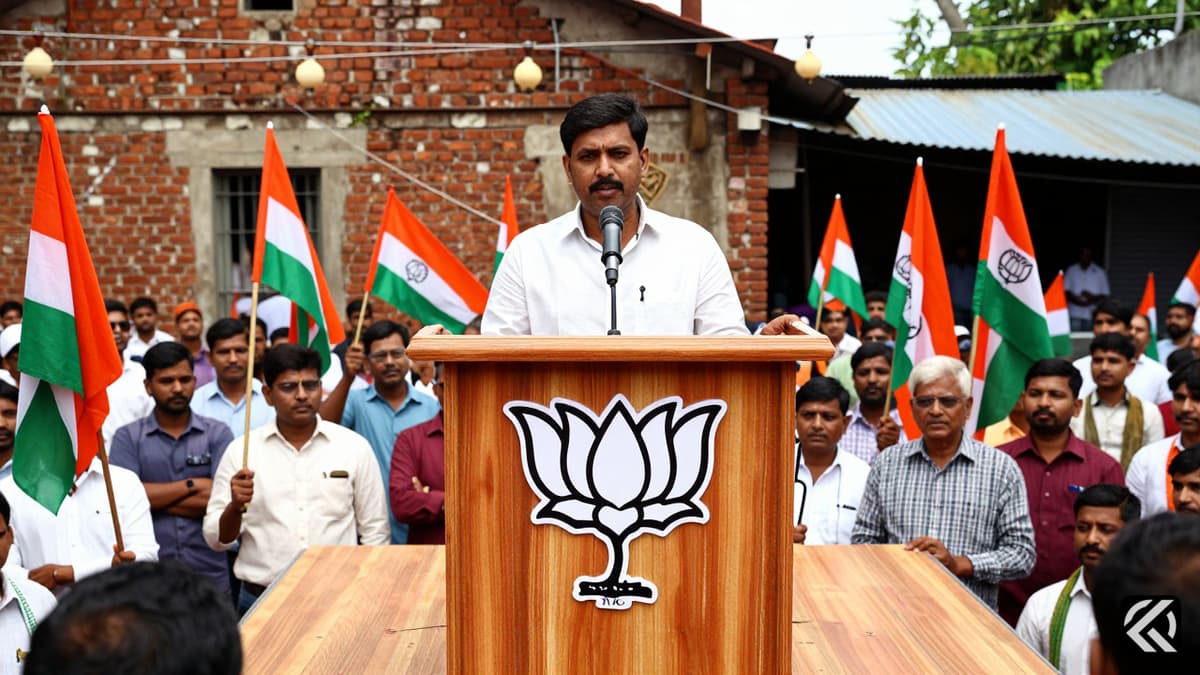
Prime Minister Narendra Modi addressed this alleged failure of the rule of law during a public meeting in Cooch Behar, expressing shock that judicial officials were held hostage. He questioned how a government that cannot protect judges can ensure the safety of common people, noting that the Supreme Court had to intervene. Meanwhile, Union Home Minister Amit Shah visited the Christian community in Kerala, appealing for support to form a government there, citing promises of a new AIIMS and action against gold theft at Sabarimala.
In Tamil Nadu, officials are driving voter awareness in tribal areas, while the Gummidipoondi constituency is highlighted as an industrial hub seeking civic development. In Maharashtra, the Congress party has fielded Akash Vishwanath More for the Baramati bye-election, and Union Home Minister Amit Shah's rhetoric in Kerala focuses on development pledges. The NDA roadshow in Thirunallar saw a massive turnout, with BJP's Nitin Nabin declaring that the people have firmly chosen the path of development.
As the election machinery gears up for the April 9 polls, the narrative has become increasingly polarized between the ruling parties and the opposition. In West Bengal, the West Bengal CM Mamata Banerjee took to the streets in Baharampur, a stronghold of senior Congress leader Adhir Ranjan Chowdhury, leading a colorful march. She specifically targeted the deletion of names from electoral rolls during the Special Intensive Revision (SIR), urging affected individuals to move appeals while simultaneously calling on the electorate to "take revenge" through their voting process. She emphasized that the results should reflect a rejection of the SIR, framing the election as a response to administrative grievances.
Conversely, Prime Minister Modi's attack on the Trinamool Congress was scathing. He labeled the incident in Malda, where judicial officers were gheraoed, as a definitive reflection of the "maha jungle raj" sponsored by the TMC. He argued that the government's disregard for constitutional institutions was evident in the inability to protect the judiciary, a situation so dire it forced the highest court in the land to step in. This rhetoric aims to undermine the TMC's claim of administrative competence and safety, positioning the opposition as a threat to the very pillars of democracy.
On the other side of the political spectrum, Union Home Minister Amit Shah attempted to broaden his coalition by reaching out to the Christian community in Kerala during Easter. His appeal was pragmatic, asking the community to support the BJP-led NDA to form a government, promising immediate infrastructure improvements like a new AIIMS within two years and swift justice for the alleged Sabarimala gold theft. He framed the election as a binary choice between continued NDA governance and the perceived mismanagement of the current state government.
In Puducherry, the atmosphere was equally charged. BJP national president Nitin Nabin conducted a roadshow in Thirunallar, lasting nearly an hour, which he described as having an "electric energy." He declared that the overwhelming response was a clear message that Puducherry had chosen the path of development, reinforcing the NDA's resolve to deliver progress. This sentiment was echoed by Manipur Chief Minister Y. Khemchand Singh, who praised the Assam government for infrastructure strides, linking the success of the BJP-led state leadership to national progress.
The Congress party, represented by national president Mallikarjun Kharge, focused its critique on what it perceives as an attack on civil society. Kharge alleged that the proposed amendments to the FCRA were not reforms but an attempt to strike fear in Christian institutions and NGOs. He claimed that Prime Minister Modi intended to use these changes to suppress civil society working in social welfare, and further alleged that Kerala CM Pinarayi Vijayan was merely following Modi's directives, lacking independence.
Senior TMC leader Abhishek Banerjee countered the BJP's development claims by accusing the Centre of withholding over Rs 1 lakh crore in state dues to make the poor starve and force voters to support the TMC. He dared the BJP to provide proof of his claims or send him to jail, highlighting the intense rhetorical warfare being waged between the two major blocs.
In West Bengal, BJP MLA Agnimitra Paul highlighted her own financial growth, declaring her movable assets had more than doubled to ₹2.56 crore since her first nomination, contrasting this with her unchanged immovable assets. Meanwhile, in the Nilgiris district, election officers are actively inspecting booths to raise awareness about 100% voting in tribal areas, a critical demographic for the outcome.
The Gummidipoondi constituency in Tiruvallur, driven by the SIPCOT Industrial Complex, is emerging as a key battleground where residents demand a balance between industrial growth and civic development. The competition here between the DMK and AIADMK reflects the broader national struggle between development narratives and sustainability concerns.
With preparations for home voting concluding in Wayanad with over 97% participation, the momentum for early voting is evident. As the April 9 polls approach, every state becomes a microcosm of the national political shift, with the Assembly polls 2026 serving as a critical referendum on governance, development, and the rule of law.
The gherao of judicial officers in Malda stands as a pivotal moment in the Assembly polls 2026 discourse, signaling a potential long-term shift in voter sentiment regarding the rule of law. If the narrative of "maha jungle raj" gains traction, it could severely impact the TMC's ability to retain power, especially among middle-class and judicial sectors. Conversely, the NDA roadshow success in Puducherry and the infrastructure promises in Kerala suggest the opposition is effectively capitalizing on development anxieties. The continued focus on voter list deletions by the West Bengal CM Mamata Banerjee indicates that local grievances will remain a potent mobilization tool, but the broader national narrative may ultimately favor the central government's promises of stability and institutional protection, reshaping the political landscape of eastern and southern India.
Jun 8, 2026 00:51 UTC
Trump Claims Iran Nuclear Deal Imminent Despite Diplomatic Fractures
Jun 8, 2026 00:47 UTC
Iran Fires Missiles at Israel After Beirut Strike
Jun 7, 2026 22:00 UTC
US, Iran Peace Hops Fade 100 Days Into War
Jun 7, 2026 20:57 UTC
Iran Strikes Israel: IRGC Promises Week of Continuous Offensive
Jun 8, 2026 02:28 UTC
Trump Walks Out of Meet the Press After Rejecting Evidence Demands