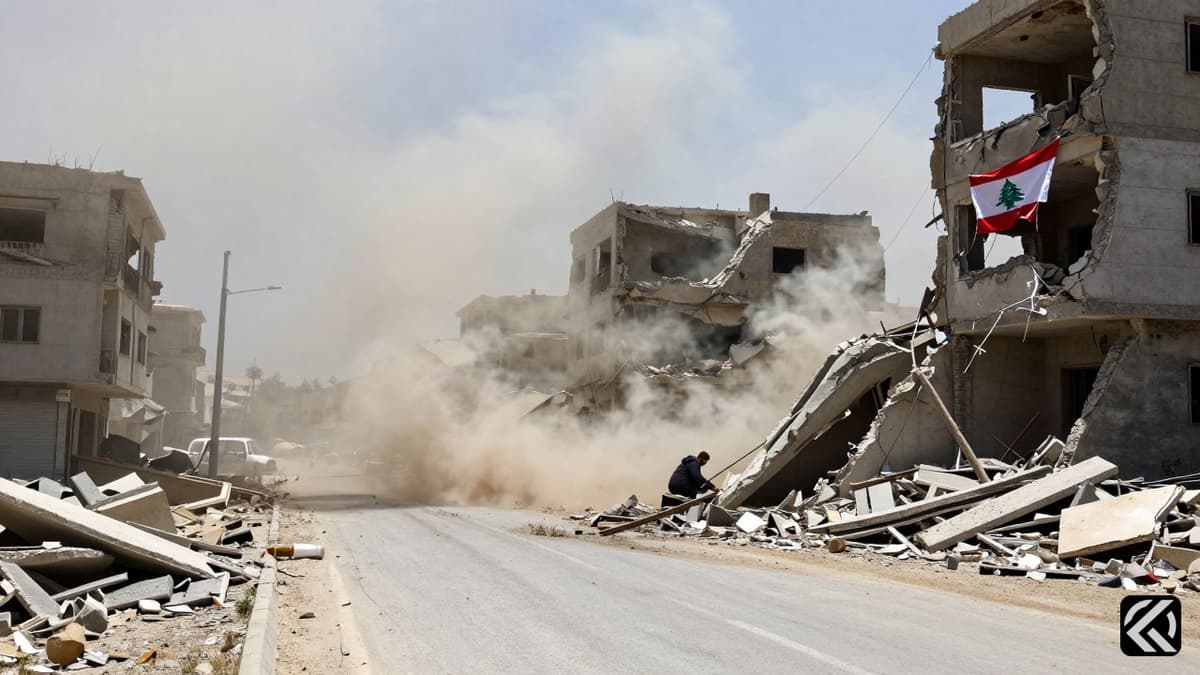
A massive Israeli air campaign has devastated southern Lebanon, destroying infrastructure and displacing millions as tensions between Hezbollah and Israel intensify beyond recent diplomatic efforts.
In a significant escalation of the Hezbollah-Israel conflict, the Israeli military has executed a massive wave of Israeli air strikes Lebanon, resulting in widespread destruction and a high number of casualties. This campaign, described by Israel as the largest of the current war, targeted over 100 sites across the country, including what were identified as Hezbollah command centers and military installations. The strikes, which unfolded over a period of just 10 minutes, have left hospitals overwhelmed and many citizens trapped under the rubble of collapsed buildings in the southern regions and suburbs.
The timing of this intense military operation occurred just hours after the office of Israeli Prime Minister Benjamin Netanyahu explicitly denied assertions made by Pakistan. Pakistan, having helped mediate a ceasefire between the US and Iran, had claimed the deal included the devastating conflict in Lebanon. However, Netanyahu's office rejected this interpretation, signaling that the hostilities in Lebanon would proceed independently of other regional agreements. This denial comes despite a ceasefire agreement announced between the US and Israel against Iran in late February, which had initially led the Lebanese presidency to believe it could still pursue efforts to include Lebanon in broader regional peace negotiations.
The human cost of this escalation is already staggering. More than 1.2 million people, representing one in five of Lebanon's population, have been forced from their homes. The displaced populations are predominantly from Shia Muslim communities in the south, the eastern Bekaa Valley, and the southern suburbs of Beirut-areas where Hezbollah maintains a strong presence. Villages near the border have been leveled as Israeli forces continue their ground invasion. Authorities state the goal is to establish a "security buffer zone" to dismantle Hezbollah's infrastructure and push fighters away. This military strategy has sparked grave concerns among observers and residents that some areas may remain occupied even after the war concludes, potentially leaving many residents permanently unable to return to their homes.
Following the announcement of the ceasefire deal involving the US, Israel, and Iran, Hezbollah stated it was not launching new attacks and claimed the group was on the "threshold of a major historic victory." The group has not officially claimed any attacks since the deal was announced. Nevertheless, Hezbollah issued a stark warning to the displaced families, urging them to wait for a formal ceasefire announcement before attempting to return to their homes. The group's refusal to claim attacks stands in contrast to its history of firing rockets into northern Israel, which has intensified as a retaliation for the killing of Iranian Supreme Leader Ayatollah Ali Khamenei in the opening stages of the war.
The origins of this latest eruption trace back to the weeks following November 2024, when a ceasefire was agreed upon but quickly fractured. The conflict reignited after Hezbollah launched rockets into Israel in response to near-daily Israeli attacks and the assassination of the Iranian leader. While Hezbollah has frequently employed drones and rockets to target northern Israel, the group has also confronted Israeli troops directly on the ground in southern Lebanon. Observers have expressed surprise at the group's resilience, noting that Hezbollah had widely believed to be severely weakened after their last war. Despite facing significant criticism within Lebanon for allegedly dragging the country into a conflict they blame on defending Iranian interests, the group retains substantial support among the Shia population.
The displacement crisis has exacerbated an already dire situation in the crisis-hit nation. Schools have been converted into shelters and are now overflowing. Consequently, many families are forced to sleep in improvised tents in public spaces or even inside cars. The influx of displaced families into other communities has triggered a rise in sectarian tensions, with residents fearing that they too could become targets of future Israeli attacks.
Despite the ongoing violence, political channels remain active but fraught with difficulty. Following the 2024 ceasefire, the Lebanese government had announced a plan to disarm Hezbollah, an organization established in the 1980s. However, the group has consistently refused to discuss the future of its weapons. President Joseph Aoun, a former army chief, has ruled out using force to disarm them, warning that such action could exacerbate internal divisions and lead to further violence. In a historic move following the latest escalation, the Lebanese government announced its willingness to negotiate directly with Israel, despite the lack of diplomatic relations between the two countries. To date, Israel has not engaged with this offer.
The current operational landscape suggests a potential shift in Israeli military posture, as sources within the Israeli media recently indicated that the army has no intention of advancing further into Lebanon. Despite the massive air campaign, military sources acknowledged that they would likely not be able to fully disarm Hezbollah through force alone. This admission, paired with the refusal to discuss weapon futures by the group, creates a precarious stalemate. With the security buffer zone strategy potentially leading to long-term occupation fears and the Lebanese government's diplomatic overtures ignored, the path to a lasting resolution remains obscured by deep mistrust and ongoing military pressure. The failure to integrate Lebanon into the regional peace deal or achieve a mutual disarmament agreement implies that the Israeli air strikes Lebanon may not immediately yield the decisive end to the Hezbollah-Israel conflict that some had hoped for, leaving the region in a state of fragile, unresolved tension.
Jun 8, 2026 00:51 UTC
Trump Claims Iran Nuclear Deal Imminent Despite Diplomatic Fractures
Jun 8, 2026 00:47 UTC
Iran Fires Missiles at Israel After Beirut Strike
Jun 7, 2026 22:00 UTC
US, Iran Peace Hops Fade 100 Days Into War
Jun 7, 2026 20:57 UTC
Iran Strikes Israel: IRGC Promises Week of Continuous Offensive
Jun 8, 2026 02:28 UTC
Trump Walks Out of Meet the Press After Rejecting Evidence Demands


