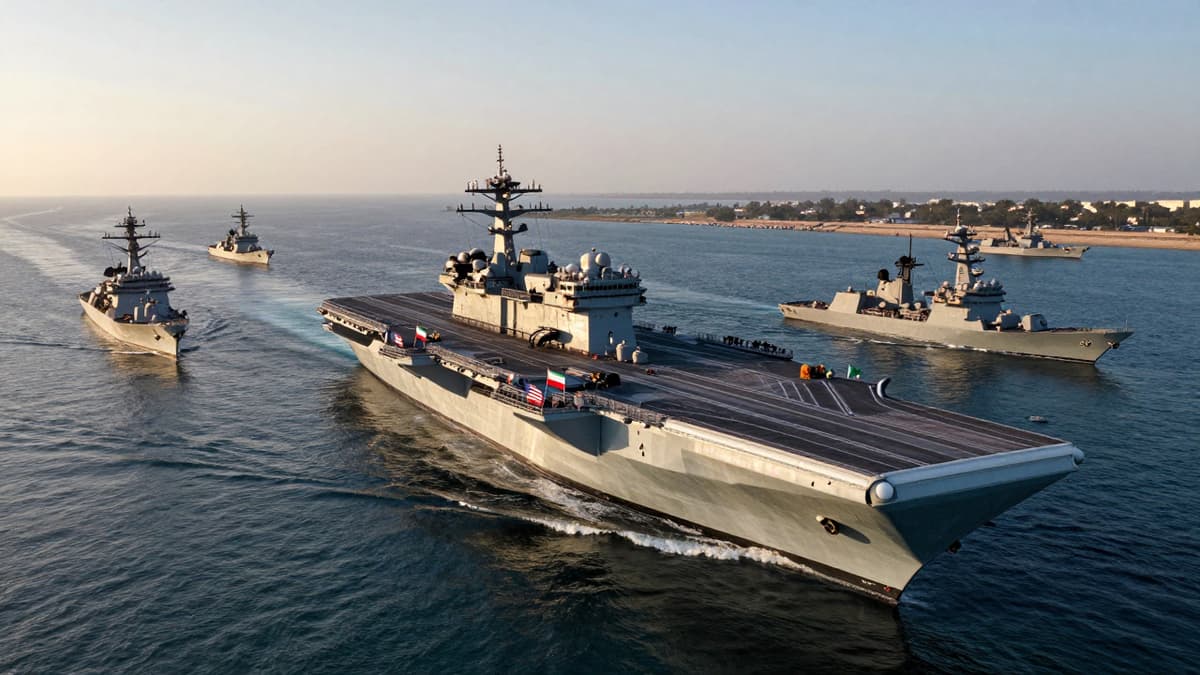
Diplomatic tensions escalate as regional leaders convene in Islamabad while military movements intensify, with Iran claiming US forces are preparing for a ground invasion despite White House denials.
The US-Israel war with Iran has reached a critical juncture as high-level diplomatic talks begin in Islamabad and US naval forces deploy to the region. Regional powers including Egypt, Turkey, and Saudi Arabia are gathering with Pakistan to discuss de-escalation strategies. Meanwhile, Iranian parliament speaker Mohammad Bagher Ghalibaf has issued a stark warning that Iranian forces are waiting for American troops. He accused the United States of secretly planning a ground invasion while publicly discussing negotiations. This rhetoric coincides with the arrival of the USS Tripoli, which US Central Command confirmed has reached the Middle East carrying 3,500 sailors and Marines.
The situation has intensified significantly as the conflict enters its 30th day. Ghalibaf, now a prominent voice within Iran, stated that the US is attempting to achieve through diplomacy what it failed to achieve through warfare. He referenced a 15-point peace plan proposed by Washington, which Tehran views as an attempt to force a surrender. In a message of defiance, Ghalibaf declared that as long as the Americans seek Iran's surrender, the answer remains "Far be it from us to accept humiliation." He further questioned how the US, which critics claim cannot even protect its own soldiers in regional bases, plans to protect them on Iranian soil.
Conversely, US officials have repeatedly denied intentions for a ground operation. Secretary of State Marco Rubio stated that Washington can achieve its objectives without ground troops. White House Press Secretary Karoline Leavitt confirmed that President Donald Trump has no plans to send ground forces anywhere. Despite these assurances, military movements continue. US officials approved written deployment orders for more than 1,000 soldiers to be sent to the Middle East in the days following Tuesday. Additionally, the IDF has indicated it is days away from hitting all "top priority" targets in Iran, including those related to ballistic missiles, nuclear facilities, and command centers.
The physical toll of the conflict continues to mount. Joint US-Israeli strikes have resulted in at least 1,900 deaths in Iran and caused significant damage to civilian infrastructure, including hundreds of medical facilities and schools, according to the Iranian Red Crescent. Recent strikes targeted steel plants using radioactive material and a heavy water plant in Arak, which produces plutonium. The IDF noted that while they destroyed this plant last June, intelligence identified attempts to rebuild it.
The geopolitical ripple effects are widening. Ukraine's President Volodymyr Zelensky reported receiving intelligence that Russia is conducting surveillance of US bases in the Middle East and Gulf regions. He cited seven areas photographed, including bases in Kuwait, Saudi Arabia, Turkey, Qatar, and Diego Garcia. Western intelligence officials suggest Russia is providing Iran with tactical advice on drone targeting and location data on US assets. Furthermore, the Pope has entered the fray, with Pope Leo XIV rejecting the co-option of God to justify the war. His remarks contrast with US Defense Secretary Pete Hegseth, who has cited scriptures suggesting divine support for the military action.
As diplomatic efforts continue, Iran has introduced a new element to its demands: sovereignty over the Strait of Hormuz. This narrow waterway, crucial for global energy markets, is now a focal point of Iran's strategy. By threatening to close the strait, Tehran aims to leverage its position for significant economic impact. Shipping through the chokepoint has largely halted, disrupting global trade and forcing nations worldwide to secure fuel supplies. The Houthis in Yemen have also joined the fray with missile attacks, prompting the Israeli military to declare readiness for a multi-front war.
The convergence of military buildup, diplomatic stalemate, and new territorial demands signals a prolonged period of high tension. With the USS Tripoli in the region and forces from multiple nations vying for influence, the potential for miscalculation remains high. If Iran follows through on threats regarding the Strait of Hormuz, global energy markets could face sustained volatility. The involvement of external powers like Russia and the vocal opposition from the Vatican suggests the conflict will continue to draw international scrutiny and complicate the path to a negotiated settlement.
Jun 8, 2026 00:51 UTC
Trump Claims Iran Nuclear Deal Imminent Despite Diplomatic Fractures
Jun 8, 2026 00:47 UTC
Iran Fires Missiles at Israel After Beirut Strike
Jun 7, 2026 22:00 UTC
US, Iran Peace Hops Fade 100 Days Into War
Jun 7, 2026 20:57 UTC
Iran Strikes Israel: IRGC Promises Week of Continuous Offensive
Jun 8, 2026 02:28 UTC
Trump Walks Out of Meet the Press After Rejecting Evidence Demands


