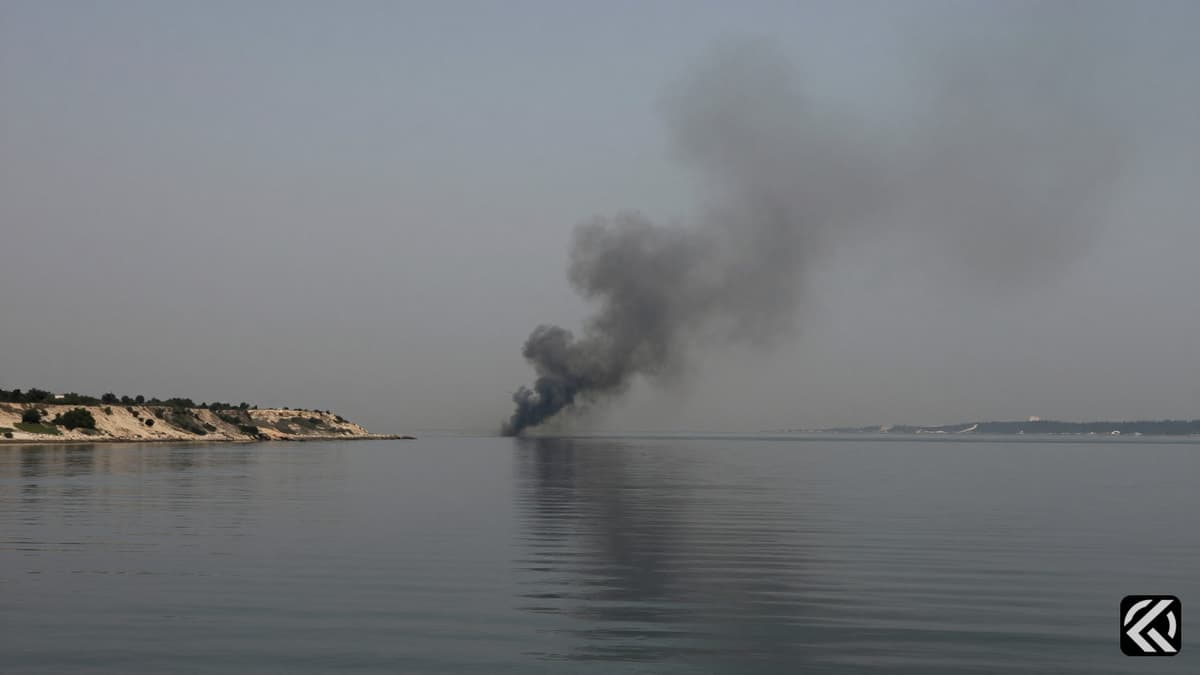
Tensions explode in the Strait of Hormuz as Iran shoots down US A-10, F-15, and Black Hawk aircraft, yet President Trump insists diplomatic channels remain open.
President Donald Trump confirmed on Friday that Iran has escalated hostilities by striking American aircraft near the Strait of Hormuz, marking a critical turning point in regional tensions. The US military acknowledged that an A-10 Warthog and an F-15 fighter jet were brought down, alongside Black Hawk helicopters assisting in rescue efforts. While the downing of the planes triggered immediate concerns, the US President maintained that diplomatic talks with Tehran are proceeding despite the active combat environment.
The sequence of events began with Iranian air defense systems shooting down an F-15 fighter jet over southwestern Iran, where one of the two crew members was successfully rescued. Just hours later, the conflict intensified as an American A-10 Thunderbolt was also targeted and destroyed near the Strait of Hormuz. US officials confirmed the loss of the A-10, noting that the pilot managed to eject and cross into Kuwaiti airspace before the aircraft crashed in Kuwait. Despite the danger, the pilot was confirmed safe by NBC News, which reported on the successful rescue operation.
Iran's military claimed full responsibility for the attack on the A-10, a claim subsequently verified by Al Jazeera. This incident represents the second American jet struck by Iranian forces this week, following the earlier downing of the F-15. The situation escalated further when two UH-60 Black Hawk helicopters, deployed specifically to assist in the rescue of the downed pilots, were hit by Iranian fire. The attacks on the helicopters left several service members with minor injuries, though officials confirmed that all personnel involved in the operation were ultimately safe.
In a subsequent interview with NBC News, President Trump addressed the severity of the situation. When asked if the downing of the jets would impact ongoing US-Iran negotiations, the President firmly stated, "No, not at all. No, it's war. We're in a war." This declaration underscored the gravity of the situation while simultaneously asserting that the diplomatic process would continue unaffected. Trump spoke during the interview without providing specific details regarding the search and rescue operations for the downed crews. Instead, the President expressed frustration over the media's coverage of the sensitive mission, highlighting the complexities of reporting on active military engagements.
A US official further clarified the details of the incident, confirming that the A-10 Thunderbolt was indeed shot down. The pilot's actions were critical to their survival, as they successfully crossed the border into Kuwaiti airspace before ejecting. The crash of the A-10 in Kuwait was a significant event, yet the primary focus remained on the safety of the aircrew. The Iranian army's subsequent claim of responsibility solidified the narrative of a targeted aerial assault. The series of strikes, involving the Iran shoots down US A-10, F-15, and Black Hawk aircraft, marks a dramatic escalation less than 48 hours after President Trump declared in a primetime address that Iran had been "completely decimated."
The timing of these strikes is particularly significant given the President's recent rhetoric. The contradiction between the declaration of total defeat for Iran and the reality of Iranian forces successfully engaging and downing US assets creates a volatile atmosphere. The fact that rescue operations were themselves under fire highlights the danger faced by service members in the region. The minor injuries sustained by those on the Black Hawk helicopters serve as a grim reminder of the risks involved in such high-stakes missions.
The immediate reaction from the US leadership emphasizes a dual-track approach: acknowledging the reality of war while maintaining diplomatic channels. President Trump's insistence that the downing of jets would not alter negotiations suggests a strategic decision to separate military conflict from political dialogue. This approach aims to prevent the escalation of hostilities from derailing any potential agreements, even as the air war continues.
The specific details of the rescue efforts, including the crossing into Kuwaiti airspace, indicate the precision required in such operations. The successful recovery of the A-10 pilot and the F-15 crew member demonstrates the resilience of US forces in the face of adversity. However, the targeting of the Black Hawk helicopters adds a new layer of complexity, suggesting that the Iranian forces are actively engaged in disrupting all US military activities in the region.
The ongoing tension near the Strait of Hormuz, a critical global shipping lane, raises the stakes for international trade and security. The successful downing of multiple US assets by Iranian forces challenges the prevailing narrative of a decimated enemy, potentially reshaping the geopolitical landscape. As search and rescue operations continue, the world watches closely to see if diplomatic talks can truly survive the heat of a declared war.
The future of US-Iran relations now hinges on whether this period of intense aerial combat can be managed without full-scale conflict. The President's words suggest a willingness to endure the conflict while pursuing diplomatic solutions, a delicate balancing act that will determine the trajectory of the crisis in the coming days.
Jun 8, 2026 02:17 UTC
Magnitude 7.8 Quake Shakes Philippines, Urging Immediate Evacuations
Join 50,000+ readers getting the global briefing every morning.
No spam. Unsubscribe anytime.
Jun 8, 2026 02:17 UTC
Magnitude 7.8 Quake Shakes Philippines, Urging Immediate Evacuations
Jun 8, 2026 00:51 UTC
Trump Claims Iran Nuclear Deal Imminent Despite Diplomatic Fractures
Jun 8, 2026 00:47 UTC
Iran Fires Missiles at Israel After Beirut Strike
Jun 7, 2026 22:38 UTC
Congress Party Claims Unity for INDIA Bloc Delhi Meeting


