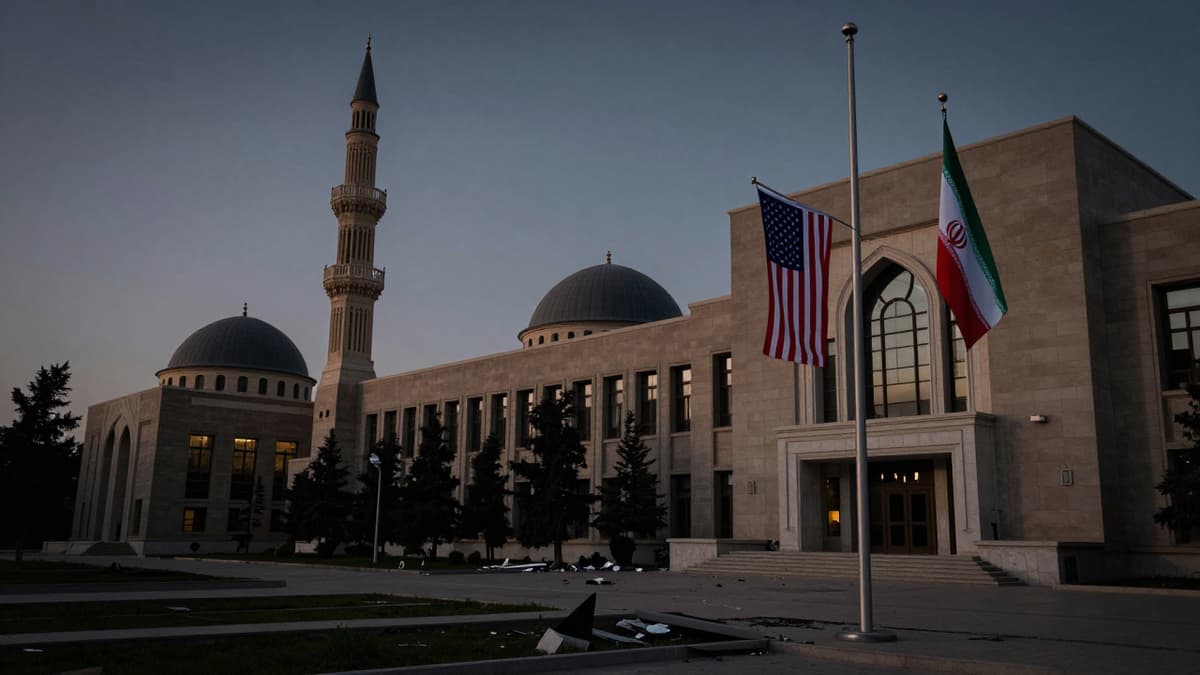
Following overnight attacks that damaged Iranian higher education facilities, the Iran Revolutionary Guard has issued a stark ultimatum targeting American academic institutions in the Gulf.
The Iran Revolutionary Guard issued a severe threat on Sunday, March 29, 2026, vowing to target U.S. universities in the West Asia region. This warning comes in direct response to claims that U.S.-Israeli strikes have destroyed two Iranian universities. The military wing of the Islamic Republic has issued an ultimatum to the American government, demanding an official statement condemning the bombing of educational facilities in Iran by a specific deadline.
The statement, released via Iranian media outlets, places the onus squarely on Washington to issue a public retraction or condemnation of the attacks. According to the text, the U.S. government must declare its disapproval of the bombing of universities by 12 noon on Monday, March 30, Tehran time. The message explicitly warns that failure to comply will result in actions against American academic sites within the region. The document further clarifies that the Iran Revolutionary Guard is prepared to execute retaliation if their demands are not met within the specified timeframe.
In addition to the political ultimatum, the statement contains specific safety warnings for those associated with American institutions. The text advises all employees, professors, and students of American universities, as well as residents living in their immediate vicinity, to stay at least one kilometre away from the campuses. This advisory suggests an imminent threat to physical safety and indicates that the location of these U.S. campuses is a primary focus of the threatened response. The directive to keep a distance implies a high level of danger and a strategy to mitigate potential casualties among American personnel and local residents.
The context for this escalating tension involves recent violent events targeting higher education institutions in Tehran. Reports from media outlets indicate that strikes occurred overnight from Friday to Saturday, hitting the capital city. The attacks reportedly targeted the University of Science and Technology, located in the northeast of the capital. While the strikes caused significant damage to the buildings themselves, media reports state that the incident did not result in any casualties. The destruction of academic infrastructure in Iran appears to have been the catalyst for the subsequent threats issued by the Iranian military leadership.
Several prominent American educational institutions maintain a physical presence in the Gulf region, placing them directly in the line of potential conflict. The threat specifically mentions campuses scattered throughout the area, highlighting targets that are geographically close to the region where the initial attacks occurred. Notable institutions identified in the context of this geographic spread include Texas A&M University, which operates a campus in Qatar, and New York University, which has a location in the United Arab Emirates. These campuses are central to the strategic location of American academic influence in the West Asia, making them vulnerable to the stated threat from the Iran Revolutionary Guard.
The geopolitical implications of targeting educational institutions are profound. By threatening specific facilities in the Gulf, the Iran Revolutionary Guard is expanding the scope of the conflict beyond direct military engagements to include cultural and academic centers. The demand for a condemnation by 12 noon on Monday, March 30, Tehran time, creates a narrow window for diplomatic resolution. The specificity of the target and the deadline suggests a calculated approach designed to maximize pressure on the U.S. government to publicly distance itself from the actions attributed to the combined U.S.-Israeli offensive.
The damage inflicted on the University of Science and Technology serves as a tangible example of the intensity of the U.S.-Israeli strikes on Iranian universities. Although no lives were lost in that specific incident, the structural damage reported by media sources underscores the seriousness of the retaliation. The strategic targeting of a university, a hub for knowledge and youth, signals a shift in the tactics employed, aiming to provoke a specific governmental response through the threat of equivalent retaliation against similar institutions abroad. The situation remains fluid, with the international community watching closely to see if the deadline for a U.S. statement will avert a broader escalation affecting American citizens and students in the Middle East.
The ultimatum from the Iran Revolutionary Guard establishes a clear condition for de-escalation: an official U.S. statement condemning the bombing of Iranian universities. If this demand is not met by the Monday noon deadline, the threat of hitting American campuses in the Gulf becomes a reality. This development suggests that the conflict may expand to target the educational infrastructure of the United States, potentially displacing students and faculty or damaging diplomatic relations further. The historical precedent of targeting academic institutions indicates a strategic intent to retaliate against the perceived loss of educational capacity in Iran by inflicting similar losses on U.S. interests. If the U.S. fails to issue the required statement, the one-kilometer exclusion zone advised by the guards could quickly become a mandatory reality for everyone in the surrounding areas, fundamentally altering the security posture for all U.S. universities in West Asia.
Jun 8, 2026 00:51 UTC
Trump Claims Iran Nuclear Deal Imminent Despite Diplomatic Fractures
Jun 8, 2026 00:47 UTC
Iran Fires Missiles at Israel After Beirut Strike
Jun 7, 2026 22:00 UTC
US, Iran Peace Hops Fade 100 Days Into War
Jun 7, 2026 20:57 UTC
Iran Strikes Israel: IRGC Promises Week of Continuous Offensive
Jun 8, 2026 02:28 UTC
Trump Walks Out of Meet the Press After Rejecting Evidence Demands


