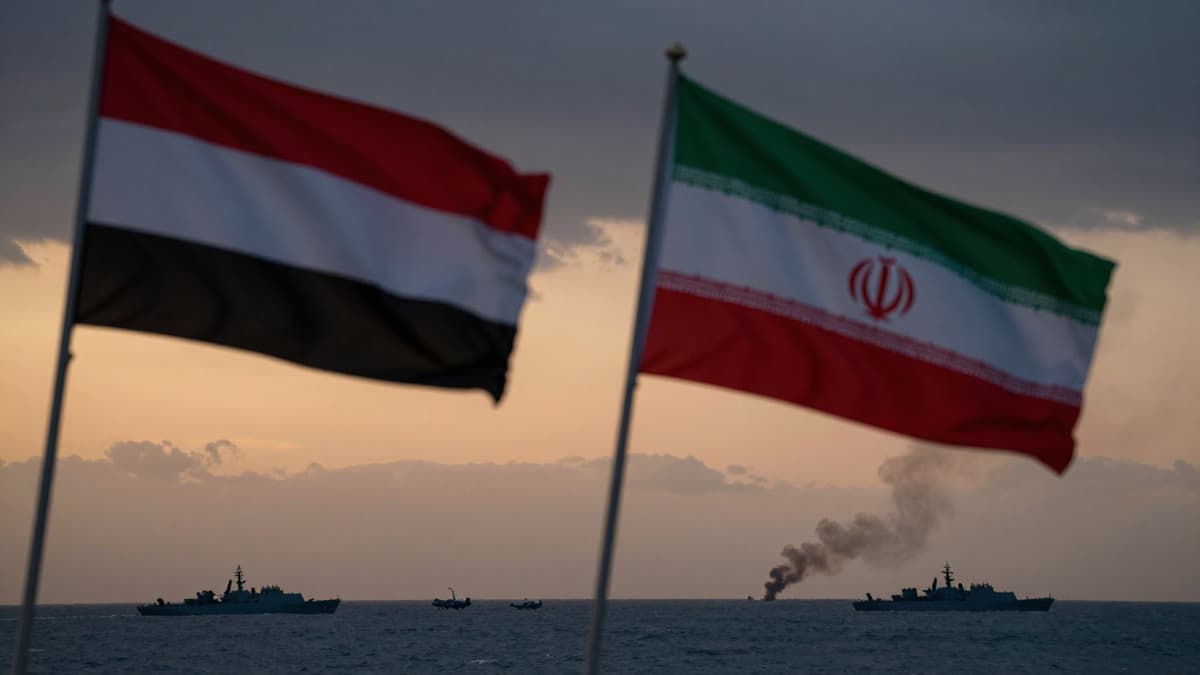
Tensions surge in West Asia as Houthis target Israel alongside Iran, while US Marines deploy to the region. Diplomatic efforts for a quadrilateral summit struggle against escalating hostilities.
Tensions in the Middle East have reached a critical tipping point as the West Asia conflict expands with new actors entering the fray. On Sunday, March 29, 2026, Yemen's Houthis initiated direct attacks on Israel, marking a significant escalation in the regional hostilities. Simultaneously, reports confirm the arrival of US Marines in the region, adding a heavy military footprint to the volatile landscape.
This surge in military activity coincides with a new wave of missiles fired from Iran at Israeli territory, while Iranian forces targeted aluminium production facilities in Bahrain and the UAE. Despite these aggressive actions, diplomatic channels remain active, with Pakistani Foreign Minister Ishaq Dar meeting counterparts from Egypt, Turkiye, and Saudi Arabia in Islamabad to address the crisis.
The situation on the ground has deteriorated rapidly over the last 24 hours. According to the Revolutionary Guards, Iran launched a barrage of missiles and drones at facilities belonging to two of the world's largest aluminium producers located in Bahrain and the UAE. The Iranian side explicitly claimed these facilities were linked to the US military, justifying the strike as a direct response to perceived American involvement in the ongoing hostilities.
On the other side of the spectrum, Israeli authorities reported that a new wave of missiles was fired from Iranian territory directly at Israeli soil on the same day. This exchange of fire signals a dangerous escalation that risks drawing more regional powers into the crossfire. Adding to the complexity, Iran's Parliament Speaker, Mohammad Bagher Ghalibaf, issued a stark warning on Sunday regarding American intentions. Ghalibaf stated that the United States is simultaneously engaging in public diplomatic efforts to end the war while secretly planning a ground attack.
"The enemy publicly sends messages of negotiation and dialogue while secretly planning a ground attack," Mr. Ghalibaf said, highlighting the deep distrust and the dual nature of the current diplomatic and military standoff. This accusation underscores the severity of the Iran US tensions, as Tehran appears convinced of American aggression despite public rhetoric suggesting otherwise.
Amidst this backdrop of violence, the international community is attempting to find a diplomatic resolution. In Islamabad, a quadrilateral summit was convened involving leaders from Pakistan, Egypt, Saudi Arabia, and Turkiye. Pakistan Foreign Minister Ishaq Dar met with his counterparts from Egypt and Turkiye to discuss the ongoing crisis. The statement released following the meeting emphasized that the primary goal of the talks was to address the tensions in the region and negotiate peace. The participants exchanged views on the West Asia conflict, with a strong consensus on the urgent need for restraint, de-escalation, and the resolution of disputes through dialogue and diplomacy.
The presence of the quadrilateral summit participants in the capital of Pakistan suggests that neighboring countries are attempting to coordinate a unified front to prevent further destabilization. However, the timing of the summit, occurring on the same day as missile exchanges and the arrival of US Marines, indicates that military actions may be outpacing diplomatic efforts. The convergence of Houthi attacks, Iranian missile strikes, and the deployment of US forces creates a complex web of retaliation that threatens to spiral out of control.
The entry of Yemen's Houthis into the direct conflict with Israel represents a strategic shift, effectively widening the geographical scope of the war. By joining the Iranian-led offensive, the Houthis have transformed from a regional insurgent group into a direct participant in the broader confrontation between Iran and Israel. This development complicates the strategic calculus for the United States and its allies, who now face a multi-front threat involving drones and missiles launched from multiple directions.
The accusation by Speaker Ghalibaf that the US is planning a ground attack adds a layer of potential conventional warfare to the current drone and missile exchanges. If such a ground operation were to materialize, it would represent a massive escalation from the current status of aerial bombardment and naval blockades. The arrival of US Marines in the region supports the narrative of a potential ground engagement or the fortification of existing bases for a larger offensive.
As diplomatic talks continue in Islamabad, the hope for a quick resolution remains fragile. The statement from the summit leaders urging restraint and dialogue stands in stark contrast to the actions on the ground, where missile strikes are becoming increasingly frequent and targeted. The reliance on "dialogue and diplomacy" as the primary tool for dispute resolution faces a significant test against the momentum of ongoing military campaigns. The coming days will be critical in determining whether the diplomatic channels can de-escalate the situation before further irreversible damage occurs or if the conflict will spiral into a full-scale regional war involving direct US ground involvement.
The current trajectory suggests that while diplomatic efforts are underway, they are operating under severe strain. The quadrilateral summit represents a vital attempt to stabilize the region, but the concurrent military maneuvers by the US and the aggressive actions by Iranian and Houthi forces create a paradox where negotiation is happening in parallel with war. If the US ground attack plans cited by Ghalibaf are real, the window for diplomacy could close rapidly. The future impact on the region will depend on whether the leaders in Islamabad, Riyadh, Cairo, and Ankara can force a pause in hostilities or if the military momentum will force a broader, more devastating conflict across the entire West Asian theater.
Jun 8, 2026 00:51 UTC
Trump Claims Iran Nuclear Deal Imminent Despite Diplomatic Fractures
Jun 8, 2026 00:47 UTC
Iran Fires Missiles at Israel After Beirut Strike
Jun 7, 2026 22:00 UTC
US, Iran Peace Hops Fade 100 Days Into War
Jun 7, 2026 20:57 UTC
Iran Strikes Israel: IRGC Promises Week of Continuous Offensive
Jun 8, 2026 02:28 UTC
Trump Walks Out of Meet the Press After Rejecting Evidence Demands


