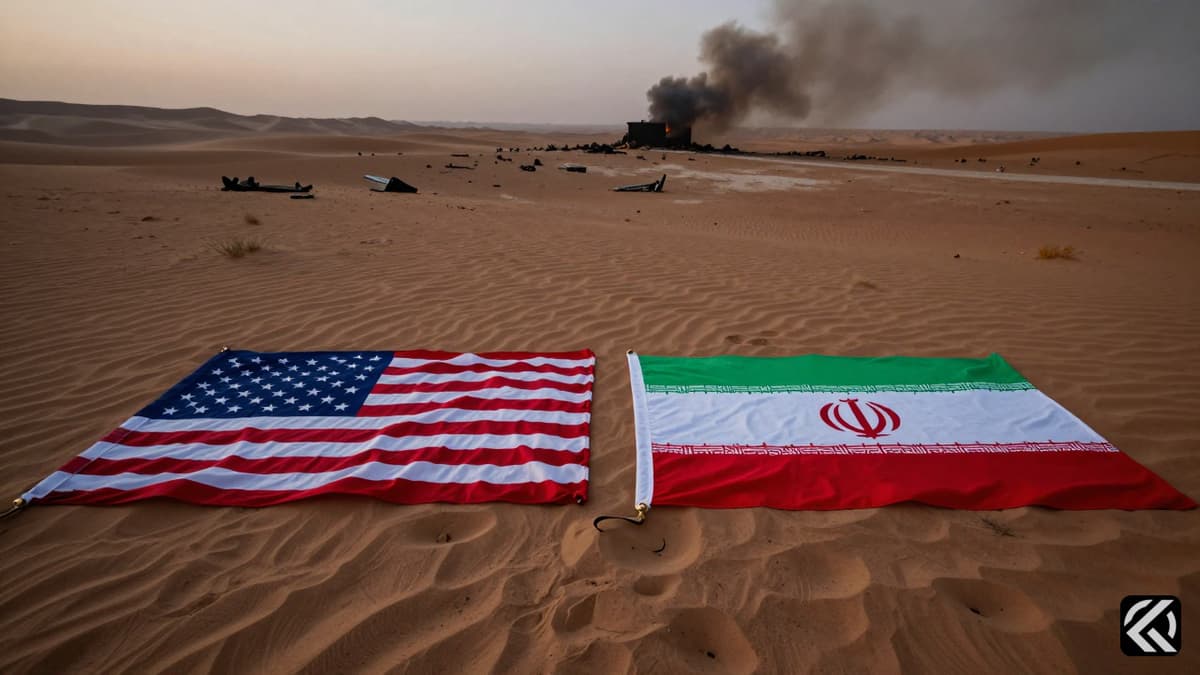
Following 38 days of intense conflict, US officials claim a decisive victory, asserting Tehran demanded a ceasefire after their military was rendered combat-ineffective.
US War Secretary Pete Hegseth addressed the press on Wednesday, claiming that Iran explicitly begged for a ceasefire after the US conducted a military campaign that left their armed forces in a state of disarray. Hegseth credited the strategic success to President Donald Trump, stating that the current situation was forged by the administration. The US leadership described the 38-day campaign as a historic and overwhelming victory on the battlefield, marking a significant shift in the region's power dynamics.
The conflict, labeled Operation Epic Fury, was characterized by Hegseth as a major strategic success that "decimated Iran's military and rendered it combat-ineffective for years to come." This assertion stands in stark contrast to the narrative presented by Tehran. While Washington celebrates the outcome as a decisive win, the Islamic Republic, led by Mojtaba Khamenei, has claimed their own victory. Tehran points to Washington's acceptance of a 10-point proposal as evidence that they achieved both battlefield and diplomatic success, offering a contrasting perspective on the outcome of the hostilities.
Hegseth's remarks signal a continued hardline stance by the US, with the administration keeping the option of further military action open if their specific demands are not fully met. A primary concern remains the stockpile of highly enriched uranium held by Iran. The Pentagon chief issued a stern warning regarding this material, stating that the US would ensure its security. Hegseth indicated that Washington is closely monitoring the situation and intends to acquire the material.
"We're watching it. We know what they have, and they will give it up, and we'll get it, and we'll take it," Hegseth stated. He emphasized that this acquisition would happen regardless of the method, asserting, "If we have to, we can do it in any, any means necessary." The US secretary of war clarified the two potential paths: voluntary handover or forceful removal. "They'll give it to us voluntarily, we'll get it, we'll take it, we'll take it out, or if we have to do something else ourselves, like we did Midnight Hammer or something like that, we reserve that opportunity," he added.
This hardline approach follows a shift in tone from President Trump. Earlier in the conflict, Trump had warned of the potential to wipe out Iran's "whole civilization." However, as the conflict concluded, the President announced a ceasefire with Tehran. Trump described the outcome as a "total and complete victory" following the intense 38-day Operation Epic Fury. Despite this dramatic shift from threat to diplomacy, the underlying tension remains palpable, with Washington retaining the right to use force to secure its objectives regarding the uranium stockpile.
The divergence in narratives highlights the complexity of the situation. On one side, the US administration views the cessation of hostilities as a surrender by Iran, driven by the decimation of their military capabilities. On the other, Iranian officials view the acceptance of their terms as a diplomatic triumph, suggesting a different interpretation of the same events. The US position, as articulated by Hegseth, leaves no ambiguity about their readiness to act decisively if their demands regarding the uranium are not met voluntarily.
The immediate aftermath of the conflict establishes a precarious new status quo where diplomatic terms and military threats coexist. While the US claims victory based on the military effectiveness of Operation Epic Fury, the Iranian leadership insists that their 10-point proposal was the catalyst for the end of hostilities. The future of the region will likely depend on how the US enforces its demand for the secure transfer of enriched uranium. If Iran does not hand over the stockpile voluntarily, the Pentagon has explicitly reserved the option of employing force, similar to past operations. The long-term impact suggests a continued state of high alert, with Washington maintaining the threat of additional strikes as a leverage point to ensure compliance with their strategic requirements.
Jun 8, 2026 00:51 UTC
Trump Claims Iran Nuclear Deal Imminent Despite Diplomatic Fractures
Jun 8, 2026 00:47 UTC
Iran Fires Missiles at Israel After Beirut Strike
Jun 7, 2026 22:00 UTC
US, Iran Peace Hops Fade 100 Days Into War
Jun 7, 2026 20:57 UTC
Iran Strikes Israel: IRGC Promises Week of Continuous Offensive
Jun 8, 2026 02:28 UTC
Trump Walks Out of Meet the Press After Rejecting Evidence Demands


