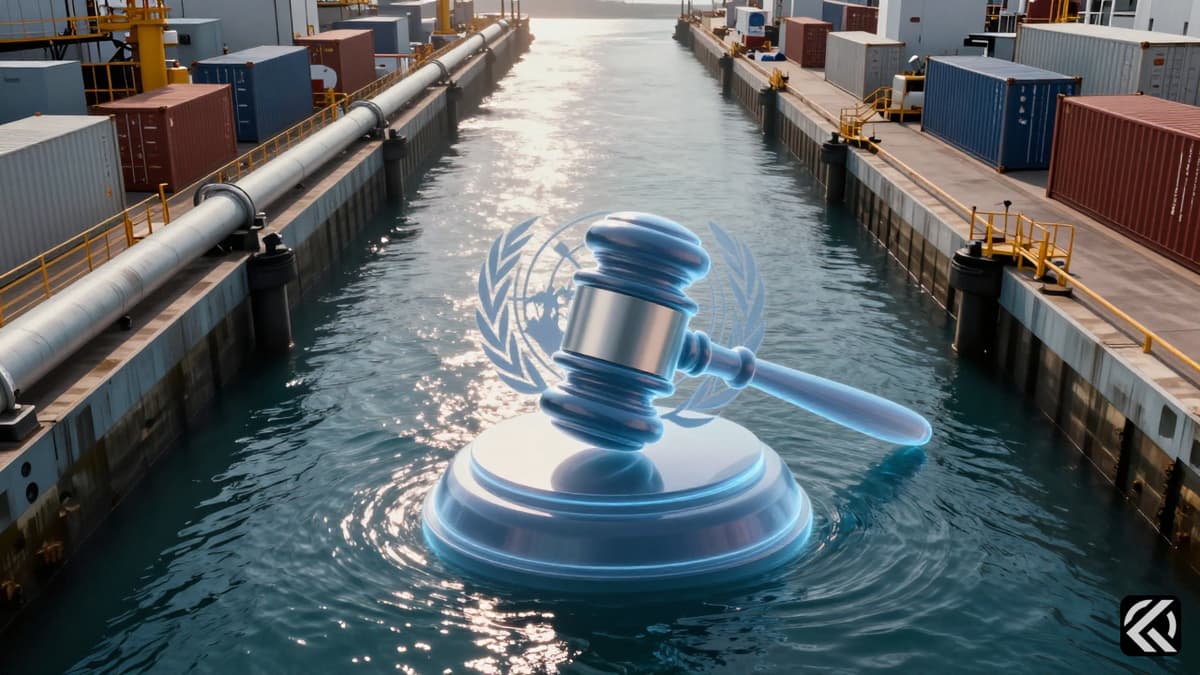
Global navigation faces a critical setback as Moscow and Beijing block UN efforts to restore the Strait of Hormuz amid escalating tensions and looming military threats.
On Tuesday, the United Nations Security Council faced a significant diplomatic setback as Russia and China executed a Russia veto against a resolution designed to reopen the Strait of Hormuz. This decisive move effectively halted Gulf-backed international efforts to restore navigation through one of the world's most vital oil transit routes. The failure of the resolution occurs at a critical juncture, coming mere hours before a deadline set by US President Donald Trump for Iran to comply or face potential military action.
The diplomatic clash originated from a proposal introduced by Bahrain, which successfully secured support from 11 Security Council members. However, the draft faced insurmountable opposition as Pakistan and Colombia chose to abstain from the vote. The resolution had undergone extensive negotiations and multiple revisions in a bid to avoid a negative outcome. An earlier iteration of the text had employed the phrase "all necessary means," a clause that could have legally authorized military intervention. That language was subsequently scaled back to "defensive means" and eventually stripped of any explicit Security Council mandate to focus purely on coordination.
In its final form, the proposed resolution merely encouraged nations reliant on the strait to coordinate defensive measures, such as escorting commercial vessels and deterring disruptions. It also demanded that Iran immediately halt attacks on merchant ships and cease interference with navigation. Despite these diplomatic overtures, the Russia veto ensured the proposal's failure. Russian and Chinese envoys argued that the root cause of the crisis lay with the United States and Israel, whom they blamed for escalating the conflict. Their position emphasized that the immediate priority must be a cessation of all hostilities rather than measures focusing solely on maritime security.
Bahrain's foreign minister, Abdullatif bin Rashid Al Zayani, expressed deep concern over the outcome. He stated that failing to adopt the resolution sends the wrong signal to the world and the people of the world. He warned that such inaction risks undermining efforts to safeguard global waterways. The geopolitical friction is heightened by the fact that Bahrain hosts the US Fifth Fleet and has been a primary driver for international intervention, viewing the disruption as an existential threat to the nation.
The situation has further intensified under the pressure of warnings from US President Donald Trump. Trump has demanded that Iran reopen the waterway, warning that failure to comply could trigger a large-scale military response. He has explicitly stated that if a deal is not reached, the country could be "taken out in one night." This rhetoric adds a layer of immediate military risk to the diplomatic stalemate.
The ongoing Strait of Hormuz blockade continues to rattle global energy markets and raise significant concerns among Gulf nations. Many of these countries rely heavily on the route for their oil and gas exports. Roughly one-fifth of the global oil supply typically passes through this narrow waterway. The standoff leaves the world watching as a potential military clash looms over a region that serves as a crucial artery for the global economy. The inability of the UN to intervene militarily or diplomatically leaves a power vacuum that could be filled by direct force if the deadline is missed.
The core of the conflict remains the actions of Iran regarding the strait. While the UN resolution sought to address the blockade through diplomatic pressure and coordinated defensive shipping, the lack of a Security Council mandate means there is no international legal framework currently supporting forceful intervention. Instead, the responsibility has shifted to national actions and the explicit threats from the United States. The Strait of Hormuz remains a flashpoint where diplomatic efforts have hit a hard wall, leaving the future of global oil supply hanging in the balance.
The international community is now left to grapple with the consequences of the veto. The abstentions from Pakistan and Colombia suggest a divided world, with some nations unwilling to support measures they fear could escalate tensions further. The shift from "all necessary means" to "defensive means" highlights the difficulty in securing consensus on how to handle the crisis without provoking a wider war.
The failure to pass the resolution signals a prolonged period of uncertainty where diplomatic solutions have been exhausted in the current UN framework. With the US President's threat of a "large-scale military response" hanging over the deadline, the region is poised for a significant shift. If the Russia veto continues to block international consensus and Iran does not reopen the strait, the likelihood of direct military engagement by the US or its allies increases substantially. This could fundamentally alter the security landscape of the Middle East, potentially leading to a disruption of global energy supplies that could last far beyond the immediate crisis. The world must now watch whether the threat of force will yield a result that diplomatic negotiation failed to achieve, or if the blockade will continue to strain the global economy.
Jun 8, 2026 02:17 UTC
Magnitude 7.8 Quake Shakes Philippines, Urging Immediate Evacuations
Jun 8, 2026 00:51 UTC
Trump Claims Iran Nuclear Deal Imminent Despite Diplomatic Fractures
Jun 8, 2026 00:47 UTC
Iran Fires Missiles at Israel After Beirut Strike
Jun 7, 2026 22:00 UTC
US, Iran Peace Hops Fade 100 Days Into War
Jun 8, 2026 04:15 UTC
Trump Urges Netanyahu to Halt Iran Strike for Peace


