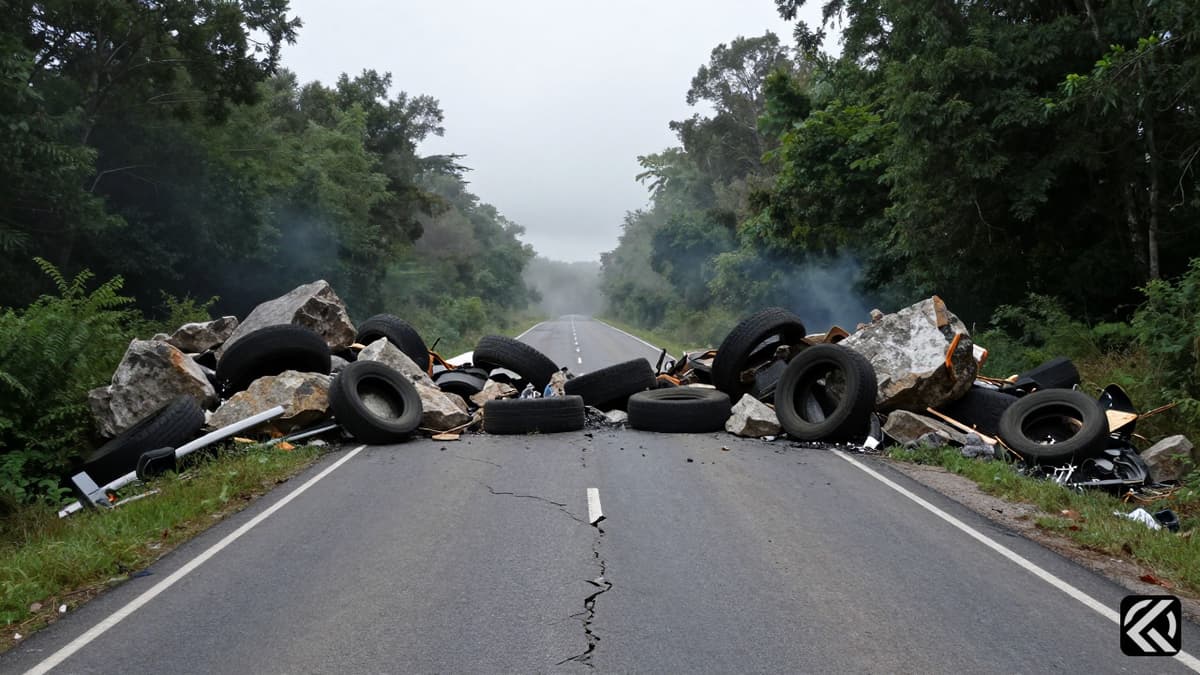
Fresh violence in Manipur has claimed five lives with zero arrests. The Bishnupur-Churachandpur road remains blocked, severely hindering the National Investigation Agency's critical work.
In the wake of a fresh wave of violence, the state of Manipur has confirmed five fatalities, a tragic toll that includes the deaths of two young children. These recent events mark a disturbing escalation in the region's security situation, leaving a trail of uninvestigated crimes in their wake. As of late Tuesday, authorities have reported that no arrests have been made in connection with any of these killings, leaving the community in a state of heightened tension and grief.
The impact of this violence extends beyond the loss of life to the very infrastructure of the state. A senior government official confirmed that the primary artery connecting the region, the Bishnupur-Churachandpur road, has remained completely blocked for the past 12 days. This prolonged obstruction is not merely a logistical inconvenience; it is a critical impediment to the work of the National Investigation Agency (NIA). The NIA is currently tasked with investigating the killing of two children that occurred on April 7 in Tronglaobi, Bishnupur. The blockade has effectively severed the ability of investigators to access the crime scene, gather evidence, and conduct a thorough inquiry into the identities of the perpetrators.
The inability to secure the area or bring the killers to justice has sparked a volatile reaction among the local population. With the attackers remaining unidentified and the situation unresolved, the community has taken to the streets multiple times over the past week. These demonstrations have turned volatile, resulting in direct clashes between the locals and security forces. The demands of the demonstrators are singular and urgent: they want the arrest of the individuals responsible for the killings. The confrontation has left scores of people injured, further deepening the crisis and highlighting the frustration and despair that permeate the region.
The specific location of the initial trigger, Tronglaobi in Bishnupur, has become a focal point of both the crime and the subsequent unrest. The killing of two children here on April 7 set the stage for the ongoing standoff. Despite the gravity of the incident and the involvement of the NIA, the physical blockade of the road has prevented any forward movement in the investigation. The inability to arrest suspects or even secure the perimeter has only served to fuel the local outrage, creating a cycle of violence where the lack of accountability drives further unrest.
The current status of the situation is precarious. The intersection of unresolved criminal activity, a stalled law enforcement investigation, and active civil disobedience creates a dangerous environment. The 12-day blockade indicates a sustained level of opposition or control by the local population or specific groups, regardless of the official calls for the road to be cleared for the NIA. The fact that no arrests have been made in any of the five cases suggests a significant challenge for law enforcement, whether due to the anonymity of the attackers, the lack of cooperation, or the physical impossibility of operating in a blocked zone.
The injuries sustained by both protesters and security personnel during the clashes underscore the volatility of the moment. As the community continues to demand justice, the absence of concrete results from the investigation only serves to intensify their resolve to take matters into their own hands, leading to repeated confrontations. The situation remains fluid, with the potential for further violence if the road is not cleared or if the arrests are not made soon. The silence of the authorities in terms of arrests, contrasted with the noise and chaos on the streets, paints a grim picture of a region struggling to find stability.
The current standoff in the region, characterized by the 12-day road blockade and the unarrested perpetrators of the Manipur killings, suggests a trajectory where the lack of immediate accountability could lead to further escalation. Based on the trends evident in the source material, the repeated clashes between locals and security forces indicate that without a resolution, the cycle of violence is likely to continue. The obstruction of the NIA's investigation means that the identities of the attackers remain a mystery, a gap that is being filled by public frustration rather than legal resolution. If the Bishnupur-Churachandpur road remains blocked and the investigations stall, the risk of further injuries to both civilians and security personnel will remain high, potentially destabilizing the region further as the demand for arrests grows more desperate.
Jun 8, 2026 00:51 UTC
Trump Claims Iran Nuclear Deal Imminent Despite Diplomatic Fractures
Jun 8, 2026 00:47 UTC
Iran Fires Missiles at Israel After Beirut Strike
Jun 7, 2026 22:00 UTC
US, Iran Peace Hops Fade 100 Days Into War
Jun 7, 2026 20:57 UTC
Iran Strikes Israel: IRGC Promises Week of Continuous Offensive
Jun 8, 2026 02:28 UTC
Trump Walks Out of Meet the Press After Rejecting Evidence Demands


